Custom Die Cut Boxes
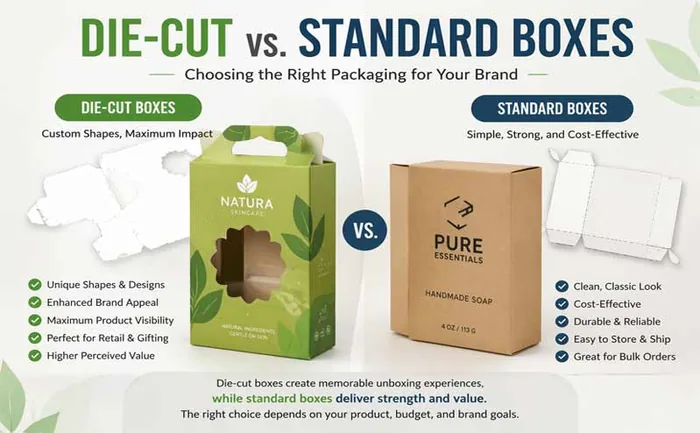
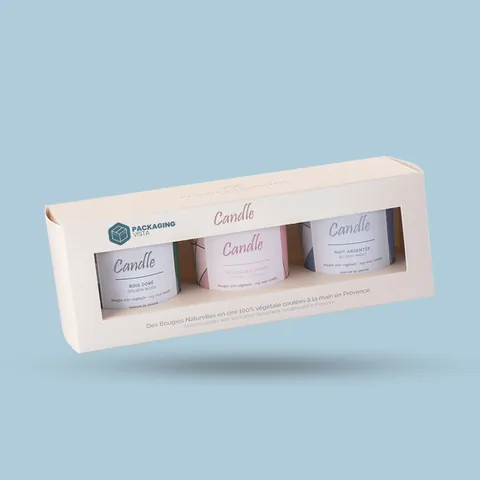
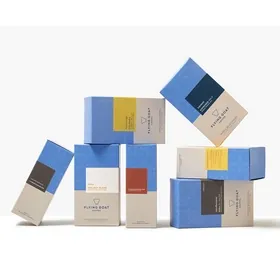
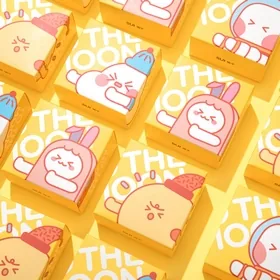
Custom die cut boxes are packaging cut to your exact shape from a bespoke dieline. They are not forced into a stock rectangle. The structure fits the product, the display, and the shipping method. That could mean a window cutout, interlocking tabs, a sleeve, or a fully custom shape.
Packaging Vista builds the dieline for you. We print die cut boxes in full CMYK and Pantone on cardstock, kraft, corrugated, or rigid stock. Add finishes like lamination, foil stamp, spot UV, and window patching.
Best of all, with a 100-box minimum and no die, plate, or setup fees, even a complex custom-cut shape costs nothing extra in tooling. Your boxes ship in 8 to 10 business days with a free 3D mockup and free US delivery.
Key takeaways
- Any shape: die cut boxes are cut from a custom dieline, so windows, tabs, sleeves, and novelty silhouettes fit your product exactly.
- No tooling cost: we never charge die, plate, or setup fees, so even a complex custom cut adds nothing to your per-box price.
- Low barrier: 100-box minimum, free dieline & 3D mockup, 8-10 day turnaround, and free US shipping.
- Go deeper: compare custom boxes, window boxes, and product boxes, then request a free quote.
Die cut box styles
Die cutting lets us shape almost any structure from a flat sheet. These are the die cut box styles we make most often:
Tuck top auto-bottom (1-2-3 bottom) boxes
A pre-glued auto-lock bottom that pops into place and snaps shut as you fold it. The base is safe without tape. Tuck top auto-bottom boxes ship flat and fold up in seconds. A trusty fit for heavier retail and ecommerce products.
Tuck end boxes with a die-cut window
Straight or reverse tuck-end cartons with a die-cut window in the front or top. The product shows through, with optional clear film backing. Ideal for retail items buyers want to see before they buy.
Sleeve and tray boxes
A two-piece build. An inner tray holds the product. An outer printed sleeve slides over it. Sleeves are an easy way to add a custom-cut window or shaped opening over a simple base.
Custom-shape display boxes
One-piece display boxes cut to a custom shape. Think house-shaped, arched, or contour-cut. They stand out on a retail shelf or counter and show the product face-out.
Boxes with die-cut inserts
Cardboard or corrugated inserts and partitions die cut to cradle each item. They keep fragile or multi-piece products from shifting inside the box.
Die-cut corrugated boxes
For mailers, retail displays, and heavier items, we die cut corrugated board into custom shapes, locking tabs, and windowed fronts. Custom die-cut corrugated boxes pair the safety of fluted board with a precise, on-brand cut. It is a durable middle ground between flat cardstock and rigid stock. It suits shipping and shelf-ready die cut packaging.
Novelty shapes: pillow, pyramid, and hexagon
Pillow boxes suit small gifts and jewelry. Pyramid boxes suit chocolates and favors. Six-sided hexagon boxes suit decorative presentation. All are cut and scored from a single custom dieline. See our pillow boxes and pyramid boxes.
Custom dielines and shapes
A dieline is the flat blueprint of your box. It marks every cut, fold, score, perforation, and window before anything is made. To die cut your shape, that dieline becomes a custom metal cutting die. The printed sheet and die are pressed together under even pressure. The blade slices crisp edges, accurate flaps, and detailed windows exactly where the dieline says.
Our team designs your custom dieline and a 3D mockup for free. You can confirm the shape and fit before we print. Because we charge no die or tooling fee, your custom shape never carries an extra setup cost. To prep your own artwork, see our packaging artwork and dieline guide.
Materials and finishes
We die cut many stocks and pair them with retail-ready finishes:
- SBS and folding cardstock for crisp, full-color retail cartons.
- Kraft for a natural, recyclable look on eco and artisan products.
- Corrugated for die-cut corrugated boxes - mailers, displays, and heavier items that need protection.
- Rigid chipboard for premium, non-collapsible die cut presentation boxes.
- Finishes: gloss or matte lamination, foil stamping, embossing and debossing, spot UV, and clear window patching.
Die cut boxes by use
Custom die cut packaging suits almost any product or display need. Here is how the most common die cut packaging boxes map to each use:
| Use case | Recommended die cut box |
|---|---|
| Retail shelf products | Custom-shape or tuck-end cartons - see retail boxes. |
| Showing the product | Die-cut window boxes - see window boxes. |
| Ecommerce shipping | Auto-bottom and die-cut mailers - see mailer boxes. |
| General product packaging | Custom dielines sized to your item - see product boxes. |
| Premium presentation | Rigid die-cut boxes - see rigid boxes. |
Pricing, minimums, and turnaround
Die cut box pricing depends on the box size, the stock, the complexity of the cut, the finishes, and the order quantity. The per-box cost drops as volume rises.
There are no die, plate, or setup fees. A custom shape never adds a tooling charge the way it does at most printers. The minimum is 100 boxes. Standard runs take 8 to 10 business days after proof approval, with rush on hand. Every order comes with a free dieline, 3D mockup, and free US shipping.
Weighing domestic vs. overseas? See why brands choose a US die cut box manufacturer. Request a free quote with your shape, size, and quantity for exact pricing.
What is a die-cut box?
A die-cut box is a folding carton, corrugated mailer, or rigid setup box whose shape, tabs, windows, perforations, and novelty silhouettes are cut and creased in a single pass from a custom-designed cutting die pressed against a printed flat sheet under even pressure.
Die-cut is a manufacturing capability applied to every structural pack-style, not a shape category of its own — every tuck-end carton (see tuck end boxes), window box (see window boxes), sleeve (see sleeve boxes), gable (see gable boxes), pillow (see pillow boxes), and rigid setup (see rigid boxes) is die-cut at production.
The term "die-cut box" typically refers to added custom features (custom windows, interlocking tabs, perforated tear-strips, integrated handles, novelty silhouettes) beyond the standard dieline of a base structural pillar.
Die-cut packaging has three unusual properties that separate it from any other structural pack-style: it's the meta-structural-pillar — die-cut is upstream of every other structural pillar, applied to every folding carton and corrugated build at production, so the term is a manufacturing-capability signifier rather than a shape descriptor, zero die/plate/setup tooling fee at Packaging Vista is a category-defining value proposition — industry-standard printers charge $200–$2,000 per custom-cutting-die setup on top of per-unit box pricing, a cost that traditionally makes low-volume custom shapes uneconomic; Packaging Vista's zero-tooling-fee model amortizes tooling into the per-unit price so a 100-unit test run costs the same per unit as a 5,000-unit production run on the same custom shape, and the custom-cutting die accepts virtually any 2D shape — rectangle, rounded corners, circle, oval, keyhole, arch, hexagon, house-silhouette, product-outline, panoramic wrap, interlocking tabs, perforations, integrated handles — on any base structural pillar with no additional tooling premium.
How much do custom die-cut boxes cost?
Die-cut box pricing scales by the base structural pillar (tuck-end, window, sleeve, gable, pillow, rigid, corrugated), size, stock, feature complexity, finishes, and quantity, with the per-unit price dropping meaningfully as volume rises. Ballpark ranges by complexity tier (before finishes and volume discounts):
- Standard rectangle die-cut (tuck-end, mailer, or basic carton on 14–18 pt SBS or kraft) — $0.20 to $1.40 per box in 500–2,000-unit runs depending on size. The baseline for any custom-branded folding carton (see the per-structural-pillar cost anchors on tuck end boxes, gable boxes, and pillow boxes).
- Single-feature die-cut (window, hang tab, ribbon slot, or thumb notch added to base carton) — adds $0.05 to $0.40 per box depending on feature (window with clear PET film patch $0.15–$0.40, hang tab $0.02–$0.06, ribbon slot $0.02–$0.05, perforated tear-strip $0.03–$0.08). See window boxes for the full film-decision breakdown.
- Multi-feature die-cut (window + tab + perforation on same dieline) — adds the sum of individual feature adders; complexity does not multiply cost because every feature rides the same cutting die at no additional tooling fee.
- Novelty silhouette die-cut (house-shape, hexagon, arch, product-outline, panoramic wrap) — $0 tooling adder over rectangle since the custom-cutting die is included in the per-unit cost; scrap paperboard yield may reduce sheet efficiency by 5–15% versus a rectangle, translating to a modest per-unit cost increase on high-complexity silhouettes.
- Die-cut rigid setup or 2-piece premium box (1.5–3 mm chipboard with custom-cut wrap-paper laminate) — $2.20 to $16.00 per box depending on size (see rigid boxes and magnetic closure boxes for full rigid-tier pricing).
- Die-cut corrugated mailer or retail display (E-flute through B-flute with custom shape) — $0.60 to $3.50 per unit depending on size and flute type (see mailer boxes and corrugated boxes).
Zero-tooling-fee value calculation unique to /die-cut-boxes: at industry-standard $200–$2,000 per custom die charge, a 100-unit custom-shape test run at $0.60 per box would carry a $2.00–$20.00 per-unit die-fee amortization — effectively tripling to 30×'ing the per-unit cost on low-volume custom shapes.
Packaging Vista's zero-tooling-fee model eliminates this barrier entirely, making custom shapes cost-equivalent to stock shapes at every volume tier including 100-unit test runs. Request a free quote with base structural pillar, feature list, and quantity.
How long do custom die-cut boxes take to make?
Standard die-cut box production is 8–10 business days after proof approval — the same lead time as the base structural pillar because the custom-cutting die is included in the standard production step, not a separate lead-time gate. Rush lanes available in 4 to 6 days for launch dates.
Add 1–2 days for rigid die-cut setup builds (see rigid boxes for full lead-time breakdown). Add 1 day for film-patch heat-sealing on windowed die-cut cartons. Add 1–3 days for multi-variant runs where different die-cut features appear on different SKUs sharing a base structural pillar.
Prototyping-cycle back-plan unique to /die-cut-boxes: because custom shapes carry $0 tooling fee at Packaging Vista, brands frequently prototype novelty silhouettes at low quantities (100–250 units) before committing to production volumes. A typical prototype-to-production cycle: Prototype round 1 (100–250 units, 8–10 business days) to validate shape, print, and structural rigidity in the customer's hands.
Design iteration (5–10 business days for dieline revision + new 3D mockup + approval). Prototype round 2 if needed (another 100–250 units on the revised dieline). Production run (1,000–10,000+ units at volume-discount pricing). This 4–8 week iterative back-plan is uneconomic at industry-standard printers because each prototype round would trigger a fresh $200–$2,000 die-fee charge; Packaging Vista's zero-tooling-fee model makes iterative prototyping cost-effective.
Standard rectangle vs single-feature vs multi-feature vs novelty-silhouette die-cut
Four die-cut complexity tiers map to typical use cases:
| Complexity tier | Features | Base structural pillar | Cost adder over rectangle | Best for |
|---|---|---|---|---|
| Standard rectangle | Base structural dieline only | Any (tuck-end most common) | Baseline | Everyday retail cartons, cost-sensitive SKUs |
| Single-feature die-cut | Window OR hang tab OR ribbon slot OR perforation OR thumb notch | Tuck-end, sleeve, gable, mailer | +$0.02–$0.40 (feature-dependent) | Product-reveal, peg display, event favors, tear-away opening |
| Multi-feature die-cut | Window + tab + perforation on same dieline | Tuck-end, sleeve, gable, retail display | Sum of individual features (no multiplier) | Retail-shelf premium, subscription reveal-kits, dispensary displays |
| Novelty silhouette | House-shape / arch / hexagon / product-outline / panoramic wrap | Any (custom outline die replaces standard shape) | $0 tooling + 5–15% sheet-yield loss | Wedding favors, holiday specials, brand-signature shapes |
Cost-adder + sheet-yield rows unique to /die-cut-boxes structural pillar: the value proposition specific to die-cut is that feature complexity does not multiply cost — a multi-feature dieline (window + tab + perforation) costs the sum of the individual feature adders, not the product, because every feature rides the same cutting die at no additional tooling fee.
Novelty silhouettes carry $0 tooling adder but may lose 5–15% sheet-yield efficiency on the paperboard cutting sheet, translating to a modest per-unit cost increase on high-complexity outlines (which brands typically accept in exchange for the brand-signature shape).
Are custom die-cut boxes worth it for a brand that needs a custom shape, feature, or novelty silhouette?
For any brand that needs a shape, window, tab, perforation, integrated handle, or novelty silhouette beyond a stock rectangle carton, custom die-cut boxes are the fundamental capability that makes every other structural pack-style customizable. The typical buyers of custom die-cut boxes span every structural pillar and product category in the sweep: cosmetic and skincare brands with product-silhouette windows and custom-shape palettes (see cosmetic boxes); bakery and confectionery brands with die-cut window bakery cartons showing decorated treats (see bakery boxes, cupcake boxes); wedding and event planners with house-shape gables, arched pillows, and hexagon favor boxes; chocolate brands with panoramic-wrap window boxes framing molded chocolates (see chocolate boxes); electronics brands with sleeve-and-tray drawers with product-silhouette cutouts (see sleeve boxes); subscription-box brands with die-cut reveal-kit inserts and thumb-notch opening features (see subscription boxes); soap and candle brands with breathable die-cut sleeves and window bands (see soap boxes, candle boxes); jewelry boutiques with product-silhouette die-cut pillow boxes and pyramid favors; cannabis and dispensary brands with die-cut CR mechanism carton dielines (see marijuana boxes, pre-roll boxes); and any brand where a stock rectangle carton fails to communicate brand signature or product visibility.
Three reasons custom die-cut is worth the (minimal) premium over stock rectangle cartons: (1) zero die/plate/setup tooling fee is the category-defining value proposition — industry-standard printers charge $200–$2,000 per custom-cutting-die setup, which triples to 30×'s the per-unit cost on 100–500-unit test runs; Packaging Vista's zero-tooling-fee model makes custom shapes cost-equivalent to stock shapes at every volume tier. (2) Iterative prototyping is cost-effective on the zero-tooling-fee model — brands can run 2–3 prototype rounds (100–250 units each) at the same per-unit cost as production to validate shape, structural rigidity, and print before committing to volume, which is uneconomic at printers charging per-die setup. (3) Feature complexity does not multiply cost — a multi-feature dieline (window + hang tab + perforated tear-strip) costs the sum of individual feature adders, not the product, because every feature rides the same cutting die.
Are die-cut boxes recyclable?
Die-cut boxes inherit the recyclability profile of their base structural pillar and stock — die-cutting itself adds no plastic, adhesive, or non-recyclable material; the process is a pure cutting-and-creasing operation on paperboard or corrugated.
Plain die-cut folding cartons on FSC-certified SBS or kraft paperboard qualify for the FTC Green Guides unqualified "recyclable" claim across virtually every US municipal program (see tuck end boxes for the plain-carton recyclability baseline). Die-cut corrugated mailers and displays recycle in most municipal streams as OCC (see corrugated boxes and mailer boxes for full corrugated recyclability breakdown).
Where recyclability gets nuanced is with add-on die-cut features that introduce non-paperboard components: die-cut windows with clear film patches require film removal before recycling (see window boxes for full PVC vs PET/RPET vs acetate film decision), die-cut rigid setup boxes use chipboard + wrap-paper laminate that generally recycles but may need laminate consideration (see rigid boxes).
Die-cut integrated handles (see gable boxes), interlocking tabs, perforated tear-strips, hang holes, and ribbon slots are all pure paperboard and add no recyclability nuance — a die-cut carton with just structural features (no windows, no laminate) has the same recyclability as the base plain carton.
FTC Green Guides (16 CFR Part 260) govern "recyclable" claim wording for all die-cut variants.
Frequently Asked Questions
What is a dieline?
A dieline is the flat blueprint of your box. It maps every cut, fold, score, perforation, and window before we make it. It acts as the guide a die-cutting machine follows to shape the box. We design your custom dieline for free. We send a flat proof and a 3D mockup to approve before we print.
Do you charge a die or tooling fee for a custom-cut shape?
No. We never charge die, plate, or setup fees. Even a complex custom-cut shape costs you nothing extra in tooling. You only pay for the boxes. That makes die cut packaging far cheaper on smaller runs than at printers that bill for the cutting die.
What custom shapes and cuts can you produce?
We can cut almost any shape. That includes windows in any shape, interlocking and auto-lock tabs, perforations, sleeves, and novelty forms like pillow, pyramid, and hexagon boxes. We will advise on the right stock weight so fine details stay crisp and the box stays structurally sound.
Do I need to supply a dieline, or can you create one?
You do not need to supply anything technical. Our team builds a custom dieline for your exact shape and product for free. We then send a flat artwork proof plus a 3D mockup. You can approve the structure and fit before we print.
What sizes and dimensions can I get?
Any size. Die cut boxes are made to your product's sizes, given as length x width x depth, plus any custom shape you need. If you are unsure, send a sample or product specs. We will size the box and supply a free dieline and 3D mockup to confirm the fit.
How much do custom die cut boxes cost?
Cost depends on the box size, stock, cut complexity, finishes, and order quantity. It drops as volume rises. Every job is custom, so we quote per project rather than list a flat price. There are never die, plate, or setup fees. The minimum is just 100 boxes. Send your shape, sizes, and quantity for an exact, no-obligation quote.
What is the lead time and minimum order?
The minimum is 100 boxes with no penalty for the custom shape. Standard turnaround is 8 to 10 business days after proof approval. Rush production is on hand when you have a tighter deadline.
What is a die-cut box, and is it a shape or a manufacturing capability?
A die-cut box is a folding carton, corrugated mailer, or rigid setup box whose shape, tabs, windows, perforations, and novelty silhouettes are cut and creased in a single pass from a custom-designed cutting die. Die-cut is a manufacturing capability applied to every structural pack-style (tuck-end, window, sleeve, gable, pillow, rigid, corrugated) — not a shape category of its own.
The term 'die-cut box' typically refers to added custom features (custom windows, interlocking tabs, perforated tear-strips, integrated handles, novelty silhouettes) beyond the standard dieline of a base structural pillar. Three unusual properties: it's the meta-structural-pillar (upstream of every other); zero die/plate/setup tooling fee is the category-defining value proposition ($200–$2,000 industry-standard vs $0 at Packaging Vista); custom-cutting die accepts virtually any 2D shape on any base structural pillar.
How much do custom die-cut boxes cost, and what's the tooling fee?
Ranges by complexity tier: standard rectangle die-cut on 14–18 pt SBS or kraft $0.20–$1.40 per box (500–2,000-unit runs) — the baseline for any custom-branded folding carton. Single-feature adder (window, hang tab, ribbon slot, perforation, thumb notch) $0.02–$0.40 depending on feature.
Multi-feature adder = sum of individual features (feature complexity does not multiply cost). Novelty silhouette (house-shape, hexagon, arch, product-outline) $0 tooling adder + 5–15% sheet-yield loss. Die-cut rigid setup $2.20–$16.00. Die-cut corrugated mailer or display $0.60–$3.50.
Zero die/plate/setup tooling fee at Packaging Vista vs $200–$2,000 industry standard — a 100-unit custom-shape test run costs the same per unit as a 5,000-unit production run.
Which die-cut complexity tier do I need — standard rectangle, single-feature, multi-feature, or novelty silhouette?
Match tier to use case. Standard rectangle die-cut fits everyday retail cartons and cost-sensitive SKUs (baseline cost). Single-feature die-cut (window OR hang tab OR ribbon slot OR perforation OR thumb notch) fits product-reveal retail, peg display, event favors, and tear-away opening at +$0.02–$0.40 per feature.
Multi-feature die-cut (window + tab + perforation on same dieline) fits retail-shelf premium, subscription reveal-kits, and dispensary displays at the sum of individual feature adders. Novelty silhouette (house-shape / arch / hexagon / product-outline / panoramic wrap) fits wedding favors, holiday specials, and brand-signature shapes at $0 tooling adder plus 5–15% sheet-yield loss on high-complexity outlines.
How do I design a custom die-cut box shape step by step?
Six steps: (1) Pick the base structural pillar (tuck-end / window / sleeve / gable / pillow / rigid / corrugated) — die-cut is a capability applied to every base structure. (2) Sketch the custom die-cut features beyond the base (windows, tabs, perforations, integrated handles, novelty silhouettes). (3) Pick stock by feature complexity (14–16 pt SBS for single feature, 18–20 pt for multi-feature, 22–24 pt for heavy load-bearing features, rigid chipboard or corrugated for structural). (4) Engineer feature dimensions to preserve structural rigidity (1/2 in board around windows, 3/4 in above handles, 1/8 in perforation tab, corner brace above 60% window coverage). (5) Add finishes on the printed panels (Pantone, foil, emboss, spot UV, soft-touch/matte, window film patch). (6) Get free custom dieline + 3D mockup + digital proof — zero tooling fee at Packaging Vista vs $200–$2,000 industry-standard die charge.
Are custom die-cut boxes worth it for a brand that needs a custom shape, feature, or novelty silhouette?
Yes, for any brand needing a shape, window, tab, perforation, integrated handle, or novelty silhouette beyond a stock rectangle carton. Three reasons: (1) Zero die/plate/setup tooling fee is the category-defining value proposition — industry-standard printers charge $200–$2,000 per custom-cutting-die setup, which triples to 30×'s the per-unit cost on 100–500-unit test runs; Packaging Vista's zero-tooling-fee model makes custom shapes cost-equivalent to stock shapes at every volume tier. (2) Iterative prototyping is cost-effective on the zero-tooling-fee model — brands can run 2–3 prototype rounds (100–250 units each) at the same per-unit cost as production to validate shape and print before committing to volume. (3) Feature complexity does not multiply cost — a multi-feature dieline costs the sum of individual feature adders, not the product, because every feature rides the same cutting die.
Are die-cut boxes recyclable?
Die-cut boxes inherit the recyclability profile of their base structural pillar and stock — die-cutting itself adds no plastic, adhesive, or non-recyclable material; it's a pure cutting-and-creasing operation on paperboard or corrugated. Plain die-cut folding cartons on FSC-certified SBS or kraft qualify for the FTC Green Guides unqualified 'recyclable' claim.
Die-cut corrugated mailers recycle as OCC in most municipal streams. Nuances come from add-on features that introduce non-paperboard components: die-cut windows with clear film patches require film removal (see /window-boxes for film breakdown); die-cut rigid setup boxes use chipboard + wrap-paper laminate (see /rigid-boxes); die-cut integrated handles, interlocking tabs, perforations, hang holes, and ribbon slots are all pure paperboard and add no recyclability nuance.
FTC Green Guides (16 CFR Part 260) govern 'recyclable' claim wording.
Who orders custom die cut boxes?
Custom-structured boxes are ordered by brands and operators who need a specific box shape or format built to their product — not a stock size.
- E-commerce and DTC brands — mailer boxes and custom shippers sized to the product so freight is billed on actual volume, not dead air.
- Product designers and startups — die-cut prototypes with free custom dielines so a launch box can be tested before it goes to press at volume.
- Premium and gift brands — rigid, magnetic-closure, and pillow-box formats that carry a giftable feel with foil, embossing, and inserts.
- Retail merchandisers — counter-display and window-box structures built to sit on a shelf and pull the shopper's eye at eye level.
- Print buyers and packaging engineers — any material and finish with no die, plate, or setup fees so a spec sheet becomes a firm quote in one business day.
How to order custom die cut boxes
Five steps from quote to delivery. Every order includes free design support, a free custom dieline, and a digital mockup for approval before anything hits the press.
- Share your specs. Send box dimensions (or a photo of the product), quantity, material preference, and any artwork or logo files. If you're unsure of the size, our design team can advise from a product photo.
- Get a quote and mockup. Within one business day we return a firm quote, a printable dieline, and a 3D digital mockup of your die cut boxes. No die, plate, or setup fees are added.
- Approve the proof. Review the mockup, request color, layout, or dieline changes, and give final approval. Revisions are unlimited before press.
- Production (8–10 business days). Your order runs on offset or digital press, then moves through finishing — lamination, spot UV, foil stamping, embossing, die-cutting, and assembly if needed.
- Free US shipping. Orders ship flat-packed with tracking. Assembled bundles or master-carton packing are available on request at no charge.
Resources & tools
Free tools and trusted references to help you size, spec, and choose the right die cut boxes before you order.
Free tools & guides
- Box Size & Dimensional Weight Calculator – size your box and see the billable weight UPS, FedEx, and USPS charge.
- Packaging materials – compare SBS, kraft, corrugated, and rigid stocks.
- Manufacturing capabilities – printing, finishing, QA, and what we can make.
- Custom boxes hub – every box style we print, in one place.
Trusted references
- How2Recycle – the standardized on-pack recycling label for paperboard and kraft packaging.
- Forest Stewardship Council (FSC) – certification for responsibly sourced paper and board.
- FEFCO — International Fibreboard Case Code – the standard code (0201, 0427, etc.) that defines every box style.
- ISTA — International Safe Transit Association – the industry-standard packaging performance test protocols.
- EPA — Sustainable Materials Management – federal guidance on reducing packaging waste at end of life.