Custom Bakery Boxes
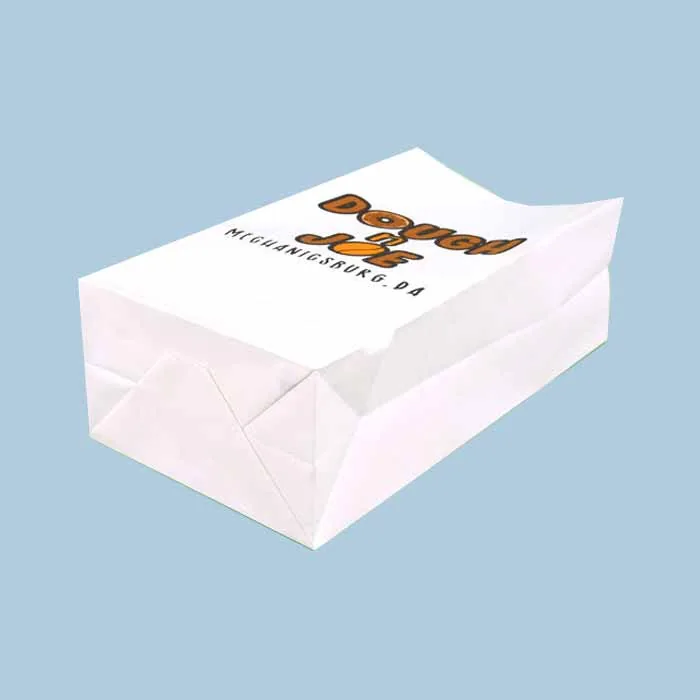
Custom bakery boxes are food-safe cartons built to hold pastries, donuts, cookies, pies, and other baked goods. They keep the goods fresh, safe, and ready for the counter or to-go bag.
Packaging Vista prints bakery boxes on food-grade SBS and kraft paperboard with food-contact-safe inks. Styles range from window pastry boxes and auto-lock cartons to donut boxes and pie boxes.
Order from just 100 boxes with no die, plate, or setup fees. Get free design help, a dieline, and 3D mockup. Your branded bakery packaging ships in 8 to 10 business days with free US delivery.
Key takeaways
- Food-safe by design: printed on food-grade paperboard and kraft with food-contact-safe inks, plus grease-resistant liner options for oily, buttery goods.
- Every bakery style: window pastry boxes, auto-lock and auto-bottom cartons, donut & cookie boxes, pie boxes, and kraft sleeves.
- Low barrier: 100-box minimum, no die, plate, or setup fees, free dieline & 3D mockup, 8-10 day turnaround, free US shipping.
- Go deeper: compare cake boxes, cupcake boxes, and food and beverage boxes, see our bakery packaging guide, then request a free quote.
What is a bakery box?
A bakery box is food-safe printed paperboard packaging built to hold and present pastries, cookies, donuts, pies, cakes, and other baked goods from the bakery counter to a customer's table. The category covers window pastry boxes for shelf-visible impulse buys, auto-lock and auto-bottom cartons for counter-fast assembly, deep pie boxes for tall desserts, and kraft sleeves for artisan single-item presentation.
Bakery boxes have three unusual requirements vs generic retail packaging: they need to be food-safe by FDA standards for direct-contact use with fresh-baked goods, they need to resist grease and moisture from butter, oil, and hot bakery items, and they need to hit counter-time efficiency — a bakery box that takes 10 seconds to fold at pack-out breaks the morning rush.
Under FDA 21 CFR 176.170 (indirect food additives — components of paper and paperboard in contact with food), the paperboard, coatings, and inks that touch bakery product must be food-contact-safe. All of our bakery-stock defaults meet this standard, and PFAS-free grease-resistant coating is available for any oily or buttery build.
Bakery box styles
The structure sets how the box opens, displays, and protects what is inside. These are the bakery box styles we print most often:
Window bakery boxes
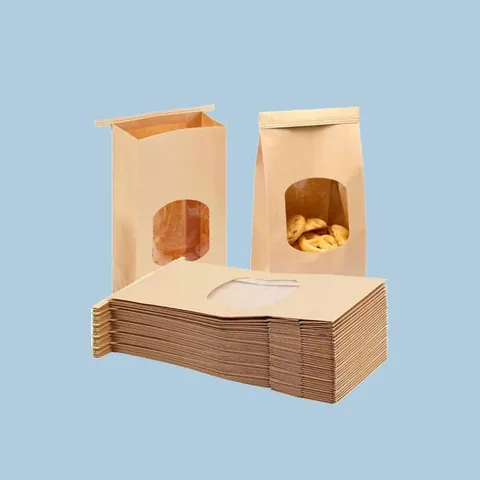
A clear window patched into the lid or front lets customers see the pastry, cookie, or slice without opening the box - a proven impulse driver on the bakery shelf. Choose the window size and placement on your dieline so the product is framed exactly the way you want.
Auto-lock and auto-bottom boxes
A pre-glued, auto-lock bottom snaps into shape in one motion, so staff can assemble boxes fast during a morning rush. The locking bottom holds weight securely, making it a workhorse for everyday pastries, muffins, and mixed dozens.
Donut and cookie boxes
Shallow, wide cartons sized for a half dozen or full dozen, often with a window to show the glaze and decoration. Tuck or lock closures keep the lid flat so stacked boxes travel cleanly.
Pie boxes
Deeper boxes with locking tabs that secure a whole pie or tall dessert during transport, in standard and custom diameters. The taller wall protects crusts and toppings from crushing on the drive home.
Kraft sleeves and bakery sleeves
A printed kraft sleeve wraps a tray or inner carton for an artisan, clean-label look with minimal material. Sleeves pair well with a window box or open tray to show off the product while carrying your branding.
Standard bakery box sizes
| Product | Typical box size (L x W x H) | Fits |
|---|---|---|
| Single pastry / cookie | 4 x 4 x 2.5 in | 1 croissant, muffin, or cupcake |
| Half-dozen donuts | 10 x 7 x 3.5 in | 6 standard donuts (~3 in each) |
| Dozen donuts | 14 x 10 x 4 in | 12 standard donuts or cookies |
| Pastry / danish box | 8 x 8 x 4 in | 6-8 pastries with window |
| Pie box (9 in) | 10 x 10 x 5 in | Standard 9 in pie or tart |
| Sheet cake half | 14 x 10 x 5 in | Half sheet cake, brownies |
Food-safe materials and grease resistance
Bakery goods are buttery, oily, and delicate, so the stock matters. We print bakery boxes on food-grade SBS paperboard for bright retail color. It meets FDA 21 CFR 176.170. We also print on kraft for an artisan feel. Barrier options for oily and buttery goods:
- Grease-resistant coating - PFAS-free, blocks butter and oil migration.
- PE liner - moisture barrier for hot bakery items.
- Glassine liner insert - drop-in food-safe sheet for extra protection.
- Uncoated kraft - breathable for dry cookies, biscotti, and shelf-stable goods.
All boxes use food-contact-safe soy-based inks. Tell us what goes inside and we recommend the right stock and barrier.
Windows and easy assembly
A window turns the box into a silent salesperson. Shoppers buy what they can see. We patch a clear, food-safe film into your chosen window shape and position. Cakes, cookies, and pastries stay on display.
Speed at the counter matters just as much. Auto-lock bottoms and simple tuck folds let staff pop a flat box into shape in seconds. Packaging never slows down a busy bakery at peak hours.
Custom bakery boxes with your branding
We print bakery boxes to your exact artwork in full CMYK and Pantone-matched color. Choose white food-grade board or natural kraft. Add finishes like gloss, matte, or soft-touch lamination, foil stamping, and emboss to make a logo pop.
Every order comes with a free custom dieline and 3D mockup. You confirm the size, window, and fit before we print. With a 100-box minimum and no die, plate, or setup fees, even a small or new bakery can launch fully branded packaging without a large upfront run.
How much do custom bakery boxes cost?
Custom bakery box pricing tracks size, stock, coating, and window. Typical ranges at a 500-unit run: $0.25 to $0.75 per box for a single-pastry or half-dozen tuck-end carton (4 × 4 × 2.5 to 10 × 7 × 3.5 in) on food-grade SBS or kraft; $0.50 to $1.20 per box for a windowed pastry or dozen-donut box (8 × 8 × 4 to 14 × 10 × 4 in) with clear-film patch; $0.60 to $1.50 per box for a deep pie or sheet-cake box with locking tabs; $0.80 to $2.00 per box with PFAS-free grease-resistant coating, PE liner, or wax coating for hot/frozen/oily builds.
Auto-lock (1-2-3 bottom) adds $0.05 to $0.15 per box for the pre-glue step but saves counter labor over the box's life. Per-box cost drops 30–40% moving from 500 to 5,000 units. No die, plate, or setup fees on any run — a first 100-box test run for a new pastry SKU carries the same tooling cost as a full-scale reorder.
What drives bakery box price, in order of impact:
- Quantity — the biggest lever. Per-box cost drops sharply from 100 to 500 to 1,000+.
- Barrier coating — PFAS-free grease-resistant, PE liner, and wax coatings add cost but are required for oily/hot/frozen product.
- Window patching — die-cut opening plus clear food-safe film patch adds one off-press step.
- Auto-lock bottom — pre-glue step at the plant costs a small premium but slashes counter assembly time.
- Board caliper — 18–20pt for light single-pastry runs, 22–24pt for heavier/humid/stacked applications.
- Print scope — single-color print on food-grade white is the retail standard and cheapest; full CMYK on kraft with soft-touch or foil is the artisan build.
Send your product, quantity, and storage environment on the quote form for exact per-box pricing.
How long do custom bakery boxes take to make?
Standard production is 8 to 10 business days after proof approval. Rush production runs in 4 to 6 business days on most orders at no additional charge, including auto-lock and windowed builds. PFAS-free grease-resistant and PE-lined stocks are on-hand and add no lead time vs standard food-grade SBS.
Wax-coated frozen-storage stocks add 1 to 2 days. Ground freight from Cheshire, Connecticut adds 2 to 5 days to reach the West Coast — expect a full quote-to-dock timeline of about 2 to 3 weeks for a first order. Bakeries planning holiday runs (Thanksgiving pies, Christmas cookies, Valentine's Day boxes): order 60–90 days ahead of the peak to build filled inventory before the counter rush.
Auto-lock vs kraft one-piece vs window box: which should you choose?
The three main bakery box structures solve different counter and shelf jobs. An auto-lock (1-2-3 bottom) is the volume workhorse — pre-glued base snaps into shape in 2–3 seconds, so a barista or bakery clerk can build 100 boxes an hour during the morning rush.
A kraft one-piece folds from a single flat sheet and gives an artisan, clean-label look but takes a few seconds longer per box. A window box shows the pastry, cookie glaze, or slice cross-section at point of sale — proven impulse driver on the shelf and in a display case.
| Auto-lock (1-2-3 bottom) | Kraft one-piece | Window box | |
|---|---|---|---|
| Counter assembly time | 2–3 seconds | 6–8 seconds | 3–5 seconds |
| Stack strength | Best (locked bottom) | Good | Good (product-visible face) |
| Brand signal | Retail/production efficient | Artisan, craft-shop | Impulse-driving shelf |
| Typical cost (500-run) | $0.35–$0.85 | $0.25–$0.75 | $0.50–$1.20 |
| Best for | Volume bakeries, morning rush | Small artisan, farmers' market | Retail display, impulse buy |
| Best product | Muffins, mixed dozens, everyday pastries | Single loaf, gift-shop cookies | Cakes, cookies, decorated pastries |
Many bakeries run all three: auto-lock for the everyday morning-rush inventory, kraft one-piece for a gift-shop artisan line, window box for a decorated-cookie or pie retail SKU. All three run on the same 100-box minimum with the same food-grade stock options.
Pricing, minimums, and turnaround
Bakery box pricing depends on size, style, stock, finishes, and quantity. Window and pie boxes cost a little more than a plain tuck carton. The per-box cost drops as volume rises.
There are no die, plate, or setup fees. The minimum is 100 boxes. Standard runs take 8 to 10 business days after proof approval, with rush on hand. Every order comes with a free dieline, 3D mockup, and free US shipping. Request a free quote with your size and quantity for exact pricing.
Preventing collapse in humid storage and stacked transport
A bakery box that looks strong on the assembly bench can soften after an hour on a humid delivery van or a warm bakery counter. Two things drive it: board caliper and coating. For a single loaf, a dozen cookies, or a small pastry lineup, an 18pt or 20pt SBS or coated kraft holds shape through a normal service day.
For heavier fillings (buttery croissants, dense muffins, filled donuts) or hot-humid climates, step up to 22pt or 24pt and add a grease-resistant coating on the inside face.
Stack strength matters as much as caliper. An auto-lock or 1-2-3 bottom bakery box handles a light stack (three to four boxes) without deforming; a tuck-top with printed side ribs or reinforced corners survives taller stacks in delivery vans. If your route stacks 8-plus boxes on a shelf or in a milk crate, ask for a stack-test spec on the dieline.
We can pre-print corner reinforcement or spec a heavier flute for tall stacks, so the bottom box holds up to the pile above it.
In-store display, grab-and-go, and pickup logistics
Front-of-house bakery boxes do double duty: they hold the product and act as silent signage on the counter. Pre-folded auto-lock boxes cut assembly time to two or three seconds per unit, which matters during a Saturday morning rush. Print a shopper-facing panel with the item name (cookies, brownies, muffins) so a customer can pick from a pre-boxed lineup without the counter staff opening lids.
A subtle back-panel logo keeps the counter looking curated even when boxes are stacked deep in a display case.
For online orders and third-party delivery, add a small notes panel or a sticker zone on top so the counter can mark the order number, pickup name, or any special allergen note. For direct-ship bakery (mail-order cookies, brownies, specialty pastries), we build a matching corrugated shipper that holds the primary bakery box snug so it does not slide during parcel transit.
The two-box system (retail box + protective mailer) is what national bakery brands use to protect frosting, glaze, and structure across a 2-3 day ground shipment.
Are custom bakery boxes worth it for a small bakery?
Yes, and small bakeries — neighborhood pastry shops, farmers-market bakers, home-based cookie brands, wedding-cake specialists, direct-ship mail-order bakeries — are exactly who the 100-box minimum was built for. A printed tuck-end kraft carton at $0.25–$0.75 per box turns a hand-decorated cookie into a shelf-ready branded product for less than a dollar per unit.
Beyond brand lift, custom packaging carries a real regulatory role for bakeries: FDA 21 CFR 176.170 requires food-contact-safe materials for anything touching the product, and states are actively tightening PFAS rules on grease-resistant coatings — California (AB 1200, effective 2023), New York, Washington, and Colorado have PFAS packaging bans that PFAS-free grease-resistant coatings comply with.
A stock brown carton with a sticker doesn't guarantee food-safe compliance; a custom bakery box specced on FDA-compliant food-grade stock does. Small bakeries commonly launch with 100 printed boxes for a single SKU (holiday cookies, signature pastry, new pie for a season), then reorder as sell-through builds.
Direct-ship mail-order bakeries pair the printed retail box with a corrugated outer shipper for a two-box protection system.
Are bakery boxes recyclable?
Yes, when specced with the right coatings. Food-grade SBS, kraft, and CCNB paperboard bakery boxes are all curbside-recyclable in nearly every US municipal program — paper and paperboard recovery in the US is 76% per US EPA. Soy and water-based inks keep the box recyclable and are FDA-compliant under 21 CFR 176.170.
PFAS-free grease-resistant coatings stay in the recyclable paper stream; legacy PFAS-based grease resistance is now banned in California, New York, Washington, Colorado, and several other states because it contaminates paper recycling. PE liners and wax coatings for hot or frozen product are mixed materials that some programs reject — for fully recyclable builds, use PFAS-free coating alone and skip the poly liner unless product safety requires it.
Clear-film window patches (PVC or PET) reduce recyclability — bio-film alternatives or unpatched open windows keep the box in the paper stream. For a fully recyclable bakery box program, we recommend food-grade kraft or FSC-certified SBS, PFAS-free grease-resistant coating instead of PE/wax, soy inks, and bio-film or open windows.
See eco-friendly boxes and kraft boxes for the full sustainable range.
Frequently Asked Questions
Are your bakery boxes food-safe for direct contact with baked goods?
Yes. We print bakery boxes on food-grade paperboard and kraft stock. We use food-contact-safe inks. The box is safe for direct contact with pastries, cookies, donuts, and other baked goods. Tell us what goes inside and we will recommend a food-safe material for your product.
Are the boxes grease-resistant for donuts, pastries, and buttery items?
Yes. For donuts, fried pastries, and rich, buttery items we offer grease-resistant liners. They keep oils from soaking through and staining the carton. Your bakery boxes stay clean and neat from counter to customer.
Can I add a clear window to show the baked goods inside?
Yes. We patch a clear, food-safe film into the lid or front of the box. You choose the window size and placement on your custom dieline. A window lets shoppers see cakes, cookies, and pastries without opening the box. That helps drive impulse sales.
Do you offer eco-friendly kraft bakery boxes?
Yes. Natural kraft paperboard gives bakery boxes a recyclable, artisan, clean-label look. We can pair it with soy-based inks and right-sized dielines to cut waste. See our kraft and eco-friendly options or ask us to match a recyclable, food-safe stock to your format.
What sizes and dimensions can I get for bakery boxes?
Any size. Bakery boxes are made to your product's sizes, given as length x width x depth. That covers single-pastry boxes, full-dozen donut and cookie boxes, and deep pie boxes. If you are unsure, send a sample or product specs. We will size the box and supply a free dieline and 3D mockup to confirm the fit.
How much do custom bakery boxes cost?
Cost depends on the box size, style, stock, finishes, and order quantity. It drops as volume rises. Every job is custom, so we quote per project rather than list a flat price. There are never die, plate, or setup fees. The minimum is just 100 boxes. Send your sizes and quantity for an exact, no-obligation quote.
What is the lead time and minimum order on bakery boxes?
The minimum is 100 boxes with no die, plate, or setup fees. Standard runs take 8 to 10 business days after proof approval, with free US shipping. Rush production is on hand if your launch or seasonal date is tight.
Can you print use-by or best-by dates directly on bakery boxes?
For pre-printed date runs we can print a fixed date on press, but most bakeries prefer to apply variable dates in-house with a stamp or thermal printer. We leave a clear white or contrast box on the flap or a side panel sized to your stamp so dates print sharp and scan-friendly.
Do you make bakery boxes for freezer or refrigerated storage?
Yes. For freezer-to-consumer bakery (cheesecakes, ice cream cakes, frozen pastries) we spec a poly-lined or wax-coated stock and a heavier caliper so condensation does not soften the corners. Tell us the storage temperature and shelf life and we spec the coating for you.
What is the difference between white auto-lock and kraft one-piece bakery boxes?
Auto-lock boxes (also called auto-bottom or 1-2-3 bottom) pop open in one motion and lock the base without tape or glue, so counter staff can assemble a hundred boxes an hour. Kraft one-piece boxes fold from a single flat sheet and give a natural artisan look but take a few seconds longer to assemble per unit. Auto-lock wins for volume; kraft one-piece wins for craft brand feel.
What is a bakery box?
A bakery box is food-safe printed paperboard packaging built to hold pastries, cookies, donuts, pies, cakes, and other baked goods from the counter to a customer's table. Category covers windowed pastry boxes for shelf impulse buys, auto-lock and auto-bottom cartons for counter-fast assembly, deep pie boxes, and kraft sleeves for artisan single-item presentation.
Three unusual requirements: food-safe per FDA 21 CFR 176.170, grease/moisture resistance (butter, oil, hot items), and counter-time efficiency (a box that takes 10 seconds to fold breaks the morning rush).
How much do custom bakery boxes cost?
Rough ranges at a 500-unit run: single-pastry or half-dozen tuck-end $0.25 to $0.75 per box; windowed pastry or dozen-donut $0.50 to $1.20; deep pie or sheet-cake $0.60 to $1.50; with PFAS-free grease-resistant coating or PE liner $0.80 to $2.00. Auto-lock adds $0.05 to $0.15 per box for pre-glue. Per-box cost drops 30 to 40 percent moving from 500 to 5,000 units. No die, plate, or setup fees.
Auto-lock vs kraft one-piece vs window box — which should I choose?
Auto-lock (1-2-3 bottom): 2–3 second assembly, best stack strength, $0.35–$0.85 per box at 500 — for volume bakeries and morning rush. Kraft one-piece: 6–8 second assembly, artisan craft-shop feel, $0.25–$0.75 per box — for farmers' market and gift-shop lines.
Window box: 3–5 second assembly, shows product at shelf, $0.50–$1.20 per box — for decorated cookies, cakes, and retail impulse buys. Many bakeries run all three.
How do you design a food-safe bakery box, step by step?
Six steps: (1) identify the product and shelf environment (dry cookies vs buttery croissants vs frozen cheesecakes drive stock and coating choice), (2) choose food-safe stock and confirm FDA 21 CFR 176.170 compliance — PFAS-free grease-resistant for oily goods, PE liner for hot, wax for frozen, (3) choose structure for counter-time and stack strength (auto-lock for volume, kraft one-piece for artisan), (4) add a window if product sells on sight, (5) reserve panel space for use-by dates, allergens, and pickup notes, (6) print, die-cut, and ship flat-packed for fast counter assembly.
Are custom bakery boxes worth it for a small bakery?
Yes — small bakeries (neighborhood pastry shops, farmers-market bakers, home cookie brands, wedding-cake specialists, direct-ship mail-order) are exactly who the 100-box MOQ was built for. A printed kraft carton at $0.25–$0.75 per box turns a hand-decorated cookie into a shelf-ready branded product.
Custom packaging also carries a regulatory role: FDA 21 CFR 176.170 requires food-contact-safe materials, and states are actively tightening PFAS rules on grease-resistant coatings (CA AB 1200, NY, WA, CO). A stock brown carton with a sticker doesn't guarantee compliance; a specced custom bakery box does.
Are bakery boxes recyclable?
Yes, when specced right. Food-grade SBS, kraft, and CCNB paperboard bakery boxes are curbside-recyclable — US paper recovery is 76% (US EPA). PFAS-free grease-resistant coatings stay in the recyclable paper stream (legacy PFAS-based grease resistance is now banned in CA/NY/WA/CO because it contaminates paper recycling).
PE liners and wax coatings for hot/frozen product are mixed materials that some programs reject. Clear PVC/PET window patches reduce recyclability — bio-film or open windows keep the box in the paper stream.
Who orders custom bakery boxes?
Custom food and beverage packaging is ordered by operators whose packaging must be food-safe, grease-resistant, and camera-ready in the same moment.
- Bakeries and pastry shops — window cake boxes, cupcake trays, and cookie cartons in grease-resistant SBS with your logo on the lid.
- Restaurants, cafés, and ghost kitchens — takeout containers, sandwich wraps, and delivery-ready boxes that survive a 30-minute delivery bag.
- Craft beverage and coffee brands — 6-pack and 12-pack carriers, coffee bag boxes, and gift crates with FDA-compliant food-contact inks.
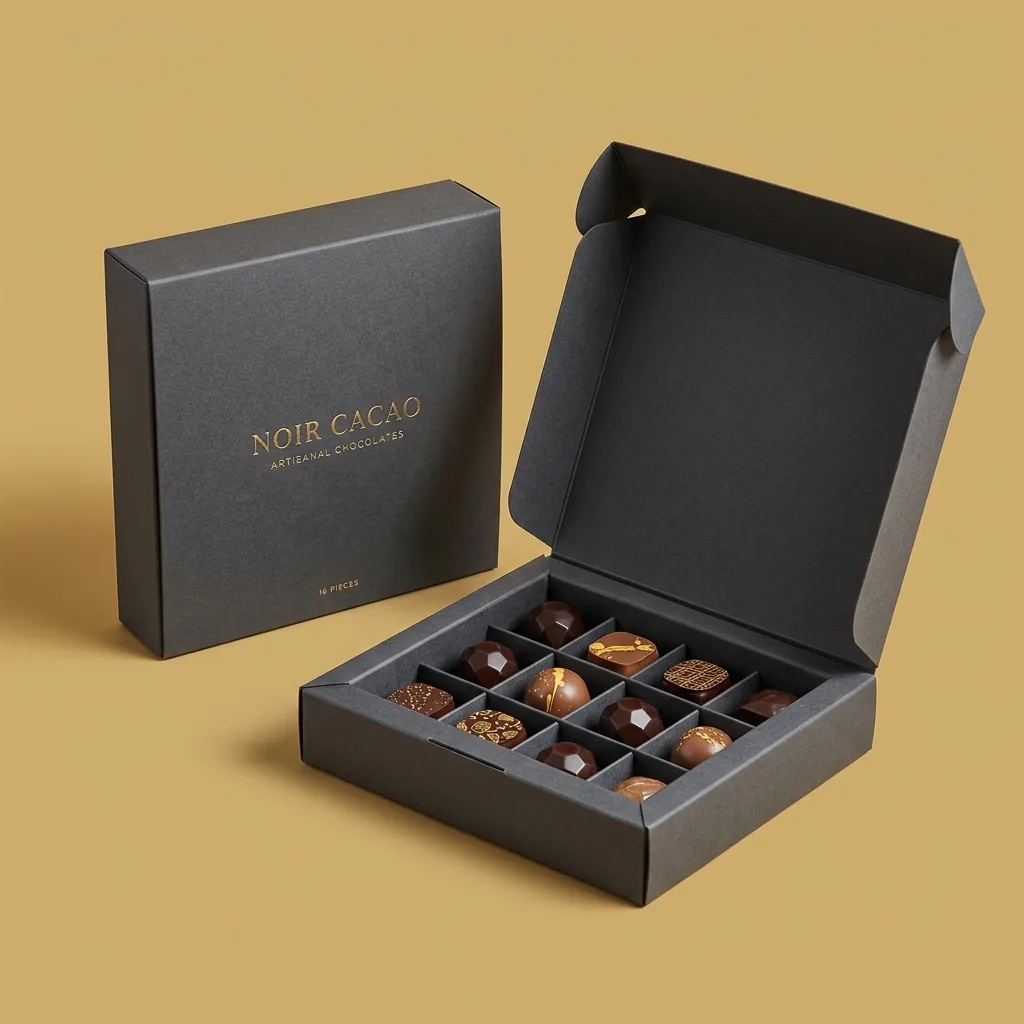
- Chocolate and confectionery makers — rigid gift boxes and folding cartons with foil, embossing, and food-safe internal dividers.
- Meal-kit and subscription food services — mailer boxes with cold-chain-compatible liners and recipe-card compartments.
How to order custom bakery boxes
Five steps from quote to delivery. Every order includes free design support, a free custom dieline, and a digital mockup for approval before anything hits the press.
- Share your specs. Send box dimensions (or a photo of the product), quantity, material preference, and any artwork or logo files. If you're unsure of the size, our design team can advise from a product photo.
- Get a quote and mockup. Within one business day we return a firm quote, a printable dieline, and a 3D digital mockup of your bakery boxes. No die, plate, or setup fees are added.
- Approve the proof. Review the mockup, request color, layout, or dieline changes, and give final approval. Revisions are unlimited before press.
- Production (8–10 business days). Your order runs on offset or digital press, then moves through finishing — lamination, spot UV, foil stamping, embossing, die-cutting, and assembly if needed.
- Free US shipping. Orders ship flat-packed with tracking. Assembled bundles or master-carton packing are available on request at no charge.
Resources & tools
Free tools and trusted references to help you size, spec, and choose the right bakery boxes before you order.
Free tools & guides
- Bakery packaging guide – styles, food-safe materials, and how to choose a box.
- Cake box sizes guide – standard dimensions for single-layer through tiered cakes.
- Food & beverage packaging hub – compare every food-grade box style we make.
- Box Size & Dimensional Weight Calculator – size your box and see the billable weight UPS, FedEx, and USPS charge.
Trusted references
- FDA — Packaging & Food Contact Substances – the federal rules on materials that touch food.
- FDA — Food Labeling & Nutrition – the federal rules for food product labels and nutrition facts.
- USDA — Food Safety & Inspection Service – federal food-safety guidance for meat, poultry, and processed foods.
- How2Recycle – the standardized on-pack recycling label for paperboard and kraft packaging.