Custom Magnetic Closure Boxes
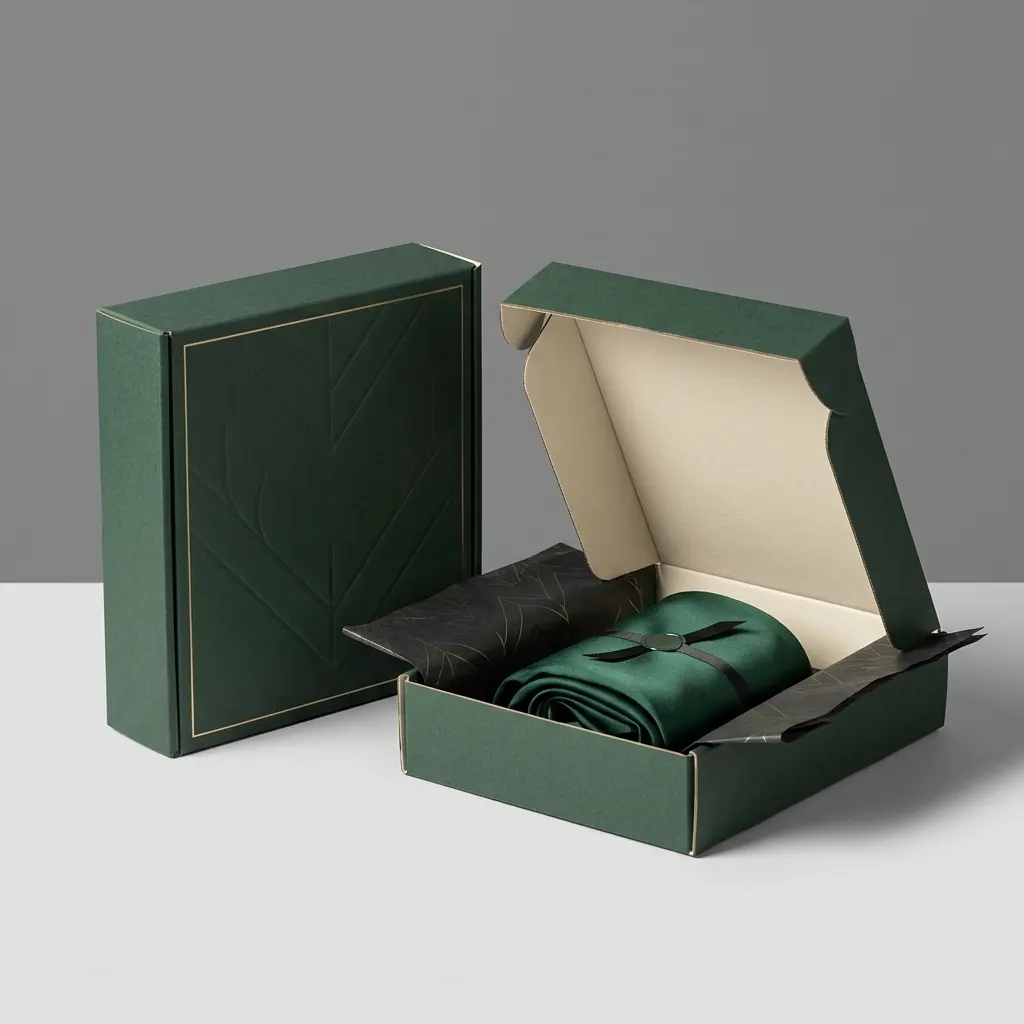
Custom magnetic closure boxes are rigid keepsake boxes built from thick chipboard, wrapped in printed paper, with hidden magnets set into the lid so it snaps shut with a satisfying click. They are the most premium way to present a product without ribbon or tape – the lid folds over, the magnets grab, and the box stays closed on its own.
Because the walls are a solid 1.5–2mm greyboard rather than a folded carton, a magnetic box feels like a gift before it is even opened, which is why brands reach for it when unboxing is part of the experience. It is a dressed-up member of the rigid boxes family, engineered specifically for repeat-open, reusable presentation.
Key takeaways
- Rigid, not folding: thick chipboard wrapped in printed paper, so it holds its shape and protects far better than a folding carton.
- Hidden magnets: two or more magnets are concealed under the wrap in the lid flap and base, giving a clean click-close with no visible hardware.
- Ships two ways: pre-assembled and set up, or as a flat-foldable collapsible rigid box that snaps together on arrival and cuts your freight cost.
- Premium finishing: foil stamping, embossing, spot UV, and soft-touch lamination all read beautifully on the flat rigid surface.
What a magnetic closure box is
The core of every magnetic box is a rigid chipboard shell – typically 1.5mm to 2mm greyboard, sometimes thicker for oversized boxes. That board is cut, scored, and formed into a base, then a printed paper wrap is glued over every visible surface and folded around the edges so no raw board shows.
The most common format is a book-style one-piece box: the base and lid are a single hinged unit, and the lid flap folds down over the front. Inside that flap sit the magnets, matched to steel plates or opposing magnets in the base wall, so the lid pulls itself shut.
Because the structure is solid rather than glued from a single flat blank, these boxes survive shipping, stacking, and years of reuse. Customers rarely throw a magnetic box away – it becomes storage for the product or a keepsake – which keeps your brand in their hands long after the sale.
How the magnets are set and how the box assembles
The magnets are the whole point, so they are engineered in before the wrap goes on. During fabrication, small neodymium magnets are recessed into the chipboard of the lid flap and either paired with a second magnet or a thin steel shim in the base. The paper wrap is then laminated over the top, hiding the hardware completely – from the outside the closure looks seamless, and the only clue is the click.
We tune the pull strength to the box size so a jewelry box snaps gently while a large apparel box holds firmly.
You can receive these boxes two ways. Fully set-up boxes arrive ready to fill, ideal for lower volumes and hand-packing. For larger runs, we can build a flat-foldable collapsible rigid version: the same thick board and magnets, but the box ships knocked-down flat and the magnets snap the walls into a box in one motion.
Collapsible construction dramatically reduces cubic freight and warehouse space while keeping the rigid feel.
Best uses and industries
Anything where presentation drives value is a fit. We build magnetic boxes for luxury gifting, apparel and accessories, electronics and tech, cosmetics and fragrance, fine jewelry, subscription and PR or influencer mailers, corporate gifts, and premium invitations. If your product is going to be photographed being opened, or handed over in person, the magnetic box earns its cost.
- Beauty and fragrance: foiled logos and foam-cradled bottles – pairs naturally with our cosmetic boxes range.
- PR and influencer kits: reusable boxes that survive the mail and look good on camera.
- Corporate and holiday gifting: a step up from any standard gift box when the recipient matters.
Variants of the magnetic style
Within the magnetic family there are several builds. The book-style (one-piece hinged lid) is the default and the most economical. A separate-lid magnetic box uses a detached top with a front magnetic flap for a more theatrical reveal. Double-door or French-opening boxes split the lid into two flaps that meet in the center, each held by a magnet.
Drawer-and-shell hybrids can add a magnetic front, and larger boxes may add a ribbon pull to help lift a snug lid.
Standard magnetic box sizes and specs
| Use case | Interior size (L x W x H) | Chipboard | Magnet count |
|---|---|---|---|
| Jewelry / small gift | 4 x 4 x 1.5 in | 1.5 mm | 2 (N38 neodymium) |
| Beauty / fragrance | 6 x 4 x 2 in | 2 mm | 2 (N38 neodymium) |
| Electronics / tech | 8 x 5 x 2 in | 2 mm | 4 (N38 neodymium) |
| PR / influencer kit | 10 x 8 x 3 in | 2 mm | 4 (N38 neodymium) |
| Apparel gift | 12 x 9 x 3 in | 2.5 mm | 4-6 (N42 neodymium) |
| Luxury / oversized | 14 x 10 x 4 in | 3 mm | 6-8 (N42 neodymium) |
Magnets are typically 5-8 mm neodymium discs, grade N38-N42 (recessed 0.5-1 mm below the surface then wrapped with 120-150 gsm coated art paper). Pull strength scales with lid weight - jewelry boxes use gentle snap, apparel boxes hold firmly. Add 1/4 in per side to product dimensions for wall thickness and insert clearance.
Materials, wraps, and finishes
Structure is chipboard; the personality comes from the wrap. Standard is coated art paper printed full CMYK or matched to a Pantone (PMS) color, then laminated gloss, matte, or soft-touch. For a more tactile luxury feel we offer specialty wraps – linen and textured stocks, leather-touch, and soft-touch films that resist fingerprints.
On top of that, the flat rigid surface is the ideal canvas for foil stamping, blind or registered embossing and debossing, and spot UV. Explore the full menu of stocks and finishes on our packaging materials page. Inside, foam or paperboard inserts are die-cut to cradle the product and stop it rattling, adding to the perceived value.
Sizing and how to measure
Measure your product at its widest length, width, and depth, then add clearance for the wall thickness and any insert – a magnetic box needs a few extra millimeters per side because the walls themselves are thick. Give us the product dimensions and, ideally, the insert style you want, and we build the interior cavity to fit snugly so nothing shifts.
Every order includes a free custom dieline and a free 3D mockup, plus a digital proof, so you approve the exact fit and lid overhang before anything is produced. If you want a primer on measuring, our rigid boxes guide walks through the fundamentals.
Pricing, minimums, and turnaround
Magnetic boxes are the most involved rigid build, so they cost more per unit than a folding carton – but there are no die, plate, or setup fees, ever, so your custom shape and print add nothing to the tooling bill. Our minimum is 100 boxes, and per-unit pricing drops as quantity rises.
Free design support, the dieline, the 3D mockup, and the proof are all included, and standard turnaround is 8–10 business days after proof approval, with free US shipping. Ready to price your box? Request a free quote with your dimensions and finishes.
What is a magnetic closure box?
A magnetic closure box is a rigid keepsake box built from 1.5–3 mm chipboard, wrapped in printed paper, with hidden neodymium magnets (typically N38–N42 grade, 5–8 mm discs, recessed 0.5–1 mm below the surface before the wrap goes over) set into the lid flap and paired with matching magnets or steel plates in the base — so the lid pulls itself shut with a satisfying click and no visible hardware.
Because the walls are solid rigid greyboard rather than folded paperboard, a magnetic closure box protects and presents at a fundamentally different tier from folding cartons (see tuck end boxes) and even from most non-magnetic rigid setups (see rigid boxes) — it is the premium unboxing format, engineered specifically for repeat-open, reusable, keepsake-tier presentation.
Magnetic closure packaging has three unusual properties that separate it from every other retail box format: the hidden neodymium magnets deliver a self-closing click with no ribbon, tape, tuck, or friction-fit engagement — the lid pulls itself shut on its own, which is a tactile signal shoppers immediately register as premium, customers rarely throw a magnetic closure box away because the rigid construction plus the click closure make it useful for product storage or keepsake display — brand impressions extend months or years past the initial unboxing, and collapsible flat-foldable rigid construction cuts cubic freight and warehouse space by 60–80% versus pre-assembled rigid while keeping the exact same chipboard thickness, magnets, and every finish option — a construction option unique to magnetic-closure rigid.
How much do custom magnetic closure boxes cost?
Magnetic closure box pricing scales by inner dimensions, chipboard caliper, magnet count and grade, wrap, finishes, and quantity, with the per-unit price dropping meaningfully as volume rises. Ballpark ranges by size and application (before finishes and volume discounts):
- Jewelry / small gift (4 × 4 × 1.5 in, 1.5 mm chipboard, 2 N38 magnets) — $2.20 to $4.80 per box in 500–2,000-unit runs. Entry-tier for the format; the smallest and most economical magnetic-closure build.
- Beauty / fragrance (6 × 4 × 2 in, 2 mm chipboard, 2 N38 magnets) — $3.20 to $6.50 per box. The workhorse magnetic-closure size for premium skincare, fragrance, and cosmetic launches.
- Electronics / tech (8 × 5 × 2 in, 2 mm chipboard, 4 N38 magnets) — $4.20 to $8.50 per box. Consumer electronics unboxing, mid-tier tech accessories.
- PR / influencer kit (10 × 8 × 3 in, 2 mm chipboard, 4 N38 magnets) — $5.50 to $10.50 per box. Multi-item mailers designed for photograph-worthy unboxing on social media.
- Apparel gift (12 × 9 × 3 in, 2.5 mm chipboard, 4–6 N42 magnets) — $6.80 to $12.50 per box. Fashion gifting where the box is part of the retail hand-off.
- Luxury / oversized (14 × 10 × 4 in, 3 mm chipboard, 6–8 N42 magnets) — $8.50 to $16.00 per box. Flagship product launches, corporate gifting, luxury goods presentation.
Insert adders unique to magnetic-closure rigid (per unit): die-cut EVA foam insert $0.60–$2.50 (luxury soft grip), die-cut paperboard insert $0.30–$0.80 (recyclable minimalist), molded paper pulp insert $0.40–$1.20 (eco-positioned).
Finish adders: full-wrap Pantone printing $0 (included), soft-touch or matte lamination $0.30–$0.80, foil stamping $0.40–$1.20 per stamped area, embossing/debossing $0.50–$1.50, spot UV $0.30–$0.80, linen or leather-touch specialty wrap $0.60–$1.80.
Flat-foldable collapsible construction adds $0.40–$0.90 per unit but saves 60–80% on freight and warehouse cost. Request a free quote with dimensions, chipboard caliper preference, variant, and quantity.
How long do custom magnetic closure boxes take to make?
Standard magnetic closure box production is 8–12 business days after proof approval (2 extra days versus folding cartons because of the rigid-construction wrap-and-assembly step), with rush lanes in 6–8 days for launch dates. Add 1–2 days for French-opening double-door or drawer-magnetic-hybrid variants.
Add 2–4 days for premium wrap options (linen, leather-touch, layered finishes). Add 3–5 days for foam-cradle insert engineering on multi-item sampler and PR kit boxes.
Launch back-plans unique to magnetic closure: 60–75 day back-plan for a DTC premium-product launch (design + magnet-pull-strength engineering + wrap proof + rigid production + fulfillment inbound). 90–120 day back-plan for a luxury or department-store retail launch (Sephora premium, Ulta luxury, Neiman Marcus, Nordstrom, Bloomingdale's) — buyer packaging vetting typically requires physical mockup samples 45 days ahead of shelf date. 45–60 day back-plan for a PR/influencer kit send where the campaign date drives the packaging timeline; PR kits often require multiple production rounds as recipient lists and gift-set contents finalize.
Corporate gifting programs typically back-plan 90–120 days ahead of the gifting occasion.
Book-style vs separate-lid vs French-opening vs drawer-magnetic-hybrid
Four common magnetic variants map to unboxing theatre and product visibility:
| Variant | Unboxing theatre | Magnet count | Assembly | Best for | Cost per box |
|---|---|---|---|---|---|
| Book-style one-piece hinged | Front flap folds down over lid | 2 (N38 base) | Pre-assembled or collapsible | Default; every category | $2.20–$16.00 |
| Separate lid magnetic | Recipient lifts lid off entirely | 2–4 (front flap magnetic) | Pre-assembled | Premium unboxing where lift-off matters | +15–25% over book-style |
| French-opening / double-door | Two lid flaps meet at center | 4 (2 per flap) | Pre-assembled | Dramatic centerline reveal (jewelry, fragrance flagship) | +25–40% over book-style |
| Drawer-and-shell + front magnet | Drawer slides out of shell | 2 (front flap) | Pre-assembled | Tech, multi-item PR kits | +20–35% over book-style |
Unboxing-theatre row unique to magnetic-closure structural pillar: the format is chosen for the specific tactile-and-visual moment the brand wants the recipient to have. Book-style is the workhorse; separate-lid is chosen when a hands-off lift-away moment matters (fragrance flagship, luxury skincare); French-opening is chosen for dramatic centerline reveals (jewelry, engagement rings, fragrance launches); drawer-and-shell with front magnet is chosen for tech unboxing where the drawer-slide-out is the reveal moment.
The variant decision cascades into magnet count, chipboard caliper, and per-unit cost.
Are custom magnetic closure boxes worth it for a premium retail brand or PR/influencer program?
For a premium retail brand, luxury launch, corporate gifting program, or PR/influencer send, magnetic closure boxes deliver an unboxing experience that no other packaging format can match, and the format has become the standard for categories where the box is part of the product hand-off.
The typical buyers of custom magnetic closure boxes at the 100–5,000 box range include: fine jewelry brands with engagement rings and heirloom pieces (see jewelry boxes); luxury fragrance brands launching flagship EDPs (see perfume boxes); premium cosmetic and skincare brands with signature palettes (see cosmetic boxes); high-end confectionery and chocolate brands with holiday gift assortments (see chocolate boxes); electronics and tech brands with flagship device launches; boutique subscription-box brands anchoring reveal-kit moments (see subscription boxes); corporate gifting programs (holiday, C-suite gifts, milestone-recognition); PR/influencer marketing agencies running photograph-worthy unboxing campaigns; and any brand where the gift box is the retail moment.
Three reasons the magnetic closure format is worth the premium over other rigid or folding-carton alternatives: (1) the hidden-magnet self-closing click is a tactile signal shoppers register as premium in under 2 seconds — no other closure format (ribbon, tape, tuck, friction-fit) delivers the same immediate premium-tier read, which matters for products where the box is the retail moment. (2) Reusability drives brand impressions past the initial unboxing — customers rarely throw a magnetic-closure box away because the rigid construction plus click closure make it useful for jewelry storage, photo storage, small keepsakes, or repeat-gift boxes; the brand stays visible for months or years. (3) Collapsible flat-foldable rigid construction is a magnetic-closure-only capability that cuts cubic freight and warehouse space by 60–80% versus pre-assembled rigid while keeping every luxury property intact — brands running 5,000+ boxes save meaningfully without sacrificing tier.
Are magnetic closure boxes recyclable?
The chipboard shell and paper wrap of a magnetic closure box are broadly curbside-recyclable as paper, but the format has a sustainability nuance unique to the category: the embedded neodymium magnets are not paper-stream recyclable and must be separated for the paperboard to enter the recycling stream cleanly.
Most municipal paper recyclers accept magnetic-closure boxes with magnets embedded because the magnets are separated at the paper-mill screening stage (magnets are ferrous-attractable and separate readily), but eco-conscious brands increasingly design for consumer-side separation with a note on the box: "remove magnets before recycling — discard as e-waste or metal scrap." Neodymium is technically recyclable as a rare-earth material at specialized e-waste facilities but rarely captured in municipal streams.
Coating and wrap-by-wrap: uncoated or matte-varnish paper wraps have the highest curbside acceptance; soft-touch, gloss, and specialty wraps (linen, leather-touch films) reduce curbside acceptance because the plastic laminate contaminates paper recycling.
FSC-certified paper wrap is available on all magnetic-closure standard runs and is the eco-positioned luxury-brand baseline. Foil stamping is generally accepted at typical retail coverage. For the most-recyclable magnetic-closure build: pair FSC chipboard + FSC uncoated or matte-varnish paper wrap + paperboard or molded pulp insert + skip laminate + magnets designed for easy consumer-side removal.
The reusable-keepsake angle also reduces disposal load — magnetic-closure boxes that customers keep for storage never enter the recycling stream at all. FTC Green Guides (16 CFR Part 260) govern "recyclable" claim wording; qualified claims ("recyclable where facilities exist and after magnet removal") are the safe path for magnetic-closure boxes.
Frequently asked questions
Are magnetic closure boxes rigid boxes?
Yes. A magnetic closure box is a sub-style of the rigid box – a thick chipboard shell wrapped in printed paper. The only structural difference is the hidden magnets built into the lid so it snaps shut. It protects and presents far better than a folded paperboard carton.
Where are the magnets and will they show?
The magnets are recessed into the chipboard of the lid flap and base, then covered by the paper wrap. They are completely hidden – from the outside you only see a clean lid that clicks closed. We size the magnet strength to the box so it holds securely without being hard to open.
Can magnetic boxes ship flat to save on freight?
Yes. We can build a flat-foldable collapsible rigid version that ships knocked-down flat and snaps into shape using the magnets. It keeps the thick rigid feel while cutting cubic freight and storage costs. We can also supply fully set-up boxes if you prefer to hand-pack.
What finishes can I add?
The flat rigid surface is ideal for foil stamping, embossing and debossing, spot UV, and soft-touch, matte, or gloss lamination. Wraps can be printed full CMYK or matched to a Pantone color, and specialty linen or leather-touch stocks are available for extra tactile luxury.
What is the minimum order and turnaround?
The minimum is 100 boxes, with lower per-unit pricing at higher quantities. There are no die, plate, or setup fees. Standard turnaround is 8 to 10 business days after you approve the digital proof, and US shipping is free.
Can you add an insert to hold my product?
Yes. We die-cut foam or paperboard inserts to cradle your product so it does not shift inside the box. Send us your product dimensions and we design the cavity into your free dieline and 3D mockup before production.
What is a magnetic closure box, and how is it different from other rigid boxes?
A magnetic closure box is a rigid keepsake box built from 1.5–3 mm chipboard wrapped in printed paper, with hidden neodymium magnets (typically N38–N42 grade, 5–8 mm discs, recessed under the wrap) set into the lid and paired with matching magnets or steel plates in the base — the lid pulls itself shut with a satisfying click and no visible hardware.
Unlike other rigid boxes (which typically use ribbon, tuck, or friction closure), the magnetic closure delivers a self-closing tactile moment that shoppers immediately register as premium. It also uniquely supports collapsible flat-foldable construction that cuts freight by 60–80% while keeping every luxury property intact.
How much do custom magnetic closure boxes cost by size?
Ranges by application: jewelry / small gift (4×4×1.5 in, 1.5 mm chipboard, 2 N38 magnets) $2.20–$4.80, beauty / fragrance (6×4×2 in, 2 mm, 2 N38) $3.20–$6.50, electronics / tech (8×5×2 in, 2 mm, 4 N38) $4.20–$8.50, PR / influencer kit (10×8×3 in, 2 mm, 4 N38) $5.50–$10.50, apparel gift (12×9×3 in, 2.5 mm, 4–6 N42) $6.80–$12.50, luxury / oversized (14×10×4 in, 3 mm, 6–8 N42) $8.50–$16.00.
Insert adders: EVA foam $0.60–$2.50, paperboard $0.30–$0.80, molded pulp $0.40–$1.20. Collapsible construction adds $0.40–$0.90 per unit but saves 60–80% on freight and warehouse.
Which magnetic closure variant do I need — book-style, separate-lid, French-opening, or drawer-magnetic-hybrid?
Match variant to unboxing theatre and product visibility. Book-style one-piece hinged lid (default, most economical) suits every category. Separate-lid magnetic (recipient lifts lid off entirely) suits premium unboxing where the hands-off lift-away moment matters — adds 15–25% over book-style.
French-opening / double-door (two lid flaps meet at center, each with its own magnet) suits dramatic centerline reveals like jewelry, engagement rings, and fragrance flagship — adds 25–40%. Drawer-and-shell with front magnet (drawer slides out) suits tech unboxing and multi-item PR kits — adds 20–35%.
How do I spec a custom magnetic closure box step by step?
Six steps: (1) Measure product inner dimensions and add 1/4 in per side for wall thickness plus insert clearance. (2) Pick chipboard caliper and magnet grade by size and lid weight (1.5–3 mm chipboard scaling with size; N38 2–4 magnets for small through medium, N42 4–8 magnets for apparel through luxury oversized). (3) Pick the variant by unboxing theatre (book-style / separate-lid / French-opening / drawer-magnetic-hybrid). (4) Choose collapsible flat-foldable vs pre-assembled shipment (collapsible cuts freight and warehouse 60–80% for volume brands). (5) Spec the paper wrap and finishes (coated art paper + Pantone + soft-touch/matte/foil/emboss/spot UV; specialty linen or leather-touch wraps for luxury). (6) Design foam or paperboard inserts to cradle the product and control the reveal.
Are custom magnetic closure boxes worth it for a premium retail brand or PR/influencer program?
Yes, and the format has become standard for categories where the box is part of the product hand-off. Three reasons the premium is worth it: (1) The hidden-magnet self-closing click is a tactile signal shoppers register as premium in under 2 seconds — no other closure format (ribbon, tape, tuck, friction-fit) delivers the same immediate premium-tier read. (2) Reusability drives brand impressions past the initial unboxing — customers rarely throw magnetic-closure boxes away because rigid construction plus click closure make them useful for jewelry storage, photo storage, keepsakes, or repeat-gift boxes. (3) Collapsible flat-foldable rigid construction is a magnetic-closure-only capability cutting cubic freight and warehouse space by 60–80% versus pre-assembled rigid while keeping every luxury property intact.
Fits jewelry, fragrance, cosmetic, chocolate, electronics, subscription reveal-kits, corporate gifting, and PR/influencer sends.
Are magnetic closure boxes recyclable?
The chipboard shell and paper wrap are broadly curbside-recyclable as paper, but the embedded neodymium magnets are not paper-stream recyclable and must be separated for the paperboard to enter the recycling stream cleanly. Most municipal paper recyclers accept magnetic-closure boxes because magnets are separated at the paper-mill screening stage (ferrous-attractable), but eco-conscious brands design for consumer-side separation with a "remove magnets before recycling" note.
Neodymium is recyclable at specialized e-waste facilities but rarely captured in municipal streams. Most-recyclable build: FSC chipboard + FSC uncoated or matte-varnish paper wrap + paperboard or molded pulp insert + skip laminate + magnets designed for easy consumer-side removal.
Reusable-keepsake angle also reduces disposal load. FTC Green Guides (16 CFR Part 260) govern 'recyclable' claim wording; qualified claims ('recyclable where facilities exist and after magnet removal') are the safe path.
Who orders custom magnetic closure boxes?
Custom-structured boxes are ordered by brands and operators who need a specific box shape or format built to their product — not a stock size.
- E-commerce and DTC brands — mailer boxes and custom shippers sized to the product so freight is billed on actual volume, not dead air.
- Product designers and startups — die-cut prototypes with free custom dielines so a launch box can be tested before it goes to press at volume.
- Premium and gift brands — rigid, magnetic-closure, and pillow-box formats that carry a giftable feel with foil, embossing, and inserts.
- Retail merchandisers — counter-display and window-box structures built to sit on a shelf and pull the shopper's eye at eye level.
- Print buyers and packaging engineers — any material and finish with no die, plate, or setup fees so a spec sheet becomes a firm quote in one business day.
How to order custom magnetic closure boxes
Five steps from quote to delivery. Every order includes free design support, a free custom dieline, and a digital mockup for approval before anything hits the press.
- Share your specs. Send box dimensions (or a photo of the product), quantity, material preference, and any artwork or logo files. If you're unsure of the size, our design team can advise from a product photo.
- Get a quote and mockup. Within one business day we return a firm quote, a printable dieline, and a 3D digital mockup of your magnetic closure boxes. No die, plate, or setup fees are added.
- Approve the proof. Review the mockup, request color, layout, or dieline changes, and give final approval. Revisions are unlimited before press.
- Production (8–10 business days). Your order runs on offset or digital press, then moves through finishing — lamination, spot UV, foil stamping, embossing, die-cutting, and assembly if needed.
- Free US shipping. Orders ship flat-packed with tracking. Assembled bundles or master-carton packing are available on request at no charge.
Resources & tools
Free tools and trusted references to help you size, spec, and choose the right magnetic closure boxes before you order.
Free tools & guides
- Rigid boxes – premium board for luxury beauty and gift unboxing.
- Luxury packaging – foil, soft-touch, and rigid finishes that elevate a brand.
- Custom boxes hub – every box style we print, in one place.
Trusted references
- How2Recycle – the standardized on-pack recycling label for paperboard and kraft packaging.
- Forest Stewardship Council (FSC) – certification for responsibly sourced paper and board.
- FEFCO — International Fibreboard Case Code – the standard code (0201, 0427, etc.) that defines every box style.
- ISTA — International Safe Transit Association – the industry-standard packaging performance test protocols.
- EPA — Sustainable Materials Management – federal guidance on reducing packaging waste at end of life.