Custom Mailer Boxes
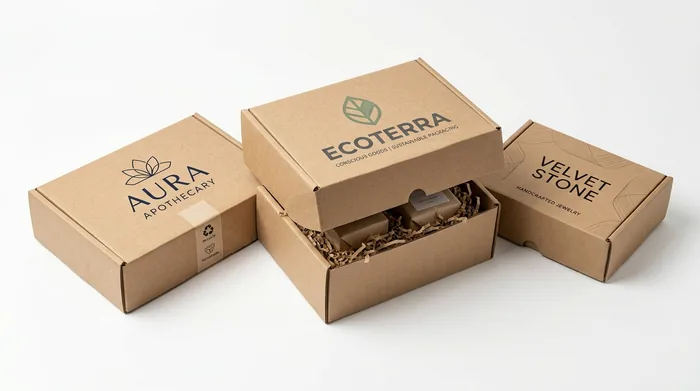
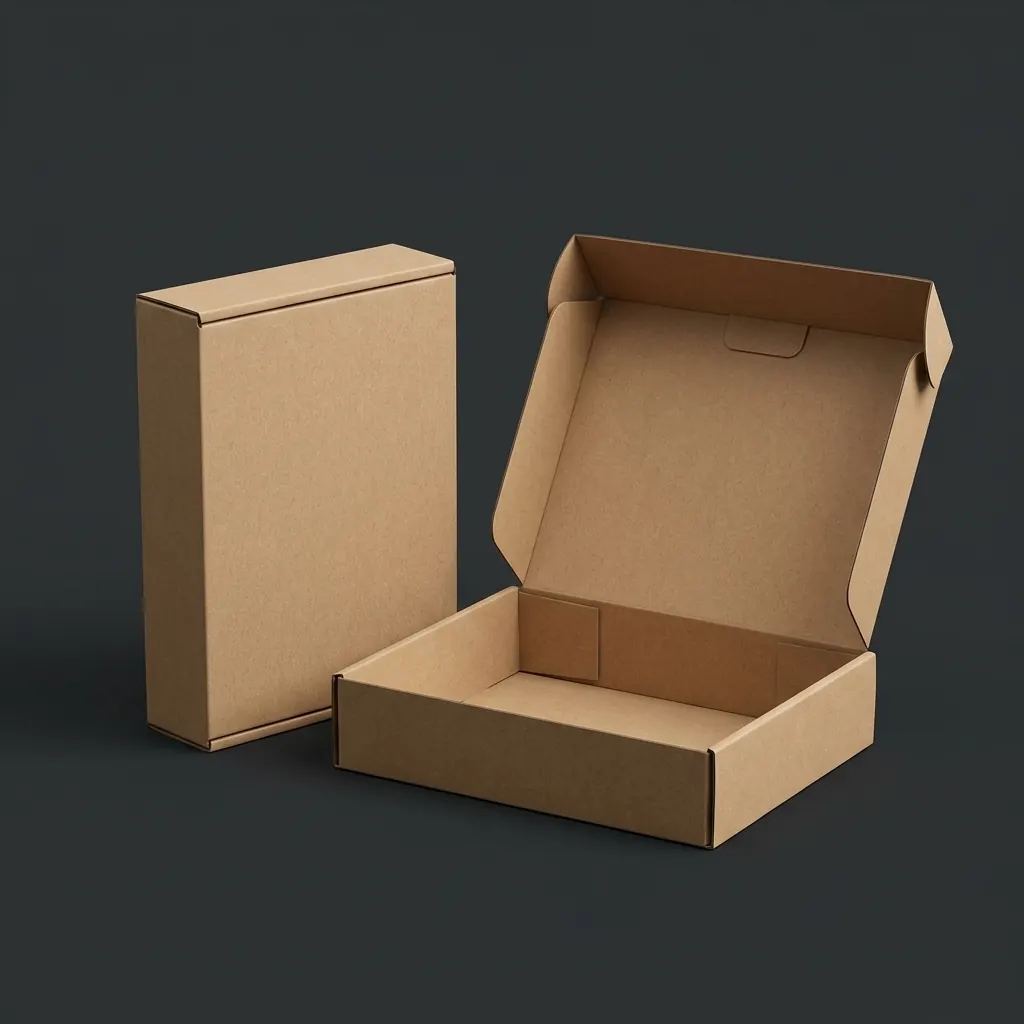
Custom mailer boxes are one-piece corrugated shipping cartons. They fold flat and self-lock without tape. So e-commerce brands get a strong box and a branded open in one.
Packaging Vista prints mailers inside and out on E-flute or B-flute corrugated. Full CMYK and Pantone-matched color. Finishes include matte and gloss film, soft-touch, foil stamping, and spot UV.
The minimum is 100 boxes. No die, plate, or setup fees. You get free design, a dieline, and a 3D mockup. Orders ship in 8 to 10 business days with free US delivery.
Key takeaways
- Built for shipping: one-piece corrugated mailers self-lock without tape and arrive flat-packed to save on freight and storage.
- Every style: roll end tuck top (RETT), roll end front tuck (REFT), tear-strip, full-flap literature, and double-wall corrugated mailers.
- Low barrier: 100-box minimum, no die, plate, or setup fees, free dieline & 3D mockup, 8-10 day turnaround, free US shipping.
- Go deeper: compare corrugated boxes, subscription boxes, and eco-friendly boxes, then request a free quote.
What is a mailer box?
A mailer box is a one-piece corrugated shipping carton that self-locks without tape, ships flat-packed to save freight, and prints inside and out for a branded unboxing. Mailers are the standard packaging format for direct-to-consumer e-commerce, subscription boxes, apparel, beauty, and hero-brand product launches — anywhere the box arriving at a customer's door is part of the brand story.
The wrap-around structure is what makes a mailer different from a standard shipping carton. Side walls fold over to make double-thick edges (extra crush resistance), a top or front tuck locks the closure, and the whole box collapses flat when shipped to you but pops up in seconds at pack-out.
This combination — sturdy in transit, flat in storage, printable inside and out — is why mailer boxes replaced plain shipper cartons as the DTC standard.
Mailer box styles
The shape sets the closure, the strength, and the open feel. These are the custom mailer box styles we make most often:
Roll end tuck top (RETT) mailer boxes
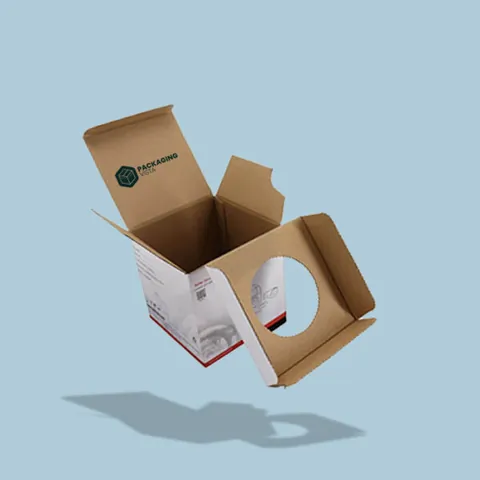
The classic mailer. The side walls roll over to make double-thick edges. A top lid flap tucks into the front to lock the box without glue or tape. RETT mailers ship flat and pop up in seconds. They are the go-to for branded e-commerce shipping.
Roll end front tuck (REFT) mailer boxes
A close cousin of the RETT. Front flaps lock into the body for a tighter closure. Dust flaps keep dirt out. REFT mailers are a strong fit for heavier or more fragile items that need extra hold in transit.
Mailer boxes with tear strip
A perforated tear strip plus a glue seal lets buyers open the box cleanly. On peel-and-seal builds, they can reseal it for returns. Tear-strip mailers suit subscription and DTC brands that want a tamper-clear, easy open.
Full-flap and literature mailer boxes
Full-flap (literature) mailers are flat, book-style boxes. They ship printed goods, apparel, and slim items. Add a tear strip or inserts to keep contents centered and scuff-free.
Corrugated and double-wall mailer boxes
For heavier or fragile goods, a B-flute or double-wall corrugated mailer adds crush strength. It also holds up under stacking. The outside stays smooth and printable.
Mailer box materials
Most mailers are printed on corrugated stock chosen for your product weight:
- E-flute corrugated - thin and smooth. The top print surface for crisp full-color art on lighter items.
- B-flute corrugated - thicker with more crush strength. Great for heavy items or boxes that ship on their own.
- White vs. kraft - white liner for bright, photo-quality print. Natural kraft for a warm, recyclable look. See our kraft boxes for the unbleached pick.
Custom mailer boxes with your logo
We print mailers to your exact art in full CMYK and Pantone-matched color, inside and out. A free dieline and 3D mockup let you approve print and fit before we print.
Inside print is a top way to add a brand message or pattern that greets the buyer at the open. No die, plate, or setup fees. Your art, your size, from the first 100 boxes.
Mailer boxes by use
Mailers fit almost any product that ships direct to the customer:
| Use | Recommended mailer |
|---|---|
| Subscription boxes | Tear-strip RETT mailers with inside print - see subscription boxes. |
| E-commerce & retail | RETT or REFT mailers sized to the product - see retail boxes. |
| Apparel & soft goods | Full-flap literature mailers - pair with branded product boxes. |
| Eco-conscious brands | Kraft, recyclable corrugated mailers - see eco-friendly boxes. |
| Heavy or fragile items | B-flute or double-wall corrugated boxes with inserts. |
| Unusual shapes | Custom die-cut boxes built to your dieline. |
Mailer box sizes and dimensions
Mailer boxes are die-cut. So any size fits your product without a tooling fee. The right size guards the product, cuts void fill, and keeps dim weight under carrier billing tiers.
Small mailer boxes
Small mailers (about 6x4x2 to 8x6x3 inches) suit apparel add-ons, cosmetics, small tech, and single-item ecommerce. They fit inside USPS Priority regional zones to keep shipping cheap.
Medium and subscription-box sizes
Medium mailers (9x6x3 to 12x9x4 inches) are the workhorse of subscription boxes, DTC brands, and multi-piece orders. The range balances inside volume with dim-weight cost. It prints well for unboxing videos.
Large mailer boxes
Large mailers (14x10x4 inches and up) hold apparel sets, kits, or multi-SKU orders. At this size, double-wall corrugated (E+B flute) is worth the small upcharge. It stops crush through the carrier network.
Use our box-size calculator to check dim weight before you lock a size. Or see the shipping guide for how mailer sizes map to USPS, UPS, and FedEx pricing tiers.
How much do custom mailer boxes cost?
Custom mailer boxes typically run $0.40 to $1.50 per box at a 500-unit order, and drop as volume rises. Small E-flute mailers for cosmetics and small tech sit at the low end; large B-flute or double-wall mailers for apparel and multi-SKU orders sit at the top.
Adding inside print costs no extra on the same press run, so the branded-open lift is essentially free. There are no die, plate, or setup fees, so a first-run 100-box order carries the same tooling cost as a 5,000-box run.
What drives mailer-box price:
- Quantity — per-box cost drops sharply from 100 to 500 to 1,000+.
- Size — larger mailers use more board and take more press sheet.
- Flute — E-flute is the cheapest and prints the sharpest; B-flute adds crush strength; double-wall (E+B) is the strongest and costs the most.
- Print coverage — outside-only vs inside-and-out is the same on-press cost; ink coverage across the full surface (heavy floods) can add a bit vs targeted logo prints.
- Finishes — each stacked finish (soft-touch, foil, spot UV, tear-strip) adds a small off-press step.
- Method — digital wins under ~500 units; offset wins at 1,000+.
See our full mailer box guide for a deeper walkthrough, or send your specs on the quote form for exact per-box pricing.
How long do custom mailer boxes take to make?
Standard production is 8 to 10 business days after proof approval. Rush production runs in 4 to 6 business days on most orders at no additional charge, including tear-strip builds and single-finish add-ons. Stacked finishes (soft-touch + foil + spot UV) can add 1 to 2 days.
Ground freight from Cheshire, Connecticut adds 2 to 5 days to reach the West Coast — expect a full quote-to-dock timeline of about 2 to 3 weeks for a first order with artwork ready.
Pricing, minimums, and turnaround
Mailer price depends on box size, flute and stock, print coverage (one side vs. inside and out), finishes, and quantity. Our full mailer box guide for e-commerce walks through each choice. The per-box cost drops as volume grows.
There are no die, plate, or setup fees. The minimum is 100 boxes. Standard production runs 8 to 10 business days after proof approval, with rush on request. Every order includes a free dieline, 3D mockup, and free US shipping.
Weighing US vs. overseas? See why brands pick a US mailer box maker. Request a free quote with your size and quantity for exact pricing.
Mailer box vs shipper carton vs poly mailer: total-landed-cost trade-offs
Three formats dominate direct-to-consumer shipping and each solves a different problem. A printed mailer box (usually an E-flute corrugated wrap-around style with a tuck-front) is the choice when the unboxing is part of the brand story: apparel, beauty, subscription, gift, and hero DTC products.
A plain shipper carton (a standard RSC or RETT shipper) is the choice for utility shipping when the product itself sells the brand: replacement parts, high-frequency reorders, industrial. A poly mailer (a plastic film envelope) is the cheapest per unit, ships flat, and is ideal for soft goods (apparel, textiles, non-fragile accessories) that do not need burst strength.
Total-landed-cost tells you which format wins for a specific SKU. Mailer boxes cost $0.40-$1.50 per unit at typical DTC volumes and add 40-100 grams to shipping weight. Shipper cartons run $0.30-$0.80 per unit at similar weights. Poly mailers cost $0.08-$0.25 per unit and add almost no shipping weight, so freight savings amortize the format difference on high-volume soft-goods brands.
For fragile or hero-brand products, the unboxing lift usually justifies the mailer-box premium.
DTC unboxing: photo shots, tissue paper, and social share moments
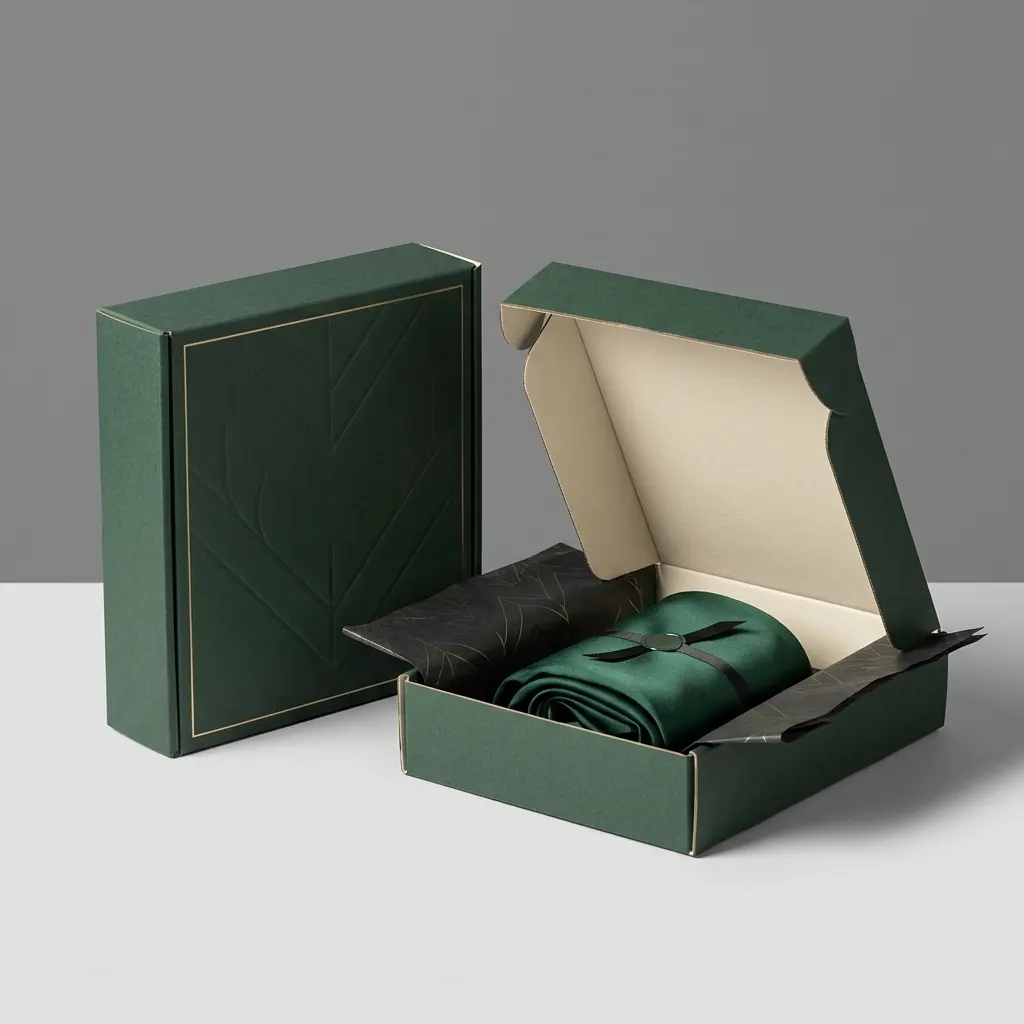
A DTC mailer box has to do more than get the product there; it has to look right on camera. Print the inside of the lid because that is the first thing a shopper sees when they open the box (a brand color, a thank-you note, or a bold graphic). Add a tissue paper or crinkle-paper inner layer that looks intentional in an unboxing video.
Land the product with a small branded card, a QR code to a “how to use” video, or a sample of a related SKU that turns a first purchase into a second.
Social sharing is where the unboxing pays back the format premium. Shoppers who record an unboxing tag the brand in the video, driving discovery at zero paid-media cost. Design for the vertical video frame that Instagram and TikTok use: the box should look complete on camera without the shopper having to reposition it.
A hero print element that reads at any angle (a monogram, a repeating pattern, or a big centered logo) photographs better than fine detail that a phone camera would flatten.
Are custom mailer boxes worth it for a small business?
Yes, for most product-based small businesses that ship direct to consumer, because the mailer carries the unboxing moment that drives repeat purchase and social share. At a 100-box minimum with no plate or setup fees, custom mailers are affordable at the smallest scale — many first-time customers order 100 or 250 mailers for a launch SKU and reorder as sell-through builds.
The cheaper alternatives are plain corrugated plain cardboard boxes cut to your size with a printed sticker (custom fit, no exterior print), or a poly mailer for soft goods that do not need burst strength. Neither carries the same shelf or unboxing weight, and neither reduces in-transit damage the way a snug custom mailer does (typically 15–30% fewer damages vs a loose plain shipper).
Are mailer boxes recyclable?
Yes. Corrugated is one of the most recycled materials in the US — the American Forest & Paper Association reports paper-based packaging recovery rates above 90%, and mailer boxes are curbside-recyclable in nearly every municipal program. Kraft mailers are the simplest to recycle because there is no bleach or heavy coating.
White-lined mailers are also recyclable when the coating is aqueous or soft-touch. Heavy laminates, foil stamping, and plastic pull-tabs are mixed materials that reduce recyclability — some programs require them pulled. For a fully recyclable mailer, we recommend E-flute or B-flute kraft, soy or water-based inks, aqueous coating instead of laminate, and paper tape or a peel-and-reseal glue strip instead of plastic.
See our eco-friendly boxes and kraft boxes ranges.
Frequently Asked Questions
What style of mailer box do you make, and is it sturdy enough for shipping?
We make roll end tuck top (RETT) and roll end front tuck (REFT) mailers. The side walls fold over into double-thick edges. A front flap tucks in to lock the box without tape. That self-locking corrugated build holds up well in transit and guards products through the mail stream.
Can you print on the inside of the mailer box, not just the outside?
Yes. Inside print is one of the top mailer picks for a branded open. We can run full-color art or a brand message on the inside panels. We will show both the outside and inside in your free 3D mockup before we print.
What material and flute do you recommend for e-commerce mailers?
Most e-commerce mailers are printed on E-flute or B-flute corrugated. E-flute is thin and smooth. It suits crisp graphics on lighter items. B-flute and double-wall add crush strength for heavy or fragile goods. We will suggest a flute based on your product weight and whether the box ships on its own.
Can I add a tear strip or peel-and-seal closure?
Yes. We can add a perforated tear strip for a clean open. A peel-and-seal glue strip lets buyers reseal the box for returns. Both are popular on subscription and DTC mailers. They are built into your dieline before we print.
How much do custom mailer boxes cost?
Cost depends on box size, flute and stock, print coverage (outside only vs. inside and out), finishes, and quantity. It falls as volume grows. Every job is custom, so we quote per project, not a flat price. There are never die, plate, or setup fees. The minimum is just 100 boxes. Send your size and quantity for an exact, no-strings quote.
What sizes and dimensions can I get for a mailer box?
Any size. Mailers are made to your product size (length x width x depth). Not sure? Send a sample or product specs. We will size the box and supply a free dieline and 3D mockup to lock in the fit before we print.
What is the lead time and minimum order on mailer boxes?
The minimum is 100 mailer boxes with no die, plate, or setup fees. So it is easy to launch a custom size and design. Plan for the standard 8 to 10 business-day turnaround after proof approval. Rush is on the table if your launch date is tight.
What is the difference between a mailer box and a shipper carton?
A mailer box is a self-contained corrugated wrap-around box with a printed exterior, made for direct customer delivery where the box IS the product presentation. A shipper carton is a standard corrugated shipping box (RSC or RETT) built for utility, usually with plain kraft or single-color print. Both ship product, but the mailer box carries the brand experience while the shipper does not.
How much does a printed mailer box reduce damages vs a plain shipper?
Damages typically drop 15-30 percent when moving from a loose product in a plain shipper to a sized mailer box that holds the product snug. The mailer's tighter fit reduces in-transit movement, which is the biggest cause of dent and abrasion damage. On fragile SKUs the improvement can be larger; on rugged utility SKUs the difference is smaller because damage was not the primary risk to begin with.
Can you add a return-shipping tear-strip or double-adhesive strip to a mailer?
Yes. A pre-applied tear-strip lets the shopper open the box in one clean motion; a second adhesive strip inside lets them reseal the box for a return without needing tape. This is common on apparel, footwear, and any category with a high return rate. The tear-and-reseal build adds a few cents per box but reduces the friction of a return and improves the reverse-logistics experience.
What is a mailer box?
A mailer box is a one-piece corrugated shipping carton that self-locks without tape, ships flat-packed to save freight, and prints inside and out for a branded unboxing. The wrap-around structure with double-thick side walls is what makes a mailer different from a standard shipping carton — sturdy in transit, flat in storage, printable inside and out.
How are custom mailer boxes made, step by step?
Six steps: (1) send product dimensions, mailer style (RETT/REFT/tear-strip/full-flap), flute, and print scope, (2) we build a free dieline and 3D mockup showing exterior + interior, (3) you approve the digital proof (physical sample optional), (4) we print inside and out on E-flute or B-flute corrugated in CMYK + Pantone, (5) tear strips, finishes, and die-cut are applied off-press, (6) mailers ship flat-packed and free across the US.
Are custom mailer boxes worth it for a small business?
Usually yes for DTC brands. The mailer carries the unboxing moment that drives repeat purchase and social share. A 100-box MOQ with no plate or setup fees makes custom mailers affordable at the smallest scale. Snug custom mailers also typically reduce in-transit damage 15–30% vs loose plain shippers.
Cheaper alternatives: plain corrugated boxes with a sticker (no exterior print) or poly mailers for soft goods.
Are mailer boxes recyclable?
Yes. Corrugated is one of the most recycled materials in the US with recovery rates above 90%. Mailer boxes are curbside-recyclable in nearly every US program. Kraft is the simplest to recycle; white-lined mailers with aqueous or soft-touch coating are also recyclable; heavy laminates, foil stamping, and plastic tape reduce recyclability.
For a fully recyclable mailer: E-flute or B-flute kraft, soy inks, aqueous coating, and paper tape or peel-and-reseal glue instead of plastic.
Mailer box vs poly mailer: which should I choose?
Choose a mailer box for fragile, hero-brand, or unboxing-driven products (beauty, subscription, gift, tech, apparel with unboxing lift) — the corrugated wrap-around protects the product and carries brand story on shelf and social. Choose a poly mailer for soft goods that do not need burst strength (t-shirts, textiles, non-fragile accessories) — poly costs $0.08–$0.25 per unit vs $0.40–$1.50 for a corrugated mailer and adds almost no shipping weight.
For most product-based DTC brands, mailer boxes carry the unboxing lift; for high-volume soft-goods, poly wins on total-landed cost.
Who orders custom mailer boxes?
Custom-structured boxes are ordered by brands and operators who need a specific box shape or format built to their product — not a stock size.
- E-commerce and DTC brands — mailer boxes and custom shippers sized to the product so freight is billed on actual volume, not dead air.
- Product designers and startups — die-cut prototypes with free custom dielines so a launch box can be tested before it goes to press at volume.
- Premium and gift brands — rigid, magnetic-closure, and pillow-box formats that carry a giftable feel with foil, embossing, and inserts.
- Retail merchandisers — counter-display and window-box structures built to sit on a shelf and pull the shopper's eye at eye level.
- Print buyers and packaging engineers — any material and finish with no die, plate, or setup fees so a spec sheet becomes a firm quote in one business day.
How to order custom mailer boxes
Five steps from quote to delivery. Every order includes free design support, a free custom dieline, and a digital mockup for approval before anything hits the press.
- Share your specs. Send box dimensions (or a photo of the product), quantity, material preference, and any artwork or logo files. If you're unsure of the size, our design team can advise from a product photo.
- Get a quote and mockup. Within one business day we return a firm quote, a printable dieline, and a 3D digital mockup of your mailer boxes. No die, plate, or setup fees are added.
- Approve the proof. Review the mockup, request color, layout, or dieline changes, and give final approval. Revisions are unlimited before press.
- Production (8–10 business days). Your order runs on offset or digital press, then moves through finishing — lamination, spot UV, foil stamping, embossing, die-cutting, and assembly if needed.
- Free US shipping. Orders ship flat-packed with tracking. Assembled bundles or master-carton packing are available on request at no charge.
Resources & tools
Free tools and trusted references to help you size, spec, and choose the right mailer boxes before you order.
Free tools & guides
- Box Size & Dimensional Weight Calculator – size your box and see the billable weight UPS, FedEx, and USPS charge.
- Paperboard vs corrugated – which board fits your product and shipping.
- Shipping guide – turnaround, delivery, and how orders ship.
Trusted references
- How2Recycle – the standardized on-pack recycling label for paperboard and kraft packaging.
- Forest Stewardship Council (FSC) – certification for responsibly sourced paper and board.
- FEFCO — International Fibreboard Case Code – the standard code (0201, 0427, etc.) that defines every box style.
- ISTA — International Safe Transit Association – the industry-standard packaging performance test protocols.
- EPA — Sustainable Materials Management – federal guidance on reducing packaging waste at end of life.