Custom Subscription Boxes
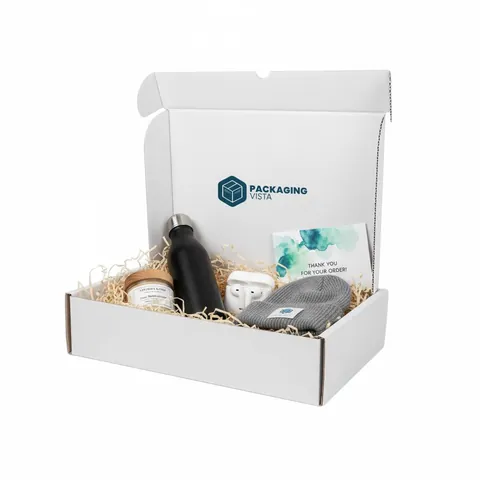
Custom subscription boxes are recurring-shipment mailers built to do two jobs at once. They must survive the carrier network. They must also deliver a memorable unboxing every single month.
Unlike a one-off retail carton, a subscription box has to perform on repeat. Same brand feel, drop after drop, arriving crush-free at a customer's door after a rough ride through auto sorting. That double duty is why direct-to-consumer brands running curated, discovery, beauty, food, or hobby subs spec their packaging so carefully.
If you are planning a program from scratch, our subscription box packaging guide is a good place to start.
Key takeaways
- Ships without tape: self-locking corrugated mailer boxes fold up by hand and stay shut through the carrier network – no tape gun at your 3PL.
- Print inside and out: full-color inside print turns the lid-lift into your brand moment, month after month.
- Right-size to cut cost: a snug box drops dim weight and stops product from rattling in transit.
- Ship flat, assemble fast: boxes arrive die-cut and flat-packed for steady, sort-friendly fulfillment.
What is a subscription box?
A subscription box is custom-printed recurring-shipment packaging built to survive the carrier network on the outside while delivering a consistent, on-brand unboxing on the inside — drop after drop, month after month. The category covers beauty samplers, snack and food discovery clubs, hobby and craft kits, pet products, book clubs, wellness and supplement kits, and premium curated tiers.
Subscription boxes typically use self-locking corrugated mailer structures (RETT or REFT) that ship flat, hand-assemble in seconds at a 3PL, and eliminate tape and adhesive at the pack-out line.
Subscription packaging has three unusual requirements that separate it from one-off retail cartons: it needs to perform on repeat (same brand feel, drop after drop, from a repeatable pack-line at your fulfillment center or 3PL), it needs to be right-sized for dimensional-weight billing (an oversized box lifts every shipment cost across a year of drops), and it needs to stage a curated reveal with printed interiors, tissue, inserts, and welcome cards that turn a monthly delivery into a moment members share on social.
What subscription-box packaging has to solve
A subscription box is a shipper and a stage at the same time. On the outside it faces belts, drop tests, and stack pressure. On the inside it is the first thing a paying member sees each cycle.
The brands that win – beauty samplers, snack clubs, craft and hobby kits, pet boxes – build a repeatable packaging system. So every drop looks unmistakably theirs and still clears the same protection bar.
Box styles that fit a subscription program
The workhorse is the corrugated mailer box. A roll-end tuck (RETT) or roll-end front-lock shape folds up self-locking and ships without tape. It gives you stiff sidewalls for stack strength and roomy inside space to print on.
Pick corrugated stock for the fluted crush guard a shipped box needs. Single-wall handles most beauty and hobby boxes. Heavier food or multi-item kits move up to double-wall. For premium or limited tiers, a rigid setup box gives a keepsake-grade reveal, though it ships built and costs more to freight.
Protection, inserts, and a rattle-free ride
Loose product is the fastest way to a bad first look and a support ticket. Custom inserts – corrugated or paperboard dividers, snug pulp or foam nests, and fitted trays – hold each item in place. So nothing shifts, scratches, or leaks in transit.
Inserts also stage the contents. A divided layout shows products in a set order instead of a jumbled pile. Tear strips and firm tuck flaps keep the box closed end to end. Our inserts and unboxing guide walks through how to match the insert to your product mix.
Branding, print, and the unboxing reveal
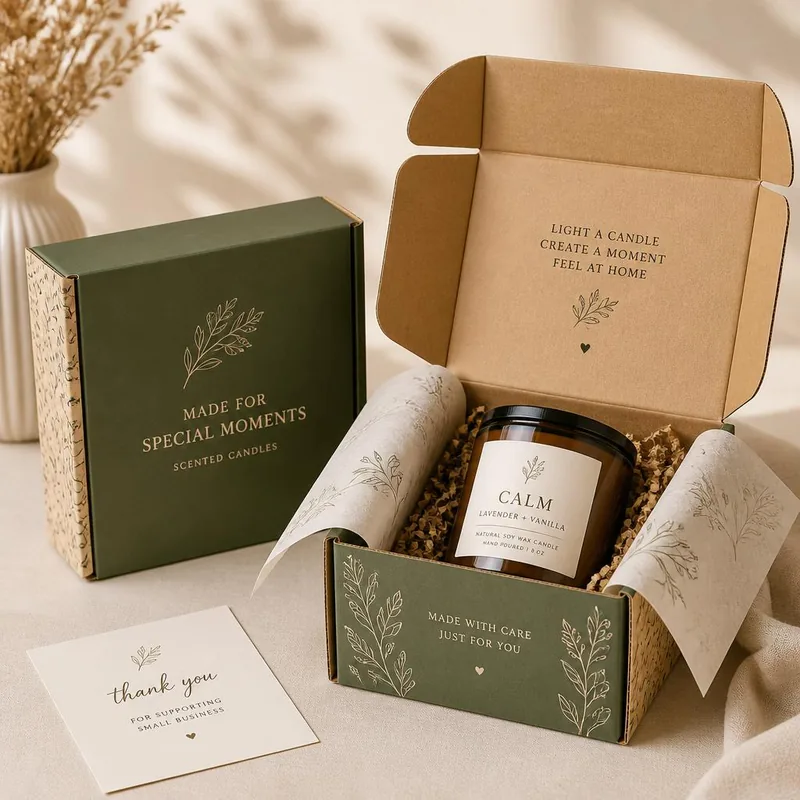
This is where a subscription box earns its social-media life. We print full CMYK and match brand colors to Pantone (PMS) across the outside and, most of all, the inside. The printed inner walls and lid are the money shot when a member lifts the flap.
Layer in finishes that read premium: soft-touch lamination, spot UV, foil stamping, or a raised logo. Round it out with the reveal kit – branded tissue, custom stickers, dividers, and a welcome-card or insert-card slot. So the whole opening feels curated. Build these as a repeatable brand system and you can swap art each season without redoing the box.
Built for flat-pack fulfillment and your 3PL
Operations make or break a subscription. Because mailer boxes ship die-cut and flat, they store small and hand-assemble in seconds. No tape, no gear needed at pack-out.
The same outer size month to month lets your team (or your 3PL) build steady pack-lines and keep auto sorting happy. If your program spans many box sizes across tiers, sticking to the same footprint where you can pays off in labor and freight.
How to spec and size your box
Start from the contents. Lay out your typical monthly mix plus any inserts, then size the inside so items sit snug with little void. A tight fit lowers dimensional weight (DIM weight). That is (Length x Width x Height) ÷ a DIM divisor – 139 for USPS/UPS/FedEx US ground. Carriers bill on the larger of actual and DIM weight. So an oversized box lifts every shipment.
Common subscription box sizes
| Tier | Typical size (L x W x H) | DIM weight (139 divisor) | Category fit |
|---|---|---|---|
| Small mailer | 6 x 4 x 2 in | ~1 lb | Jewelry, samples, digital+goodies |
| Beauty / discovery | 8 x 6 x 2 in | ~1 lb | Beauty samplers, deluxe minis |
| Standard curation | 10 x 8 x 3 in | ~2 lb | Lifestyle, snack, book, wellness |
| Craft / hobby | 12 x 9 x 4 in | ~4 lb | Craft kits, coffee, pet |
| Deluxe / meal kit | 14 x 10 x 6 in | ~7 lb | Meal kits, apparel, multi-item |
Check that your built box fits inside your target carrier's mailer or parcel limits. Then choose single- versus double-wall based on total weight and fragility. We give a free custom dieline and 3D mockup. So you can test fit and art before you commit to a run.
Food, beauty, and compliance notes
If your box ships food, use food-grade or FSC-certified stock for any liner or part that touches product. Follow your category's label rules – ingredient, allergen, and net-weight rules vary, so check the current rules for your product type and state.
Cosmetic and supplement subs have their own label duties. When in doubt, keep the outer shipper purely branded while single products carry their own compliant primary labels.
How much do custom subscription boxes cost?
Custom subscription box pricing tracks size, flute, print scope, and quantity. Typical ranges at a 500-unit run: $0.60 to $1.50 per box for a small E-flute mailer (6 × 4 × 2 to 8 × 6 × 2 in) printed inside and out — the beauty/discovery sweet spot; $1.00 to $2.20 per box for a standard curation mailer (10 × 8 × 3 in) with soft-touch or single finish; $1.50 to $3.50 per box for a craft/hobby size (12 × 9 × 4 in) in B-flute or single-wall; $2.00 to $5.00 per box for a deluxe/meal-kit size (14 × 10 × 6 in) in double-wall corrugated.
Insert adders: printed corrugated dividers $0.15–$0.50, molded pulp nest $0.20–$0.80, EVA foam tray $0.40–$1.20. Tissue paper $0.05–$0.20, stickers $0.05–$0.15, printed insert card $0.10–$0.30. Per-box cost drops 30–40% moving from 500 to 5,000 units — subscription programs typically hit that scale by cycle 3–4.
No die, plate, or setup fees on any run.
What drives subscription box price, in order of impact:
- Quantity per cycle — per-box cost drops sharply as cycle volume grows. A launch program at 100 units per cycle pays higher unit cost than a mature 2,000-unit cycle.
- Size + flute — the biggest DIM-weight-adjacent cost lever. Right-size before you finalize print budget.
- Print scope — interior print is free on the same press run; inside AND outside CMYK is the standard subscription build.
- Finishes — soft-touch and spot UV are the usual finishes; heavy stacked finishes rarely justify their cost on a monthly-recycled box.
- Inserts and reveal-kit — corrugated dividers cheapest, molded pulp mid-tier, EVA foam most expensive.
- Art variant count — a seasonal 4-artwork rotation runs on the same dieline; digital press keeps unit cost flat across variants at low volume.
Send your box size, cycle volume, and program tier on the quote form for exact per-box pricing.
How long do custom subscription boxes take to make?
Standard production is 8 to 10 business days after proof approval. Rush production runs in 4 to 6 business days on most orders at no additional charge. Multi-artwork variant runs (seasonal rotation) add 1 to 3 days for staged press setups. Ground freight from Cheshire, Connecticut adds 2 to 5 days to reach the West Coast — expect a full quote-to-dock timeline of about 2 to 3 weeks for a first order.
For subscription programs specifically, back-plan reorders 60–90 days ahead of each cycle so a fresh drop of boxes reaches your 3PL before the previous cycle's inventory runs out — this is the difference between a smooth cycle handoff and a missed drop.
Subscription mailer vs one-off retail mailer: what's different?
Both use the same self-locking corrugated wrap-around structure, but a subscription mailer is optimized for a recurring program — not a one-off shipment. The differences show up in dieline discipline, print scope, and reorder cadence.
| Subscription mailer | One-off retail mailer | |
|---|---|---|
| Reorder cadence | Monthly or quarterly recurring | Single or annual reorder |
| Outer footprint | Fixed across cycles for 3PL pack-line discipline | Sized per campaign |
| Print scope | Interior print is standard (unboxing moment) | Exterior print typical, interior optional |
| Art variability | Seasonal rotation on the same dieline | Single artwork per run |
| Reveal kit | Tissue + stickers + insert card + welcome card | Optional; often just the box |
| DIM sensitivity | Very high (cost stacks over 12+ cycles/year) | Moderate (single shipment) |
| Fulfillment model | 3PL or in-house recurring pack-line | Often ships from brand warehouse |
The practical takeaway: on a subscription program, spend engineering time on the outer footprint (DIM-optimized), the inside print (unboxing moment), and the repeatable reveal kit. Everything else can vary by cycle without changing the dieline or the pack-line.
Minimums, turnaround, and pricing
We run custom subscription boxes at a 100-box minimum with no die, plate, or setup fees. That helps when you are testing a new tier or a limited drop. Free design, a free custom dieline, a free 3D mockup, and a digital proof come with every order. Standard production runs 8–10 business days with free US shipping.
Ready to build your program box? Request a quote with your product mix and target tier.
Are custom subscription boxes worth it for a small business?
Yes, and subscription-box startups are exactly who the 100-box minimum was built for — a first cycle launch at 100 boxes with no die or plate fees lets an indie curator test a program without a warehouse full of stock. Subscription is one of the most cash-flow-friendly retail categories for a small brand: buyers pay upfront (or on card-on-file), the product ships direct so there's no wholesale margin loss, and repeat purchase is baked into the model.
Custom packaging is the single biggest lever on member retention in the first 3 cycles — a printed interior with a themed insert card lifts NPS and social-share rates measurably vs a plain kraft mailer with a sticker. Common launch pattern: 100 boxes for a cycle 1 beta with 50–75 members, 250 boxes for cycle 2, then 500+ once the cohort stabilizes.
The economics improve at every cycle because per-box cost drops 30–40% between 500 and 5,000 units — a small brand hitting cycle 5 at 1,000 units per drop lands close to established-brand unit economics. For DTC brands running a subscription tier alongside one-off retail, see mailer boxes for the shared-format alternative.
Are subscription boxes recyclable?
Yes. Corrugated subscription boxes are curbside-recyclable in nearly every US municipal program — corrugated is the most-recycled packaging material in the US, with old corrugated container (OCC) recovery rates consistently above 90% per the American Forest & Paper Association.
Kraft and white-lined corrugated are both recyclable; soy and water-based inks keep the box recyclable and align with an eco-forward member story. Reveal-kit elements vary: tissue paper and printed insert cards recycle with the box; vinyl stickers do not (paper stickers are the recyclable alternative); paper ribbon recycles, synthetic ribbon does not.
Heavy laminates, foil stamping, and PET window patches reduce recyclability. For a fully recyclable subscription program, we recommend kraft or FSC-certified white-lined corrugated, soy inks, aqueous coating instead of heavy laminate, paper stickers instead of vinyl, and a paperboard or molded pulp insert instead of EVA foam.
Under FTC Green Guides (16 CFR Part 260), any recyclability or "made with recycled content" claim on the box needs substantiation. See eco-friendly boxes for the full sustainable range.
Frequently asked questions
Do subscription mailer boxes need tape to ship?
No. The roll-end tuck and front-lock mailer shapes are self-locking. They fold up and stay closed through the carrier network without tape. So hand assembly at your fulfillment center is fast.
Can you print the inside of the box?
Yes. Full-color inside print is one of the top reasons brands pick custom subscription boxes. We print CMYK inside and out and match brand colors to Pantone. So the lid-lift reveal is on-brand every month.
What is the minimum order for subscription boxes?
Our minimum is 100 boxes, with no die, plate, or setup fees. That makes it easy to launch a new tier or run a short seasonal edition without a big commit.
Should I use single-wall or double-wall corrugated?
Single-wall corrugated handles most beauty, hobby, and light-product boxes. Move to double-wall when the box is heavy, holds many or fragile items, or needs extra stack strength in transit.
How do I keep shipping costs down?
Right-size the box to the contents. A snug inside cuts dim weight, and carriers bill on the larger of actual and dim weight. So an oversized box raises the cost of every shipment and lets product rattle around.
Do the boxes ship flat to my 3PL?
Yes. Mailer boxes arrive die-cut and flat-packed. That saves storage space and lets your team hand-assemble them fast. Same-size runs also keep auto pack lines steady.
Can I add inserts, tissue, and stickers?
Yes. We make custom inserts, dividers, and trays to hold your products in place. We also add branded tissue, stickers, and welcome-card slots to round out the unboxing as a repeatable system.
What is a subscription box?
A subscription box is custom-printed recurring-shipment packaging built to survive the carrier network on the outside and deliver a consistent on-brand unboxing on the inside — drop after drop, month after month. Category covers beauty samplers, snack clubs, hobby kits, pet products, book clubs, wellness and supplement kits.
Typically uses self-locking RETT or REFT corrugated mailers that ship flat, hand-assemble in seconds at a 3PL, and eliminate tape at pack-out. Three unusual requirements: perform on repeat from a repeatable pack-line, be right-sized for DIM-weight billing (an oversized box lifts every shipment across 12+ cycles), and stage a curated reveal with printed interiors + tissue + inserts.
How much do custom subscription boxes cost?
Rough ranges at a 500-unit run: small mailer 6×4×2 to 8×6×2 in $0.60 to $1.50 per box; standard curation 10×8×3 in $1.00 to $2.20; craft/hobby 12×9×4 in $1.50 to $3.50; deluxe/meal-kit 14×10×6 in double-wall $2.00 to $5.00. Insert adders: printed corrugated dividers $0.15–$0.50, molded pulp $0.20–$0.80, EVA foam $0.40–$1.20.
Tissue paper $0.05–$0.20, stickers $0.05–$0.15, printed insert card $0.10–$0.30. Per-box cost drops 30 to 40 percent moving from 500 to 5,000 units.
Subscription mailer vs one-off retail mailer — what's different?
Both use the same self-locking corrugated structure, but a subscription mailer is optimized for a recurring program: fixed outer footprint across cycles for 3PL pack-line discipline, interior print as standard (unboxing moment), seasonal art rotation on the same dieline, repeatable reveal kit (tissue + stickers + insert card), and very high DIM-sensitivity because cost stacks over 12+ cycles per year.
A one-off retail mailer is sized per campaign and typically ships from the brand's warehouse with single artwork per run.
How do you design a custom subscription box program, step by step?
Six steps: (1) lock the outer footprint by DIM weight (L×W×H)/139 for USPS/UPS/FedEx US ground, right-size to shave 1 inch and save 10–20% per shipment across the year, (2) choose self-locking mailer structure (RETT/REFT single-wall E-flute for most; B-flute or double-wall for meal kits), (3) design a repeatable brand system — fix outer footprint + dieline + finish stack, vary interior art + tissue + stickers by cycle, (4) spec inserts + tissue + reveal-kit for staged unboxing, (5) print inside and out (interior print free on same press run), (6) ship flat-packed to 3PL and stage reorders 60–90 days ahead of each cycle.
Are custom subscription boxes worth it for a small business?
Yes — subscription-box startups are exactly who the 100-box MOQ was built for. A first cycle launch at 100 boxes lets an indie curator test a program without warehouse stock. Custom packaging is the single biggest lever on member retention in the first 3 cycles — printed interior with themed insert card lifts NPS and social-share rates measurably vs a plain kraft mailer with a sticker.
Common launch pattern: 100 boxes for cycle 1 (50–75 members), 250 for cycle 2, 500+ once cohort stabilizes.
Are subscription boxes recyclable?
Yes. Corrugated subscription boxes are curbside-recyclable — corrugated is the most-recycled packaging material in the US (OCC recovery rate above 90% per AF&PA). Kraft and white-lined corrugated are both recyclable; soy inks and aqueous coatings stay in most streams.
Reveal-kit elements vary: tissue paper and printed insert cards recycle with the box; vinyl stickers don't (paper stickers are the recyclable alternative); paper ribbon recycles, synthetic ribbon doesn't. Heavy laminates and foil reduce recyclability.
Who orders custom subscription boxes?
Custom retail and eco packaging is ordered by brands that need clean, recyclable, shelf-ready boxes without compromising branding.
- Eco-focused consumer brands — kraft and recycled-content boxes with soy-based inks and clear recyclability messaging on the panel.
- Independent retailers and boutiques — branded shopping boxes, gift boxes, and tissue paper for the in-store unboxing.
- Subscription-box operators — corrugated mailer boxes with printed inserts, tissue paper, and rip strips for the reveal moment.
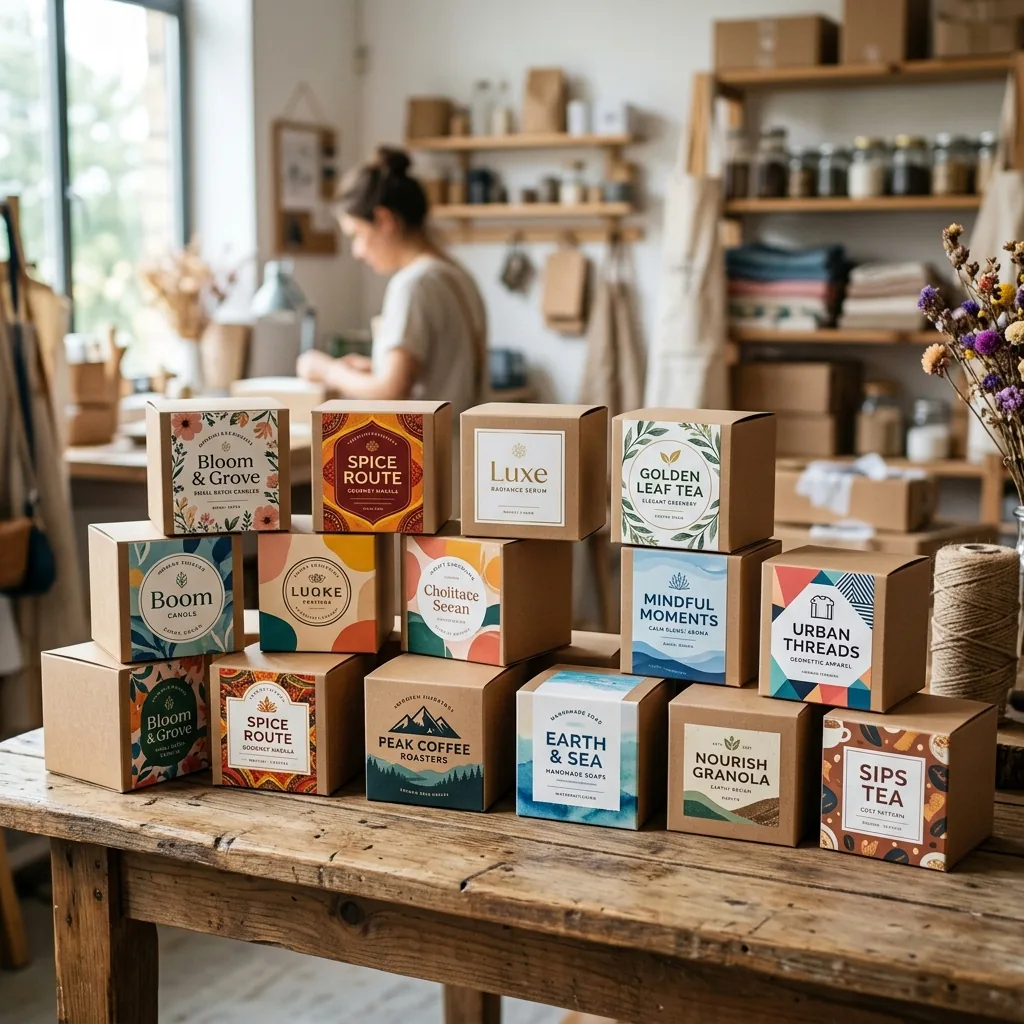
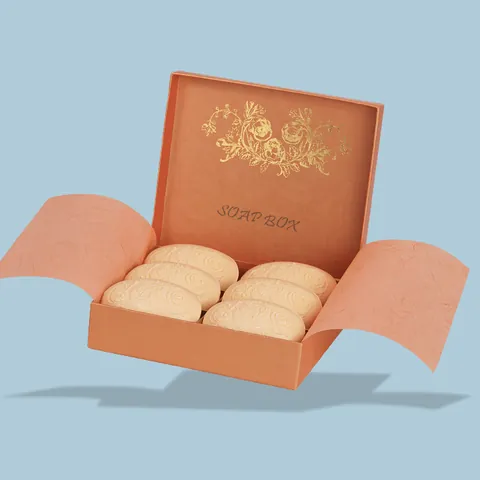
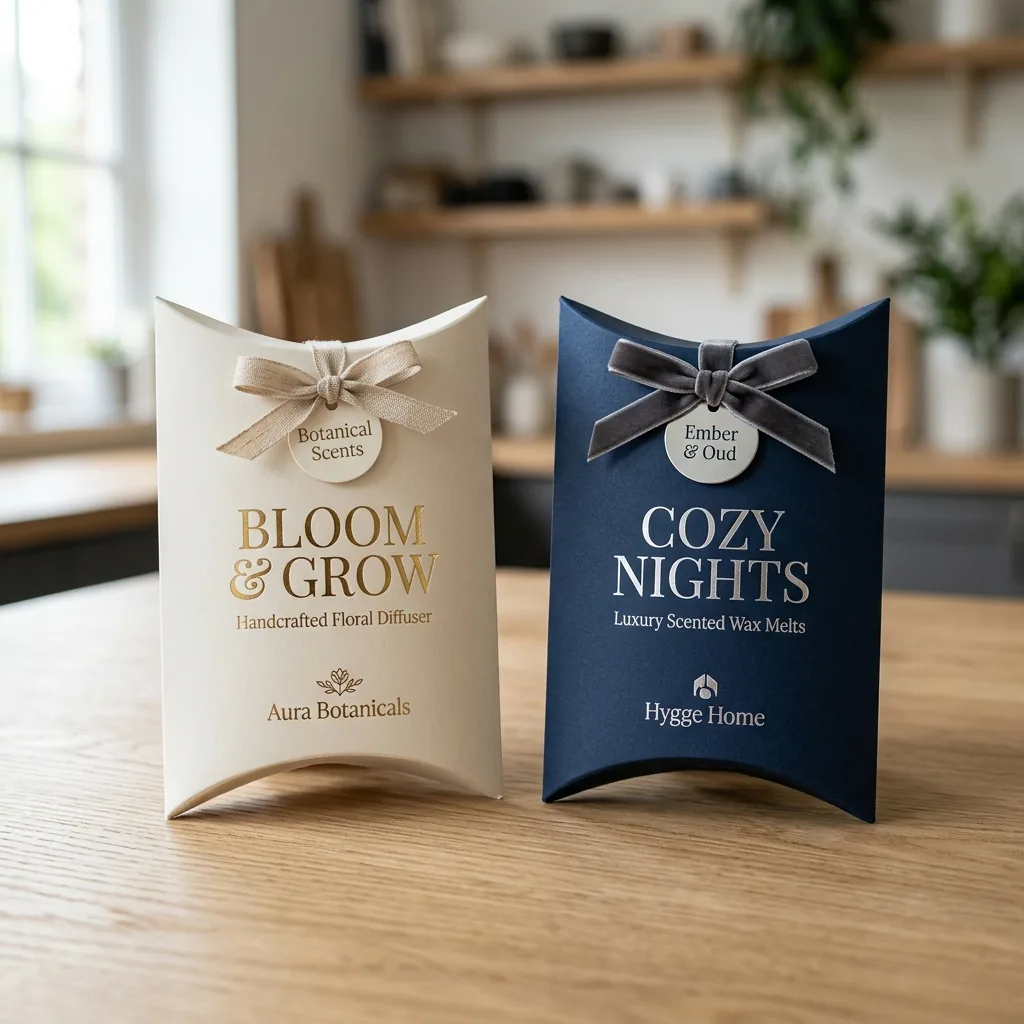
- Candle, soap, and home-fragrance makers — kraft candle boxes, custom soap sleeves, and pillow boxes for gift retail.
- Etsy and DTC handmade brands — low-MOQ 100-box runs so a new SKU can launch without committing to pallet quantities.
How to order custom subscription boxes
Five steps from quote to delivery. Every order includes free design support, a free custom dieline, and a digital mockup for approval before anything hits the press.
- Share your specs. Send box dimensions (or a photo of the product), quantity, material preference, and any artwork or logo files. If you're unsure of the size, our design team can advise from a product photo.
- Get a quote and mockup. Within one business day we return a firm quote, a printable dieline, and a 3D digital mockup of your subscription boxes. No die, plate, or setup fees are added.
- Approve the proof. Review the mockup, request color, layout, or dieline changes, and give final approval. Revisions are unlimited before press.
- Production (8–10 business days). Your order runs on offset or digital press, then moves through finishing — lamination, spot UV, foil stamping, embossing, die-cutting, and assembly if needed.
- Free US shipping. Orders ship flat-packed with tracking. Assembled bundles or master-carton packing are available on request at no charge.
Resources & tools
Free tools and trusted references to help you size, spec, and choose the right subscription boxes before you order.
Free tools & guides
- Box Size & Dimensional Weight Calculator – size your box and see the billable weight UPS, FedEx, and USPS charge.
- Mailer boxes – the ecommerce workhorse for recurring shipments.
- Shipping guide – turnaround, delivery, and how orders ship.
Trusted references
- How2Recycle – the standardized on-pack recycling label for paperboard and kraft packaging.
- Forest Stewardship Council (FSC) – certification for responsibly sourced paper and board.
- FEFCO — International Fibreboard Case Code – the standard code (0201, 0427, etc.) that defines every box style.
- ISTA — International Safe Transit Association – the industry-standard packaging performance test protocols.
- EPA — Sustainable Materials Management – federal guidance on reducing packaging waste at end of life.