Custom Battery Display Hanger Boxes
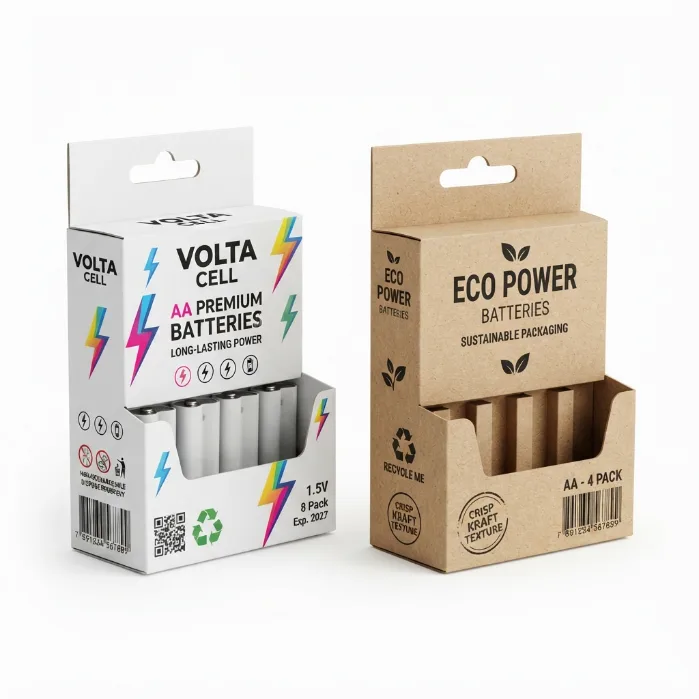
Custom battery display hanger boxes are printed cartons with a built-in hang tab that let battery packs hang on retail peg hooks, plus matching counter and clip-strip displays that sell the same packs at checkout. They present AA, AAA, 9V, and button or coin cell packs clearly, protect the cells inside, and leave room for the safety warnings batteries require.
Packaging Vista designs hanger cartons and battery displays for private-label, specialty, and accessory brands.
Order from just 100 boxes with no die, plate, or setup fees. Every order includes a free dieline and 3D mockup. Standard production is 8 to 10 business days after proof approval, with free US shipping.
Key takeaways
- Peg-ready: euro-hole, round-hole, and reinforced hang tabs that keep battery packs straight on the hook.
- Warnings planned in: panel space for button and coin cell ingestion warnings under Reese's Law and 16 CFR 1263.
- Display options: counter displays and hanging clip-strip displays that match your hanger cartons.
- Low barrier: 100-box minimum, no die, plate, or setup fees, 8–10 day turnaround. See counter display boxes and retail display boxes, or request a free quote.
What is a battery display hanger box?
A battery display hanger box is a slim paperboard carton with an extended top panel that has a die-cut hang hole. It slides onto the peg hooks found in hardware, electronics, grocery, and convenience stores, so shoppers see the battery type, count, and brand at a glance. The carton often frames a blister or tray that holds the cells, or it can be a closed carton with a window.
Battery packaging has a stronger safety role than most retail cartons. Button and coin cells can cause serious internal injuries if a child swallows one, so their packaging carries prominent warnings and must be child-resistant. A good hanger carton gives those warnings room to be read on the peg, not squeezed into a corner.
Battery hanger box and display styles
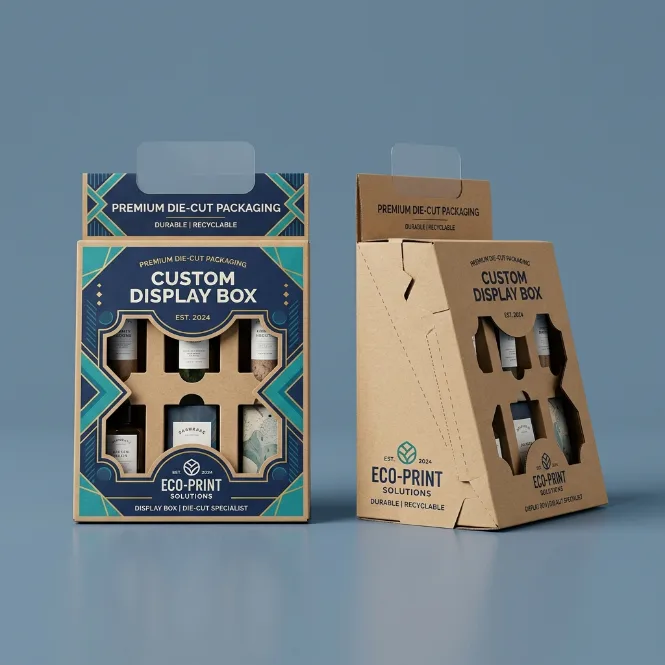
Battery packaging ladders across five structural formats, each tuned to a different retail fixture and purchase moment. The hang-tab carton is the workhorse — a tuck-end carton with a tall hang panel and euro-hole slot that holds AA, AAA, 9V, C, D, or coin-cell packs neatly and offers four printed sides for the brand mark, cell count, chemistry, voltage, run-time rating, and compliance iconography.
The blister card carton pairs a printed paperboard frame or backing card with a clear PET blister sealed over the cells — the blister provides shelf visibility and, when child-resistance tested under 16 CFR 1700.20 (Poison Prevention Packaging Act), meets F=1 or F=2 compliance for button-cell SKUs that trigger it;
the paperboard frame carries warnings, hang tab, and brand. The window hanger carton is a closed carton with a die-cut window (open or patched with clear food-safe film) so shoppers can see the actual cell count without a full plastic blister —
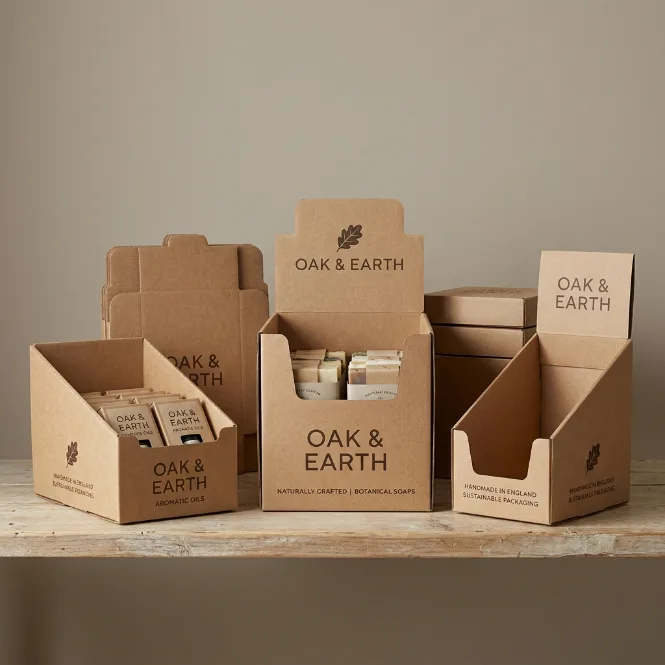
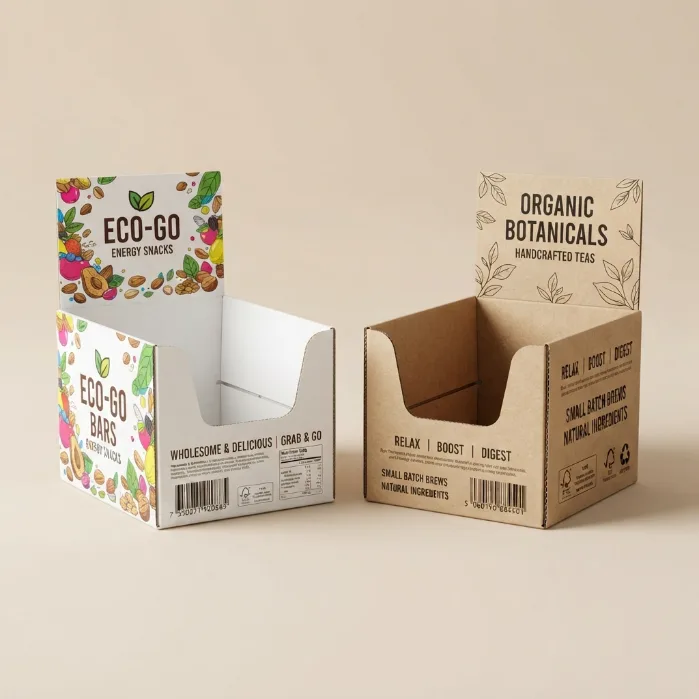
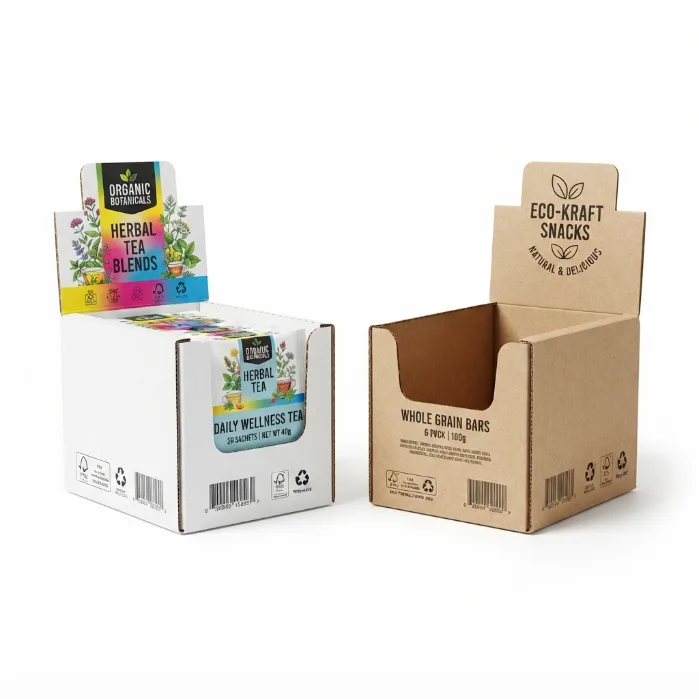
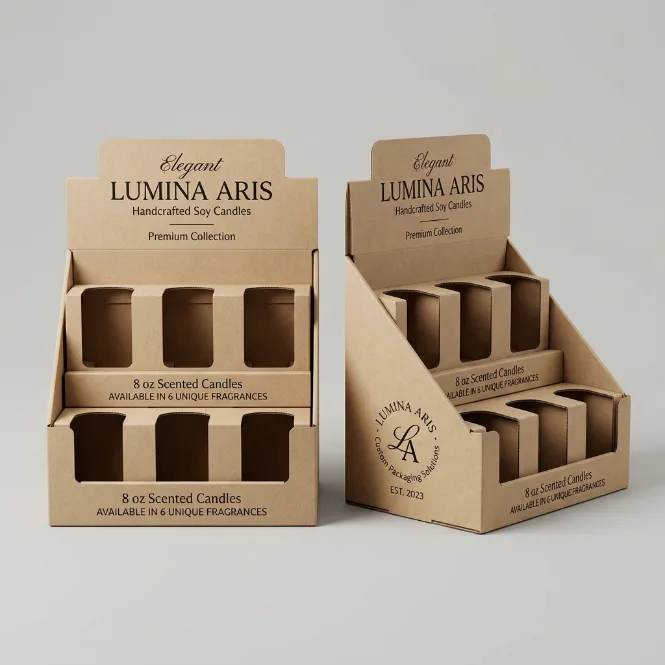
a plastic-reduction build that keeps the SKU curbside-recyclable; see window boxes for window shapes. The counter battery display is a small tiered or printed-tray display that holds a case of hanger cartons upright at the checkout line, where batteries are one of the top five impulse add-ons in US grocery and drug (chocolate, gum, magazines, lip balm, batteries);
see counter display boxes for more formats. Finally, the clip-strip and sidekick display is a hanging strip or narrow corrugated panel with hooks that mounts on the side of a fixture to add secondary battery facings near related products —
toys, remotes, flashlights, holiday decor — where the shopper is already thinking about something that needs batteries.
Common battery hanger box sizes
Every carton is sized to your pack. These are typical starting points:
| Pack | Typical carton W × D × H | Hang panel | Notes |
|---|---|---|---|
| Coin cell, 1–2 count | 3 × 0.5 × 4.5 in | 1 in, euro-hole | Space for ingestion warning |
| Button or coin cell, 4–6 count | 3.5 × 0.6 × 5.5 in | 1 in, euro-hole | Frames a child-resistant blister |
| AA or AAA, 4-pack | 2.5 × 0.75 × 4.5 in | 1 in, euro-hole | Classic peg pack |
| AA or AAA, 8–12 pack | 4.5 × 0.75 × 5.5 in | 1.25 in, reinforced | Heavier, double-thick tab |
| 9V, 2-pack | 2.25 × 1.1 × 4.75 in | 1 in, round or euro | Terminal cover recommended |
Materials and finishes
- SBS paperboard (18–24 pt): the standard for hanger cartons, with crisp print for small text and warnings.
- Reinforced hang tabs: a folded double layer at the hang hole for heavier multi-packs.
- E-flute corrugated: for counter and clip-strip displays that hold many cartons.
- Coatings: gloss or matte aqueous, or lamination, to resist scuffing from repeated handling on pegs.
Button and coin cell warning labeling
Battery safety labeling has tightened since Reese's Law was passed in 2022. When your carton holds button or coin cells, or a product that uses them, plan for these:
- Child-resistant packaging: Reese's Law requires button and coin batteries to be sold in child-resistant packaging. That is usually a tested blister or sealed pack; the printed carton alone does not provide it.
- Warning statements: clear ingestion warnings, such as keeping batteries away from children and seeking medical help immediately if one is swallowed, on the package.
- Consumer products with cells: CPSC's rule at 16 CFR 1263 sets warning-label requirements, including placement on the principal display panel, for packaging of consumer products that contain or come with button or coin batteries.
- Legibility: warnings must be conspicuous, so we size the panels to fit them at readable type sizes.
- Standard pack details: battery type and size, chemistry, count, voltage, and your brand contact information.
Your compliance specialist confirms the exact wording, symbol, and placement. We make sure every required element fits clearly on the dieline.
How much do custom battery hanger boxes cost?
Typical ranges at a 500-unit run: $0.30 to $0.75 for an SBS hang-tab carton, $0.40 to $0.95 for a blister backing card or frame carton (blister priced separately), $0.45 to $1.05 for a window hanger carton, and $2.20 to $4.50 for a counter battery display.
Size, board, reinforced tabs, windows, finishes, and quantity drive price, and per-unit cost falls as volume increases. There are no die, plate, or setup fees. Send your pack size and quantity on the quote form for exact pricing.
How long do custom battery hanger boxes take to make?
Standard production is 8 to 10 business days after proof approval, and rush runs are available on most orders. Allow time for your compliance review of the warning panels before you approve the proof. To check fit with your blister and peg hooks, order a non-printed sample in your exact size and board for USD 75, credited to your first order.
Hang-tab carton vs blister card vs counter display
| Hang-tab carton | Blister card | Counter display | |
|---|---|---|---|
| Shows the cells | With a window | Yes, through the blister | Shows the cartons |
| Child resistance | From a tested inner pack | From a tested blister | Relies on each pack |
| Where it sells | Peg hooks | Peg hooks | Checkout counter |
| Typical cost (500-run) | $0.30–$0.75 | $0.40–$0.95 plus blister | $2.20–$4.50 |
Are battery hanger boxes worth it for a small brand?
Yes. Batteries are a crowded, price-driven category, and a clean, well-organized hanger carton is how a private-label or specialty brand stands out on a wall of pegs. Pairing the cartons with a small counter display captures impulse buys at checkout. The 100-box minimum lets new battery and accessory brands test designs without a big print commitment.
Are battery hanger boxes recyclable?
Paperboard hanger cartons and corrugated displays with aqueous coatings are accepted in most US curbside recycling. Plastic blisters are a separate material and batteries themselves must never go in household recycling bins, so print clear, separate disposal guidance for the carton, the blister, and the used cells.
Keep claims specific and qualified under the FTC Green Guides, and ask about eco-friendly or FSC-certified board.
Frequently Asked Questions
What is a battery hanger box?
It is a slim printed carton with a hang tab and die-cut hole, so battery packs can hang on retail peg hooks. It shows the battery type, count, and brand, and it holds or frames the cells.
Which hang hole should I choose?
A euro-hole (sombrero) slot is the most common and resists tearing. Round holes suit lighter packs. For heavy multi-packs we add a reinforced double-thickness tab.
Do button and coin battery packs need special warnings?
Yes. Reese's Law requires button and coin batteries to be sold in child-resistant packaging with warning labels, and CPSC's rule at 16 CFR 1263 sets warning-label requirements for packaging of products that contain or come with them. Your compliance team confirms the final wording.
Is your printed carton child-resistant?
No. A paperboard carton on its own is not a child-resistant package. Child resistance usually comes from a tested blister or sealed pack, and we design the carton to hold or frame that pack.
Can you make a counter display for battery packs?
Yes. We make counter displays and hanging clip-strip displays sized to hold your hanger cartons, printed to match, so the same packs sell on pegs and at checkout.
How much do custom battery hanger boxes cost?
At 500 units, hang-tab cartons typically run $0.30 to $0.75, blister backing cards $0.40 to $0.95 plus the blister, window cartons $0.45 to $1.05, and counter displays $2.20 to $4.50 each. There are no die, plate, or setup fees.
What is the minimum order and lead time?
The minimum is 100 boxes. Standard production is 8 to 10 business days after proof approval, with rush available and free US shipping.
Can I get a sample to test on my peg hooks?
Yes. A non-printed sample in your exact size and board costs USD 75, and that amount is credited to your first order.
Who orders custom battery display hanger boxes?
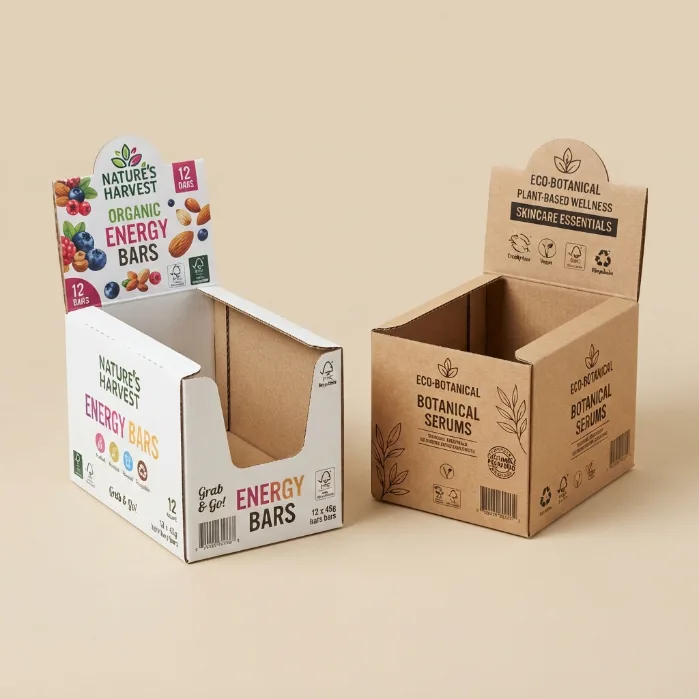
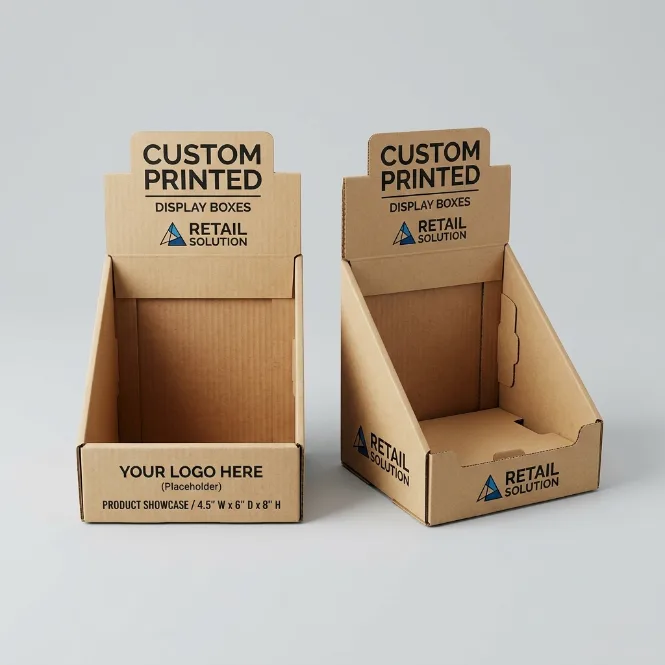
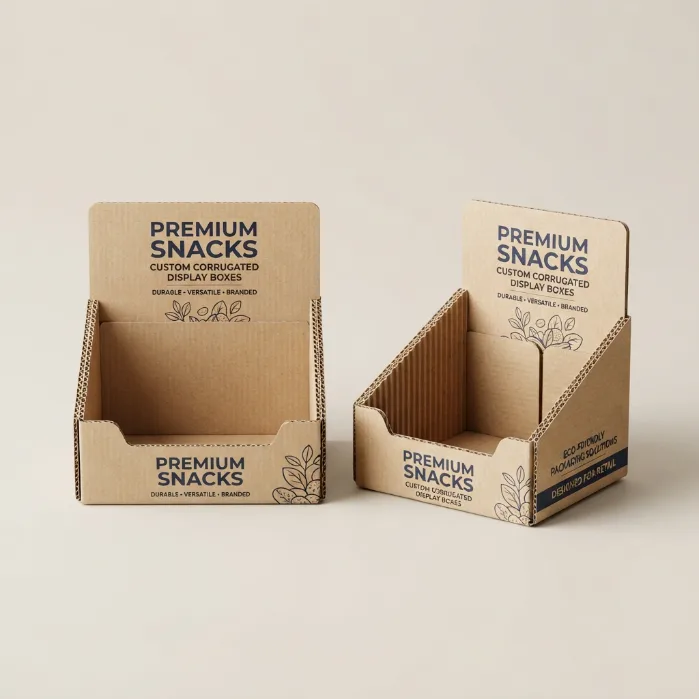
Custom display boxes are ordered by brands that sell at the counter, the checkout lane, or the shelf edge, where the box itself has to stop a shopper and hold the product upright.
- Consumer brands entering retail — PDQ trays and counter displays that ship packed, open in seconds, and meet a buyer's planogram.
- Beauty and personal-care makers — lip balm, bath bomb, soap, and cosmetic display trays with cavities sized to each unit.
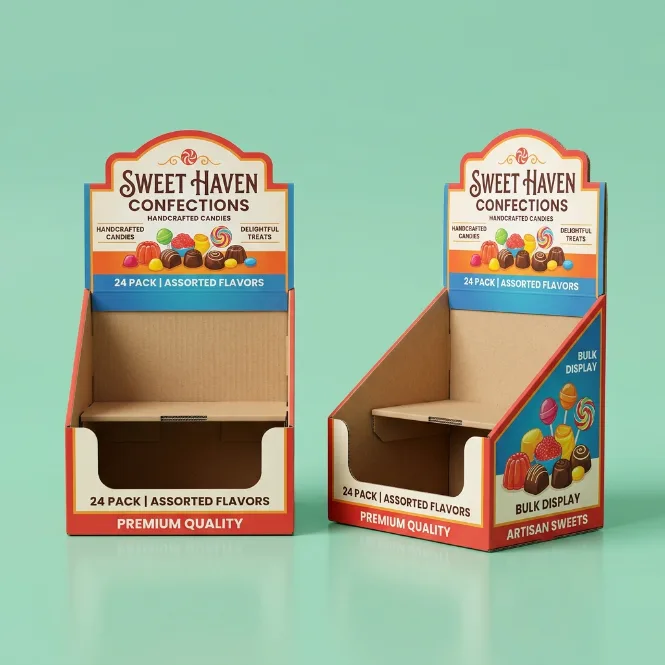
- Candy, snack, and convenience brands — checkout-lane display boxes with tall printed headers built for impulse buys.
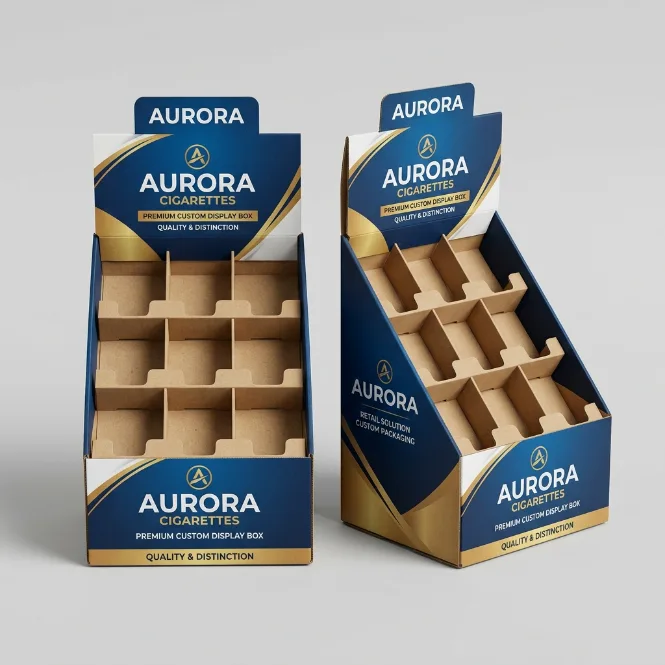
- CBD, hemp, and smoke-shop suppliers — countertop display boxes with room for the compliance copy each product line needs.
- Wholesale reps and trade-show teams — display mailers and pop-up displays that ship to the store and turn into a merchandiser on arrival.
How to order custom battery display hanger boxes
Five steps from quote to delivery. Every order includes free design support, a free custom dieline, and a digital mockup for approval before anything hits the press.
- Share your specs. Send box dimensions (or a photo of the product), quantity, material preference, and any artwork or logo files. If you're unsure of the size, our design team can advise from a product photo.
- Get a quote and mockup. Within one business day we return a firm quote, a printable dieline, and a 3D digital mockup of your battery display hanger boxes. No die, plate, or setup fees are added.
- Approve the proof. Review the mockup, request color, layout, or dieline changes, and give final approval. Revisions are unlimited before press.
- Production (8–10 business days). Your order runs on offset or digital press, then moves through finishing — lamination, spot UV, foil stamping, embossing, die-cutting, and assembly if needed.
- Free US shipping. Orders ship flat-packed with tracking. Assembled bundles or master-carton packing are available on request at no charge.
Resources & tools
Free tools and trusted references to help you size, spec, and choose the right battery display hanger boxes before you order.
Free tools & guides
- Packaging materials – compare SBS, kraft, corrugated, and rigid stocks.
- Custom boxes hub – every box style we print, in one place.
- Our capabilities – printing, finishing, QA, and what we can make.
Trusted references
- How2Recycle – the standardized on-pack recycling label for paperboard and kraft packaging.
- Forest Stewardship Council (FSC) – certification for responsibly sourced paper and board.
- FEFCO — International Fibreboard Case Code – the standard code (0201, 0427, etc.) that defines every box style.
- ISTA — International Safe Transit Association – the industry-standard packaging performance test protocols.