Custom Cereal Boxes
Custom cereal boxes are printed paperboard cartons for breakfast cereal, granola, muesli, and snack mixes. They also do the heavy lifting of branding on a crowded shelf.
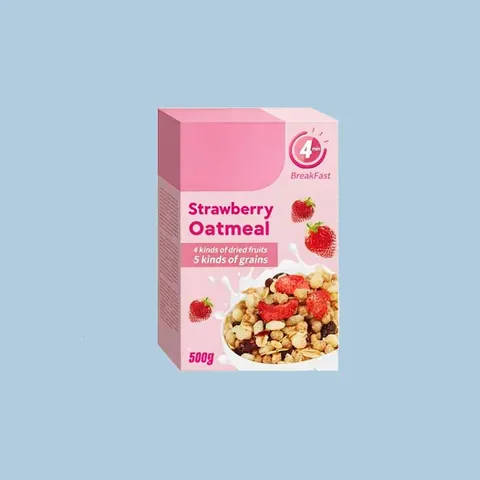
Packaging Vista prints them on food-safe paperboard with food-contact-safe inks. Print in full CMYK and Pantone color. Styles include classic tuck-top cartons, single-serve mini boxes, granola boxes with a window, and tray-and-sleeve formats.
Order from just 100 boxes with no die, plate, or setup fees. You get free design, dieline, and 3D mockup. Your cereal packaging ships in 8 to 10 business days with free US delivery.
Key takeaways
- Built for breakfast brands: printed paperboard cartons for cereal, granola, muesli, and snack mixes, sized to your bag or liner.
- Food-safe options: food-grade paperboard and food-contact-safe inks; works with the inner bag or liner that holds the cereal.
- Low barrier: 100-box minimum, no die, plate, or setup fees, free dieline & 3D mockup, 8-10 day turnaround, free US shipping.
- Go deeper: see food & beverage boxes, window boxes, and eco-friendly boxes, browse our food packaging by product guide, then request a free quote.
What is a cereal box?
A cereal box is food-safe printed paperboard packaging built to hold breakfast cereal, granola, muesli, and snack mix inside a food-contact-safe inner bag or liner, while carrying the brand story, Nutrition Facts panel, and shelf-standing presence on retail shelves.
Unlike most food packaging, a cereal box is actually two components: the outer printed carton (food-grade SBS paperboard that meets FDA 21 CFR 176.170) and the inner bag or liner (usually PE-coated foil or metallized OPP for oxygen and moisture barrier) that holds the cereal itself.
The printed box stays clean, the liner keeps the product fresh, and both work together as the shelf-standard cereal package.
Cereal packaging has three unusual requirements vs generic food cartons: inner-liner sizing (the outer box is sized around the pouch, not the cereal), FDA-compliant Nutrition Facts panel per 21 CFR 101.9 (2016 update with mandatory Added Sugars line, Vitamin D and potassium in required nutrients, mandatory since 2020), and shelf-color print quality (cereal competes on visual saturation more than most food categories — red flakes, golden granola, and chocolate crunch all sell on hue accuracy across every reorder).
Cereal box styles
The right structure depends on your product, fill size, and where it sells. These are the cereal box styles we print most often:
Classic tuck-top cereal carton
The familiar tall, upright carton with tuck-end flaps that close top and bottom. It is the retail-standard shape for boxed cereal and muesli. It stacks cleanly on a shelf. You get large front, back, and side panels for branding and needed product info.
Single-serve and mini cereal box
A small portion-control carton for hotels, school lunches, sampling, and variety packs. Mini cereal boxes are a few inches tall and hold one to a few ounces. They print just like the full-size version, so a multipack stays on brand.
Granola box with a window
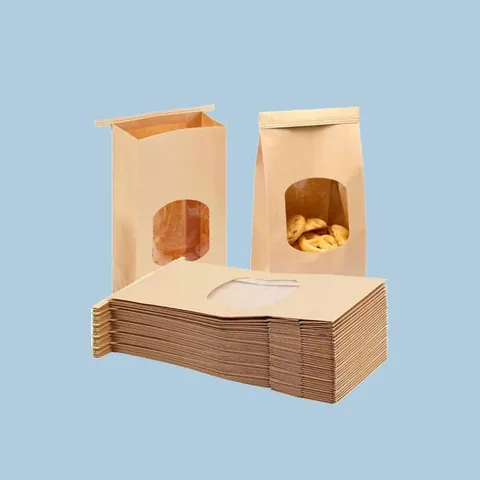
A tuck carton with a die-cut window and clear film patch. Shoppers can see the granola, clusters, or muesli inside. The window adds shelf appeal for premium and craft brands. The printed panels carry your logo, flavor, and copy.
Snack and cluster cartons
Compact cartons for granola clusters, cereal cups, and snack mixes. Each one is sized to a pouch or liner. A smaller footprint suits grab-and-go displays and lighter portion counts without changing your look.
Tray and sleeve formats
An open tray slides into a printed sleeve. It suits multipacks or gifting sets. The inner bags or single-serve boxes stay visible when the sleeve is removed.
Standard cereal box sizes and net weights
| Format | Typical size (H x W x D) | Net weight |
|---|---|---|
| Family / large | 12 x 8 x 2.5 in | 18-24 oz (510-680 g) |
| Standard | 11 x 7.75 x 2 in | 12-18 oz (340-510 g) |
| Small | 9 x 6.5 x 2 in | 10-12 oz (280-340 g) |
| Single-serve / hotel | 4 x 3 x 1.5 in | 1-1.5 oz (28-42 g) |
| Granola window box | 8 x 5 x 2 in | 8-12 oz (227-340 g) |
Standard stock is 16-24 pt SBS (~400-600 gsm) for structure and premium print quality.
Food-safe materials and liners
Cereal sells on freshness, so the material matters. We print on food-grade paperboard that meets FDA 21 CFR 176.170 with food-contact-safe inks. We can add lamination or a coating for scuff resistance and shelf life.
Direct food contact is handled by the inner bag or liner. That is usually PE-coated foil or metallized OPP. The printed box stays clean and your product stays fresh. For a natural look, we can match uncoated kraft stock or recyclable eco-friendly board to your brand.
Nutrition and label compliance
Packaged cereal in the US needs an FDA-compliant Nutrition Facts label per 21 CFR 101.9. The current format was updated in 2016 and has been mandatory since 2020. Serving size must be in bold. Calories go in large type. Added sugars are declared apart. Vitamin D and potassium sit in the needed nutrient list.
Ingredient list and allergen "Contains" statement must be legible at 1/16 in minimum. We save set panel space for these fields inside the dieline.
Shelf-ready printing
Cereal is an impulse, color-driven category, so print quality drives sales. We print full CMYK and Pantone-matched color for vivid, steady shelf appeal. Add gloss, matte, or soft-touch lamination, foil stamping, emboss, and spot UV to make a flavor or logo pop.
The carton panels leave room for a nutrition facts and ingredients panel, a barcode, and claims. You confirm the exact label content and placement so it meets your labeling rules.
Custom cereal boxes with your branding
We print cereal boxes to your exact artwork and sizes. Every order comes with a free custom dieline and 3D mockup. You approve the fit, the window placement, and the finish before we print. There are no die, plate, or setup fees. Custom packaging stays doable for startup cereal and granola brands testing a first run or a new flavor at low volume.
How much do custom cereal boxes cost?
Custom cereal box pricing tracks size, caliper, and add-ons. Typical ranges at a 500-unit run: $0.25 to $0.60 per box for a single-serve or hotel mini cereal box (4 × 3 × 1.5 in) on 16pt SBS; $0.60 to $1.40 per box for a small or standard retail cereal box (9 × 6.5 × 2 to 11 × 7.75 × 2 in) on 20pt SBS; $0.90 to $2.00 per box for a family/large cereal box (12 × 8 × 2.5 in) on 24pt SBS; $1.00 to $2.40 per box for a granola window box with die-cut opening and clear film patch.
Add-ons: PET window patch $0.15–$0.40, foil accent $0.10–$0.30, matte or soft-touch laminate $0.10–$0.25, PFAS-free grease-resistant coating $0.15–$0.50. Multi-flavor variant runs on the same dieline share setup cost across SKUs (a 4-flavor line at 500 units per flavor prints together for meaningful per-box savings).
Per-box cost drops 30–40% moving from 500 to 5,000 units. No die, plate, or setup fees on any run.
What drives cereal box price, in order of impact:
- Size + caliper — a family-format 24pt box uses ~3x the board of a single-serve 16pt hotel box.
- Quantity — per-box cost drops sharply from 100 to 500 to 1,000+.
- Multi-flavor variants — running 4 flavors on the same dieline together cuts per-SKU setup meaningfully; digital press keeps unit cost flat across variants at low volume.
- Window patching — food-safe PET film adds one off-press step; drives impulse sales on granola/muesli.
- Finish stack — matte laminate is standard for shelf-scuff resistance; foil accents and soft-touch reserved for premium and craft brands.
- Print method — digital wins under ~500 units per flavor; offset wins at 1,000+ per flavor for the tightest Pantone match cereal-shelf color needs.
Send your bag/liner size, flavor count, and quantity on the quote form for exact per-box pricing.
How long do custom cereal boxes take to make?
Standard production is 8 to 10 business days after proof approval. Rush production runs in 4 to 6 business days on most orders at no additional charge, including window and single-flavor builds. Multi-flavor variant runs (4–6 SKUs on the same dieline) add 1 to 3 days for staged press setups.
PFAS-free grease-resistant coating and food-grade laminates are on-hand and add no lead time. Ground freight from Cheshire, Connecticut adds 2 to 5 days to reach the West Coast — expect a full quote-to-dock timeline of about 2 to 3 weeks for a first order.
Startup cereal and granola brands: order 30–45 days ahead of retail rollout so co-packer fill lines have printed boxes ready before the first PO ships. Direct-to-consumer subscription cereal brands: back-plan reorders 60 days ahead of each cycle so a fresh drop reaches the co-packer before the previous cycle's inventory runs out.
Tuck-top vs single-serve vs granola window box: which should you choose?
The three main cereal-box structures solve different shelf and channel jobs. A classic tuck-top cereal carton is the retail-standard tall upright box that stacks cleanly on a grocery shelf and gives you large front, back, and side panels for branding and Nutrition Facts.
A single-serve or hotel mini is a small portion-control carton for hotels, school lunches, sampling programs, and variety packs. A granola window box is a shorter tuck carton with a die-cut window and clear film that lets shoppers see the coarse texture and cluster size — proven impulse driver on premium granola shelves.
| Tuck-top retail | Single-serve / hotel | Granola window box | |
|---|---|---|---|
| Typical size | 9–12 in H × 6.5–8 in W | 4 × 3 × 1.5 in | 8 × 5 × 2 in |
| Net weight | 10–24 oz | 1–1.5 oz | 8–12 oz |
| Print panel area | Large — full front, back, sides | Small — front + side only | Reduced — window cutout removes area |
| Best channel | Grocery, mass retail, big-box | Hotels, schools, variety packs, sampling | Natural/craft/premium, farmers' market |
| Typical cost (500-run) | $0.60–$2.00 | $0.25–$0.60 | $1.00–$2.40 |
| Best for | Family + standard cereal SKUs | Portion control, sampling, hotels | Granola, muesli, cluster, craft |
Many cereal brands run all three: tuck-top standard for grocery, single-serve hotel for restaurant supply and variety-pack SKUs, granola window for the premium craft line. A matched art system across all three keeps the family look consistent while each structure hits its own channel and price economics.
Pricing, minimums, and turnaround
Cereal box pricing depends on the box size, board, window and finishes, and order quantity. The per-box cost drops as volume rises. There are no die, plate, or setup fees. The minimum is 100 boxes. Standard runs take 8 to 10 business days after proof approval, with rush on hand.
Every order comes with a free dieline, 3D mockup, and free US shipping. Request a free quote with your size and quantity for exact pricing.
Are custom cereal boxes worth it for a startup granola or cereal brand?
Yes, and startup breakfast brands — small-batch granola makers selling at farmers' markets, craft muesli brands going into natural-food retail, DTC subscription cereal startups, home-based clean-label cereal makers — are exactly who the 100-box minimum was built for.
A printed 24pt SBS cereal box at $0.90–$2.00 per box turns a small-batch granola into a shelf-ready branded product that stands next to established brands at Whole Foods, Sprouts, and independent natural-food stores without the buyer question “is this legit?” that a stock white carton with a printed label triggers.
Beyond brand lift, cereal packaging carries a heavy compliance role: FDA 21 CFR 101.9 Nutrition Facts panel (mandatory since 2020 with Added Sugars line + Vitamin D + potassium), FALCPA allergen callout (wheat, milk, soy, tree nuts are all common cereal allergens), and net-weight labeling in metric + US units.
A stock cereal carton with a printed sticker doesn't guarantee any of these are correctly positioned or legally readable at 1/16 in minimum type. Common startup pattern: 100 boxes for a single flavor's farmers-market debut, then 250–500 across 3–4 flavors as natural-retail placement expands (running the flavors together on the same dieline shares setup cost across SKUs).
DTC subscription cereal brands pair the printed retail box with a corrugated master shipper for the recurring monthly drop.
Are cereal boxes recyclable?
Outer paperboard box: yes. Food-grade SBS, kraft, and CCNB paperboard cereal boxes are all curbside-recyclable in nearly every US municipal program — paper and paperboard recovery in the US is 76% per US EPA, one of the highest recovery rates of any material class.
Soy and water-based inks keep the box recyclable and are FDA-compliant under 21 CFR 176.170. Matte and aqueous coatings stay in most curbside streams. Heavy laminates, foil stamping, and PET window patches reduce recyclability — small foil accents on a hero logo are usually accepted; full metallic wraps are not.
The inner liner is the recyclability challenge for cereal: standard PE-coated foil and metallized OPP inner bags are mixed-material and typically not recyclable in curbside programs (they go to landfill or, in some markets, to store drop-off soft-plastic collection at supermarkets).
PFAS-free grease-resistant coatings on the outer box stay in the recyclable paper stream; legacy PFAS-based coatings are now banned in California (AB 1200 effective 2023), New York, Washington, and Colorado because they contaminate paper recycling. For a fully-recyclable cereal package, we recommend FSC-certified SBS or kraft outer box, PFAS-free coating instead of laminate, small foil accents instead of full metallic wraps, bio-film window patches instead of PET, and a paper-based inner liner (compostable BPI-certified glassine or cellulose alternatives are emerging for craft brands, though they carry a cost premium).
See eco-friendly boxes for the full sustainable range.
Frequently Asked Questions
Are your cereal boxes food-safe?
Yes. We print cereal boxes on food-grade paperboard with food-contact-safe inks. We also offer food-safe material options. In most cereal packaging the product sits inside an inner bag or liner. The printed carton is the outer pack and your cereal stays fresh and safe.
Do the boxes include the inner bag or liner?
We print the outer cereal carton. The inner food-contact bag or liner that holds the cereal is usually supplied by your brand or filler. Tell us what you plan to use. We will size the carton to fit your bag or pouch and confirm the right format for your line.
Can I add a window to show the cereal or granola?
Yes. We can die-cut a window into the carton and add a clear film patch. Shoppers can see the granola, clusters, or muesli inside. Window placement and size go into your dieline and 3D mockup. You approve the look before we print.
Is there room for a nutrition and ingredients panel?
Yes. A cereal carton has large front, back, and side panels. There is plenty of room for a nutrition facts and ingredients panel, a barcode, and claims. You provide and confirm the exact label content and placement so it meets your labeling rules.
What sizes and dimensions can I get?
Any size. Cereal boxes are made to your product. That covers single-serve mini cartons a few inches tall up to full retail and family-size boxes. Sizes are given as length x width x depth. If you are unsure, send your bag, pouch, or product specs. We will size the box and supply a free dieline and 3D mockup.
How much do custom cereal boxes cost?
Cost depends on the box size, board, window and finishes, and order quantity. It drops as volume rises. Every job is custom, so we quote per project rather than list a flat price. There are never die, plate, or setup fees. The minimum is just 100 boxes. Send your sizes and quantity for an exact, no-obligation quote.
What is the lead time and minimum order?
The minimum is 100 boxes with no die, plate, or setup fees. Standard runs take 8 to 10 business days after you approve the proof. Rush is on hand if your launch date is tight. US shipping is free.
What is a cereal box?
A cereal box is food-safe printed paperboard packaging built to hold breakfast cereal, granola, muesli, and snack mix inside a food-contact-safe inner bag or liner, while carrying the brand story, Nutrition Facts panel, and shelf-standing presence on retail shelves.
Actually two components: outer printed SBS carton per FDA 21 CFR 176.170 + inner PE-coated foil or metallized OPP bag for oxygen/moisture barrier. Three unusual requirements: inner-liner sizing, FDA 21 CFR 101.9 Nutrition Facts panel (2016 update, Added Sugars mandatory since 2020), and shelf-color print quality (cereal competes on saturation more than most food categories).
How much do custom cereal boxes cost?
Rough ranges at a 500-unit run: single-serve/hotel mini (4×3×1.5 in) on 16pt SBS $0.25 to $0.60 per box; small or standard retail (9×6.5×2 to 11×7.75×2 in) on 20pt SBS $0.60 to $1.40; family/large (12×8×2.5 in) on 24pt SBS $0.90 to $2.00; granola window box (8×5×2 in) with clear film patch $1.00 to $2.40.
Add-ons: PET window $0.15–$0.40, foil accent $0.10–$0.30, laminate $0.10–$0.25, PFAS-free grease-resistant coating $0.15–$0.50. Multi-flavor variant runs on the same dieline share setup cost. Per-box cost drops 30 to 40 percent moving from 500 to 5,000 units.
No die, plate, or setup fees.
Tuck-top vs single-serve vs granola window box — which should I use?
Tuck-top retail cereal carton: 9–12 in H, 10–24 oz net weight, large front/back/side print panels, $0.60–$2.00 at 500 — for grocery and mass retail. Single-serve/hotel mini: 4×3×1.5 in, 1–1.5 oz, small print area, $0.25–$0.60 — for hotels, schools, variety packs, sampling.
Granola window box: 8×5×2 in, 8–12 oz, die-cut window shows coarse texture and clusters, $1.00–$2.40 — for premium natural/craft granola and muesli. Many brands run all three across product lines.
How do you design an FDA-compliant cereal box, step by step?
Six steps: (1) size the box around the inner bag or liner (not the cereal directly — outer sized to the pouch), (2) choose stock and caliper (16pt single-serve, 20pt standard retail, 24pt family/large; all meet FDA 21 CFR 176.170), (3) reserve FDA-compliant Nutrition Facts panel space per 21 CFR 101.9 (bold serving size, large calories, mandatory Added Sugars, Vitamin D + potassium) + FALCPA allergen callout + net weight in metric AND US units, (4) add window if granola/muesli sells on visual texture, (5) approve printed proof and Pantone-match front panel (cereal photographic imagery unforgiving of hue drift), (6) print, die-cut, fold flat, ship.
Are custom cereal boxes worth it for a startup granola or cereal brand?
Yes — startup breakfast brands (small-batch granola, craft muesli, DTC subscription cereal, clean-label home makers) are exactly who the 100-box MOQ was built for. A printed 24pt SBS box at $0.90–$2.00 turns small-batch granola into a shelf-ready branded product for natural-food retail without the "is this legit?" question a stock white box triggers.
Cereal packaging also carries heavy compliance: FDA 21 CFR 101.9 Nutrition Facts (mandatory since 2020), FALCPA allergen callout, net weight in metric + US. A stock carton with a sticker doesn't guarantee these are correctly positioned at 1/16 in min type.
Are cereal boxes recyclable?
Outer paperboard box: yes. Food-grade SBS, kraft, and CCNB cereal boxes are curbside-recyclable — US paper recovery is 76% (US EPA). Soy inks and aqueous coatings stay recyclable. The inner liner is the recyclability challenge: standard PE-coated foil and metallized OPP inner bags are mixed-material and typically NOT curbside-recyclable (they go to landfill or supermarket soft-plastic drop-off).
PFAS-free grease-resistant coatings on the outer box stay in the paper stream (legacy PFAS-based now banned in CA/NY/WA/CO). Small foil accents OK, full metallic wraps not.
Who orders custom cereal boxes?
Custom food and beverage packaging is ordered by operators whose packaging must be food-safe, grease-resistant, and camera-ready in the same moment.
- Bakeries and pastry shops — window cake boxes, cupcake trays, and cookie cartons in grease-resistant SBS with your logo on the lid.
- Restaurants, cafés, and ghost kitchens — takeout containers, sandwich wraps, and delivery-ready boxes that survive a 30-minute delivery bag.
- Craft beverage and coffee brands — 6-pack and 12-pack carriers, coffee bag boxes, and gift crates with FDA-compliant food-contact inks.
- Chocolate and confectionery makers — rigid gift boxes and folding cartons with foil, embossing, and food-safe internal dividers.
- Meal-kit and subscription food services — mailer boxes with cold-chain-compatible liners and recipe-card compartments.
How to order custom cereal boxes
Five steps from quote to delivery. Every order includes free design support, a free custom dieline, and a digital mockup for approval before anything hits the press.
- Share your specs. Send box dimensions (or a photo of the product), quantity, material preference, and any artwork or logo files. If you're unsure of the size, our design team can advise from a product photo.
- Get a quote and mockup. Within one business day we return a firm quote, a printable dieline, and a 3D digital mockup of your cereal boxes. No die, plate, or setup fees are added.
- Approve the proof. Review the mockup, request color, layout, or dieline changes, and give final approval. Revisions are unlimited before press.
- Production (8–10 business days). Your order runs on offset or digital press, then moves through finishing — lamination, spot UV, foil stamping, embossing, die-cutting, and assembly if needed.
- Free US shipping. Orders ship flat-packed with tracking. Assembled bundles or master-carton packing are available on request at no charge.
Resources & tools
Free tools and trusted references to help you size, spec, and choose the right cereal boxes before you order.
Free tools & guides
- Food packaging by product – match the right food-safe box to what you sell.
- Packaging materials – compare SBS, kraft, corrugated, and rigid stocks.
- Food & beverage packaging hub – compare every food-grade box style we make.
Trusted references
- FDA — Packaging & Food Contact Substances – the federal rules on materials that touch food.
- FDA — Food Labeling & Nutrition – the federal rules for food product labels and nutrition facts.
- USDA — Food Safety & Inspection Service – federal food-safety guidance for meat, poultry, and processed foods.
- How2Recycle – the standardized on-pack recycling label for paperboard and kraft packaging.