Custom Beverage Boxes
Custom beverage boxes are printed carriers and cartons built to hold, protect, and brand bottles, cans, juice pouches, and drink mixes. They suit craft and CPG drink brands.
Packaging Vista makes 4-pack and 6-pack bottle and can carriers, single-bottle gift boxes, and divided drink cartons. We print on sturdy corrugated, kraft, and food-grade cardstock with food-contact-safe inks in full CMYK or Pantone color.
Order from just 100 boxes with no die, plate, or setup fees. Get free design help, dieline, and 3D mockup. Your beverage packaging ships in 8 to 10 business days with free US delivery.
Key takeaways
- Carriers and cartons: 4-pack and 6-pack bottle and can carriers, basket carriers with handles, single-bottle gift boxes, and divided drink cartons.
- Bottles stay safe: custom dividers and sturdy board keep glass and cans from clinking, shifting, and breaking in transit.
- Low barrier: 100-box minimum, no die, plate, or setup fees, free dieline & 3D mockup, 8-10 day turnaround, free US shipping.
- Go deeper: see the food & beverage hub, compare kraft boxes, read our food packaging by product guide, then request a free quote.
What is a beverage box?
A beverage box is custom-printed packaging built to hold, protect, and brand bottles, cans, juice pouches, or drink mixes — from 4-pack aluminum-can carriers for craft brewers to single-bottle rigid gift boxes for premium spirits to 12-count corrugated cases for direct-ship kombucha.
The category covers self-locking basket carriers with center handles, snug-compartment 4/6-pack can carriers, closed cartons with internal dividers, wine and spirits gift tubes, and rigid retail cases for shelf and DTC shipping.
Beverage packaging has three unusual requirements that separate it from most food packaging: load-bearing structure (a loaded 6-pack of glass bottles weighs 6–7 lb — the corrugated flute and ECT rating have to match the pack weight or the shipper splits at the corner in the parcel network), moisture and cold-chain durability (paperboard weakens fast when wet, and beverage cartons live in humid warehouses, refrigerated cases, and ice-filled displays), and for alcohol brands TTB regulatory labeling (Alcohol and Tobacco Tax and Trade Bureau rules for government warnings, class-and-type designation, ABV, and net contents, plus state-by-state DTC shipping compliance for wineries and craft brewers).
Beverage box styles
The right structure depends on your container, pack count, and how the drink sells. These are the beverage box styles we print most often:
4-pack and 6-pack bottle and can carriers
The retail workhorse for craft beer, hard seltzer, cold brew, and craft soda. Snug compartments hold each bottle or can in place, and built-in handles make a 4-pack or 6-pack easy to grab off the shelf and carry home.
Basket carriers with a handle
An open-top basket carrier puts your bottles on display while a center handle keeps them secure - a popular look for glass juice, kombucha, and specialty soda lines at markets and taprooms.
Single-bottle gift boxes
A tube or rigid-style box for one premium bottle of spirits, wine, cold-press juice, or syrup - ideal for gifting, sampling, and limited releases.
Drink-mix and powder cartons
Folding cartons sized for drink mix, electrolyte, protein, or instant-coffee sachets, with strong shelf presence and panels for nutrition facts and branding.
Juice and multi-can cartons with dividers
Closed cartons with internal partitions secure bottled juice, sparkling water, or 12-count can packs for shipping and stacked retail display.
Dividers and strength for bottles and cans
Drinks are heavy and breakable, so structure matters more here than in most packaging. We design custom inserts and dividers sized to your exact bottles or cans. Each unit stays split up and cushioned. Glass stops clinking and cracking.
For the box itself we pick board by weight. We use heavier corrugated for glass bottles and multi-can packs. Lighter paperboard fits slim cans and light-weight pouches.
Standard beverage carrier specs
| Format | Typical container | Recommended stock | Loaded weight |
|---|---|---|---|
| 4-pack can carrier | 12 or 16 oz aluminum | E-flute corrugated | 1.5-2.5 lb |
| 6-pack can carrier | 12 oz aluminum | E-flute or B-flute | 4-5 lb |
| 4-pack bottle carrier | 12 oz glass longneck | B-flute corrugated | 3.5-4.5 lb |
| 6-pack bottle basket | 12 oz glass longneck | B-flute + handle | 6-7 lb |
| 12-count case | Cans or 12 oz bottles | BC double-wall corrugated | 12-16 lb |
| Single-bottle gift | 750 ml wine, spirits | Rigid chipboard or tube | 3-3.5 lb |
Your free 3D mockup lets you confirm the carrier holds the load before production.
Food-safe materials
Beverage packaging that touches drink containers, and sometimes the product itself, needs the right stock. We print on food-safe options. That includes food-grade SBS cardstock, natural kraft, and sturdy corrugated, all with food-contact-safe inks.
Kraft reads as natural and clean for organic and artisan drink brands. SBS gives bright retail color. Corrugated adds the strength heavier bottles need. Ask us to match a food-safe stock to your format on your quote request.
Custom beverage boxes with your branding
We print beverage boxes to your exact artwork in full CMYK and Pantone-matched color. Every order comes with a free custom dieline and 3D mockup. You approve the fit before we print.
Add gloss, matte, or soft-touch lamination. Layer on foil stamping, emboss or deboss, spot UV, and window patching to make a craft beverage pop on a crowded shelf. With no die, plate, or setup fees and a 100-box minimum, small and growing drink brands can launch a branded carrier without a large run. It fits craft breweries, juice startups, and specialty soda makers.
How much do custom beverage boxes cost?
Custom beverage box pricing tracks pack size, corrugated grade, and add-ons. Typical ranges at a 500-unit run: $0.30 to $0.80 per box for a 4-pack aluminum-can carrier (12 or 16 oz cans) on E-flute corrugated; $0.60 to $1.40 per box for a 6-pack can carrier or 4-pack bottle carrier on E-flute or B-flute; $1.00 to $2.20 per box for a 6-pack bottle basket carrier with center handle on B-flute; $1.50 to $3.20 per box for a 12-count case shipper on BC double-wall corrugated; $1.80 to $4.50 per box for a single-bottle rigid gift box or tube (750 mL wine/spirits) in chipboard with wrap.
Insert and divider adders: die-cut corrugated dividers $0.20–$0.60 per box, molded pulp cavity $0.30–$0.90, wax coating $0.10–$0.30, poly liner $0.15–$0.45. Per-box cost drops 30–40% moving from 500 to 5,000 units. No die, plate, or setup fees on any run.
What drives beverage box price, in order of impact:
- Corrugated flute + ECT — the biggest cost lever. E-flute cheapest for light cans; double-wall BC costs more but is required for heavy 12-count glass cases.
- Quantity — per-box cost drops sharply from 100 to 500 to 1,000+.
- Divider / basket structure — an internal die-cut divider adds a step but is essential for glass bottles.
- Moisture coating — wax cheapest and short-lived; poly liner longer-lasting; PFAS-free grease-resistant if applicable.
- Print method — flexo cheapest for large simple-artwork shipper runs; offset for retail carrier print quality; litho-lam when a large shipper needs photo-quality graphics.
- Finish stack — soft-touch and foil are usually reserved for retail carriers and gift boxes, not for shipping cases.
Send your container weight, pack size, and channel (retail carrier vs DTC shipping case) on the quote form for exact per-box pricing.
How long do custom beverage boxes take to make?
Standard production is 8 to 10 business days after proof approval. Rush production runs in 4 to 6 business days on most orders at no additional charge, including window and divider builds. Wax-coated and poly-lined stocks for cold-chain builds are on-hand and add no lead time.
Rigid single-bottle gift boxes with hand-assembly add 1 to 2 days. TTB compliance-check review for alcohol brands takes place during the standard proof cycle and doesn't add lead time. Ground freight from Cheshire, Connecticut adds 2 to 5 days to the West Coast — expect a full quote-to-dock timeline of about 2 to 3 weeks for a first order.
Craft breweries and wineries targeting seasonal releases (spring lager, summer IPA, fall pumpkin, winter holiday): back-plan reorders 60–90 days ahead of the release date so printed carriers reach the packing line before the first batch is ready.
4-pack can carrier vs 6-pack bottle basket vs 12-count case: which should you choose?
The three main beverage-carrier structures cover most craft and CPG beverage programs. A 4-pack aluminum-can carrier is the craft-beer, hard-seltzer, and cold-brew workhorse — light, cheap, prints well on E-flute for retail shelf. A 6-pack bottle basket carrier is the specialty-soda, kombucha, and craft-glass standard — open-top display with center handle for grab-and-go retail.
A 12-count case shipper is the direct-ship and wholesale-distribution build — double-wall corrugated for parcel-network survival across 6–7 lb (bottles) or 12–16 lb (case) of load.
| 4-pack can carrier | 6-pack bottle basket | 12-count case shipper | |
|---|---|---|---|
| Container | 12 or 16 oz aluminum cans | 12 oz glass longneck | Cans or 12 oz bottles |
| Corrugated grade | E-flute (26–32 ECT) | B-flute (32 ECT) + handle | BC double-wall (48–71 ECT) |
| Loaded weight | 1.5–2.5 lb | 6–7 lb | 12–16 lb |
| Channel | Retail shelf, taproom, farmers' market | Retail shelf, natural food, boutique | DTC shipping, wholesale, distribution |
| Typical cost (500-run) | $0.30–$0.80 | $1.00–$2.20 (basket + handle) | $1.50–$3.20 |
| Best for | Craft beer, hard seltzer, cold brew, RTD cocktails | Kombucha, craft soda, cold-press juice | Distribution, DTC winery/brewery, corporate gift 12-packs |
Many craft beverage brands run all three: 4-pack can carriers for the flagship retail SKU, 6-pack bottle baskets for seasonal specialty releases, 12-count double-wall cases for DTC direct-ship and wholesale distribution. A matched art system keeps the family look consistent across retail and shipping structures.
Pricing, minimums, and turnaround
Beverage box pricing depends on size, style, finishes, and quantity. A divided carrier costs more than a plain carton. The per-box cost drops as volume rises.
There are no die, plate, or setup fees. The minimum is 100 boxes. Standard runs take 8 to 10 business days after proof approval, with rush on hand. Every order comes with a free dieline, 3D mockup, and free US shipping. Bottling stateside? See why brands choose a US beverage box manufacturer. Request a free quote with your container, pack count, and quantity for exact pricing.
Alcohol packaging: TTB label placement and direct-to-consumer shipping
Alcohol beverage packaging follows label rules from the federal Alcohol and Tobacco Tax and Trade Bureau (TTB) and separate direct-to-consumer shipping rules that vary by state. On a bottle carton or a multi-pack, the government warning statement has to appear in the required size and wording; the class and type designation, alcohol content, and net contents follow.
We place these on a rear or side panel so the front stays clean for brand storytelling, and we run a compliance check on the dieline before it goes to press.
For direct shipping to consumers, the outer shipper has to carry “contains alcohol” and adult-signature-required marks, and some states require an additional carrier declaration. We build these into the shipper artwork and dieline, so a winery or craft brewery does not have to hand-stamp cartons at pack-out.
If the brand ships to multiple states, a single shipper design that covers the strictest state usually works everywhere else too and keeps SKU counts down in the warehouse.
Moisture, condensation, and cold chain: keeping paperboard beverage boxes strong
Paperboard weakens fast when it gets wet, and beverage cartons often live in humid warehouses, refrigerated cases, or ice-filled displays. The default fix is a wax coating on the inner surface or a poly-lined stock. Wax is cheap and works well for short shelf lives; poly-lined board holds up longer and is easier to recycle in curbside streams that accept coated paperboard.
For chilled or refrigerated beverage shippers, we spec a moisture-resistant stock and add a slightly heavier board caliper so the box can handle condensation without softening at the corners.
Six-pack and case shippers for glass bottles need a corrugated grade that matches the total pack weight. A 6-pack of 12-ounce glass bottles usually weighs 6 to 7 pounds; we spec a 32 ECT B-flute for that load. A case of 24 heavier long-neck bottles needs a stronger 44 ECT or a C-flute build. Getting the flute right up front is cheaper than replacing a run of split shippers after a warehouse test.
Are custom beverage boxes worth it for a craft brewery or indie beverage brand?
Yes, and craft beverage brands — independent breweries, small-batch cideries, craft distilleries, kombucha startups, cold-press juice brands, hard-seltzer indies, craft-soda makers, cold-brew coffee shops going into cans — are exactly who the 100-box minimum was built for.
A printed 4-pack can carrier on E-flute at $0.30–$0.80 per box turns a small-batch craft beer into a taproom-and-retail branded product for less than a dollar per unit — the smallest per-unit beverage packaging investment. Craft beverage is unusually margin-friendly at this scale because buyers accept the taproom premium and packaging drives the retail impulse purchase.
Beyond brand lift, alcohol packaging carries a real compliance role: TTB (Alcohol and Tobacco Tax and Trade Bureau) requires the government warning statement, class-and-type designation, ABV, and net contents on any alcoholic beverage carton, and DTC shipping across state lines requires state-specific carrier declarations (California, New York, and Texas have the strictest requirements).
A stock white carton with a printed sticker doesn't meet TTB or common carrier compliance for interstate DTC alcohol shipping. Common craft launch pattern: 100 boxes for a taproom-only debut of a seasonal SKU, then 250–500 4-pack carriers as retail placement expands, plus 100 12-count DTC case shippers as the direct-to-consumer club program builds.
Non-alcohol craft brands (kombucha, craft soda, cold-brew) skip TTB but still hit ECT and moisture-coating specs the same way — a 6-pack of glass kombucha weighs the same as a 6-pack of beer.
Are beverage boxes recyclable?
Yes for most builds. Uncoated corrugated and paperboard beverage cartons are curbside-recyclable nearly everywhere in the US — corrugated is the most-recycled packaging material in the US with old corrugated container (OCC) recovery rates above 90% per American Forest & Paper Association.
Soy and water-based inks keep the box recyclable and are FDA-compliant under 21 CFR 176.170. Wax-coated stock is not accepted in most curbside programs but is compostable in industrial facilities where available (still ends up landfilled in most markets).
Poly-lined board is accepted by curbside programs that also take milk cartons (roughly 60% of US programs — check locally). PFAS-free grease-resistant coatings stay in the paper stream; legacy PFAS-based coatings are now banned in California (AB 1200 effective 2023), New York, Washington, and Colorado.
Aluminum cans and glass bottles inside the carrier recycle in their own streams and are among the highest-recovery containers in the US (aluminum can recovery ~50%, glass ~30%). For a fully recyclable beverage program, we recommend uncoated corrugated for retail carriers, poly-lined board for cold-chain if a moisture barrier is required (not wax where curbside is preferred), soy inks, and printing the recycling-stream mark directly on the carton so shoppers know how to sort it.
See eco-friendly boxes for the full sustainable range.
Frequently Asked Questions
What pack sizes of beverage carriers can you make?
We build custom dielines for any pack, from single-bottle gift boxes to 4-pack, 6-pack, and 12-count carriers for bottles and cans. Just tell us your container size and pack count. Our free design team will size the carrier and supply a dieline and 3D mockup.
Can you add dividers to keep bottles or cans from clinking?
Yes. We design custom inserts and dividers sized to your exact bottles or cans. Each unit stays split up and cushioned. Glass and cans do not clink, shift, or break in shipping and retail handling.
Are the boxes strong enough for heavy glass bottles?
Yes. We pick board by the weight of your product. We use heavier corrugated for glass bottles and multi-can packs. We use lighter paperboard for slim cans and pouches. Your free 3D mockup confirms the carrier holds the load before we print.
Are your beverage boxes food-safe?
We offer food-safe options. That includes food-grade SBS cardstock, natural kraft, and corrugated. All are printed with food-contact-safe inks. Tell us your product on your quote request. We will match a food-safe stock to your beverage format.
What sizes and dimensions can I get?
Any size. Beverage boxes are made to your container and pack count, given as length x width x depth. If you are unsure, send a sample or bottle and can specs. We will size the box and supply a free dieline and 3D mockup to confirm the fit before we print.
How much do custom beverage boxes cost?
Cost depends on the box size, style, finishes, and order quantity. It drops as volume rises. Every job is custom, so we quote per project rather than list a flat price. There are never die, plate, or setup fees. The minimum is just 100 boxes. Send your container, pack count, and quantity for an exact, no-obligation quote.
What is the lead time and minimum order on beverage boxes?
The minimum is 100 units with no die, plate, or setup fees. Plan for the standard 8-10 business-day turnaround after proof approval. Rush production is on hand if your launch or event date is tight.
Can you make boxes for shipping wine, beer, or spirits directly to consumers?
Yes. We build TTB-compliant outer packaging with the required government warning, class and type designation, and net contents, plus a shipper with adult-signature and contains-alcohol marks. A single shipper design that satisfies the strictest state is usually the easiest path for wineries or breweries shipping to multiple states.
Are your beverage boxes recyclable in every state?
Uncoated paperboard and corrugated cartons are curbside-recyclable nearly everywhere. Wax-coated stock is not accepted in some curbside programs but is compostable in industrial facilities. Poly-lined board is accepted by most curbside programs that also take milk cartons. We flag the recycling stream on the box on request so shoppers know how to sort it.
How do I know what corrugated grade to pick for a 6-pack of glass bottles?
For a 6-pack of 12-ounce glass bottles (about 6 to 7 pounds total) a 32 ECT B-flute shipper is our default. For heavier long-neck bottles or a 12-pack we step up to 44 ECT or a C-flute build. Tell us bottle weight, count, and whether the shipper needs to survive parcel drops and we spec the flute for you.
What is a beverage box?
A beverage box is custom-printed packaging built to hold, protect, and brand bottles, cans, juice pouches, or drink mixes — from 4-pack aluminum-can carriers for craft brewers to single-bottle rigid gift boxes for premium spirits to 12-count corrugated cases for direct-ship kombucha.
Three unusual requirements vs generic packaging: load-bearing structure (a loaded 6-pack of glass bottles weighs 6–7 lb — corrugated flute + ECT rating must match pack weight), moisture and cold-chain durability (humid warehouses, refrigerated cases, ice-filled displays weaken uncoated paperboard), and for alcohol brands TTB regulatory labeling.
How much do custom beverage boxes cost?
Rough ranges at a 500-unit run: 4-pack can carrier on E-flute $0.30 to $0.80 per box; 6-pack can carrier or 4-pack bottle carrier on E-flute or B-flute $0.60 to $1.40; 6-pack bottle basket with center handle on B-flute $1.00 to $2.20; 12-count case shipper on BC double-wall $1.50 to $3.20; single-bottle rigid gift box or tube (750 mL wine/spirits) $1.80 to $4.50.
Insert/divider adders: die-cut corrugated dividers $0.20–$0.60, molded pulp $0.30–$0.90, wax coating $0.10–$0.30, poly liner $0.15–$0.45. Per-box cost drops 30 to 40 percent moving from 500 to 5,000 units.
4-pack can vs 6-pack bottle basket vs 12-count case — which should I choose?
4-pack can carrier: light 1.5–2.5 lb load, E-flute (26–32 ECT), $0.30–$0.80 at 500 — for craft beer, hard seltzer, cold brew, RTD cocktails. 6-pack bottle basket: 6–7 lb load, B-flute + handle, $1.00–$2.20 — for kombucha, craft soda, cold-press juice retail. 12-count case: 12–16 lb load, BC double-wall (48–71 ECT), $1.50–$3.20 — for DTC shipping, wholesale distribution, corporate gift 12-packs.
Many craft beverage brands run all three.
How do you design a beverage box that survives shipping and retail, step by step?
Six steps: (1) weigh the loaded pack and match corrugated flute + ECT (6-pack 12 oz glass = 32 ECT B-flute; 12-pack case = 44 ECT or C-flute; 12-count double-wall BC = 48–71 ECT), (2) spec dividers or basket carrier to stop glass clink, (3) choose stock for moisture/cold-chain exposure (uncoated for dry, wax for short shelf life, poly-lined for cold chain), (4) reserve TTB panel space for alcohol brands (government warning + class-and-type + ABV + net contents + adult-signature-required for DTC), (5) add finishes and Pantone-match brand color, (6) print, die-cut, glue, ship flat-packed to packing line.
Are custom beverage boxes worth it for a craft brewery or indie beverage brand?
Yes — craft beverage brands (independent breweries, small cideries, craft distilleries, kombucha startups, cold-press juice, hard-seltzer indies, craft-soda makers) are exactly who the 100-box MOQ was built for. A printed 4-pack can carrier at $0.30–$0.80 per box turns small-batch craft beer into taproom-and-retail branded product.
Alcohol packaging also carries TTB regulatory compliance (government warning + class-and-type + ABV) plus state-specific DTC shipping requirements (CA/NY/TX have the strictest). A stock white carton with a sticker doesn't meet TTB or common carrier compliance.
Are beverage boxes recyclable?
Yes for most builds. Uncoated corrugated and paperboard beverage cartons are curbside-recyclable nearly everywhere — US OCC recovery is above 90% (AF&PA). Wax-coated is not accepted in most curbside programs (industrial compostable where available).
Poly-lined board is accepted by ~60% of US curbside programs that also take milk cartons. PFAS-free grease-resistant stays in paper stream (legacy PFAS-based now banned in CA/NY/WA/CO). Aluminum cans and glass bottles inside recycle in their own streams.
Who orders custom beverage boxes?
Custom food and beverage packaging is ordered by operators whose packaging must be food-safe, grease-resistant, and camera-ready in the same moment.
- Bakeries and pastry shops — window cake boxes, cupcake trays, and cookie cartons in grease-resistant SBS with your logo on the lid.
- Restaurants, cafés, and ghost kitchens — takeout containers, sandwich wraps, and delivery-ready boxes that survive a 30-minute delivery bag.
- Craft beverage and coffee brands — 6-pack and 12-pack carriers, coffee bag boxes, and gift crates with FDA-compliant food-contact inks.
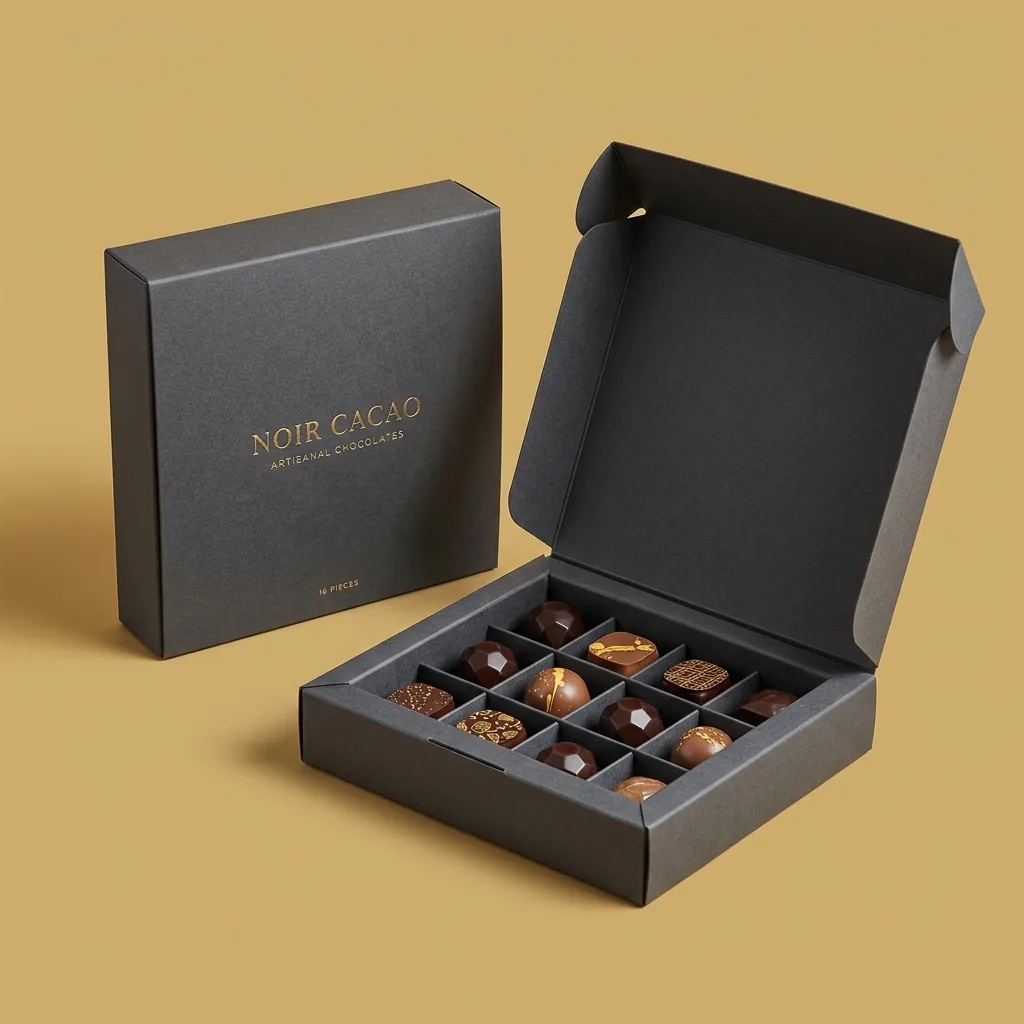
- Chocolate and confectionery makers — rigid gift boxes and folding cartons with foil, embossing, and food-safe internal dividers.
- Meal-kit and subscription food services — mailer boxes with cold-chain-compatible liners and recipe-card compartments.
How to order custom beverage boxes
Five steps from quote to delivery. Every order includes free design support, a free custom dieline, and a digital mockup for approval before anything hits the press.
- Share your specs. Send box dimensions (or a photo of the product), quantity, material preference, and any artwork or logo files. If you're unsure of the size, our design team can advise from a product photo.
- Get a quote and mockup. Within one business day we return a firm quote, a printable dieline, and a 3D digital mockup of your beverage boxes. No die, plate, or setup fees are added.
- Approve the proof. Review the mockup, request color, layout, or dieline changes, and give final approval. Revisions are unlimited before press.
- Production (8–10 business days). Your order runs on offset or digital press, then moves through finishing — lamination, spot UV, foil stamping, embossing, die-cutting, and assembly if needed.
- Free US shipping. Orders ship flat-packed with tracking. Assembled bundles or master-carton packing are available on request at no charge.
Resources & tools
Free tools and trusted references to help you size, spec, and choose the right beverage boxes before you order.
Free tools & guides
- US beverage box manufacturing – why craft drink brands source carriers stateside.
- Food & beverage packaging hub – compare every food-grade box style we make.
- Box Size & Dimensional Weight Calculator – size your box and see the billable weight UPS, FedEx, and USPS charge.
Trusted references
- FDA — Packaging & Food Contact Substances – the federal rules on materials that touch food.
- FDA — Food Labeling & Nutrition – the federal rules for food product labels and nutrition facts.
- USDA — Food Safety & Inspection Service – federal food-safety guidance for meat, poultry, and processed foods.
- How2Recycle – the standardized on-pack recycling label for paperboard and kraft packaging.