Custom Cannabis Boxes
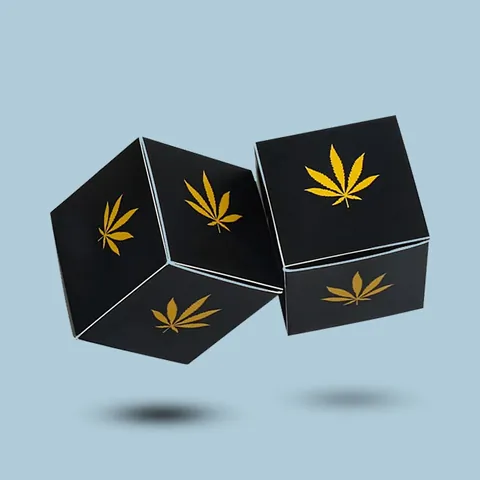
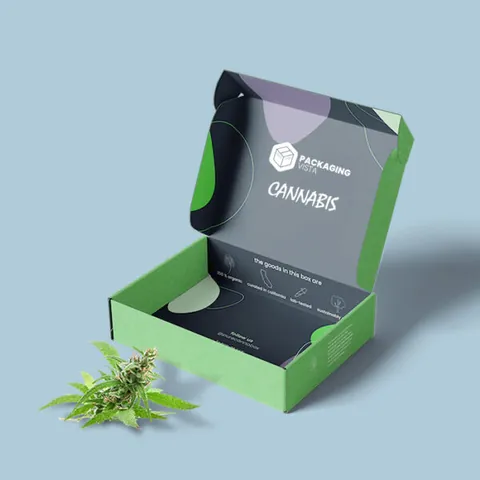
Custom cannabis boxes are printed retail packs for flower, pre-rolls, edibles, concentrates, and vape carts. They show off your brand. They also carry the warnings, THC content, and batch info a regulated product needs.
Packaging Vista makes these for dispensaries and growing cannabis brands. We build in compliance-aware layouts and child-resistant options where you need them. Order from just 100 boxes with no die, plate, or setup fees. You get full CMYK and Pantone print, a free dieline and 3D mockup, and an 8 to 10 day turnaround with free US shipping.
Key takeaways
- Built for the category: rigid flower cartons, pre-roll tubes, edible boxes, and concentrate packaging printed to your exact spec.
- Compliance-aware: dielines reserve space for warning symbols, THC content, net weight, batch numbers, and a COA QR code, with child-resistant constructions where needed.
- Low barrier: 100-box minimum, no die, plate, or setup fees, free dieline & 3D mockup, 8-10 day turnaround, free US shipping.
- Go deeper: compare marijuana boxes, pre-roll boxes, and CBD packaging, read how cannabis packaging changes after Schedule III, then request a free quote.
Cannabis box styles by product
The right structure depends on the product and how it sits on a shelf. The table below maps common cannabis products to a fit-for-purpose box, with links to each option.
| Product | Recommended packaging |
|---|---|
| Flower (eighths, jars) | Rigid two-piece or tuck cartons sized to the jar or bag. |
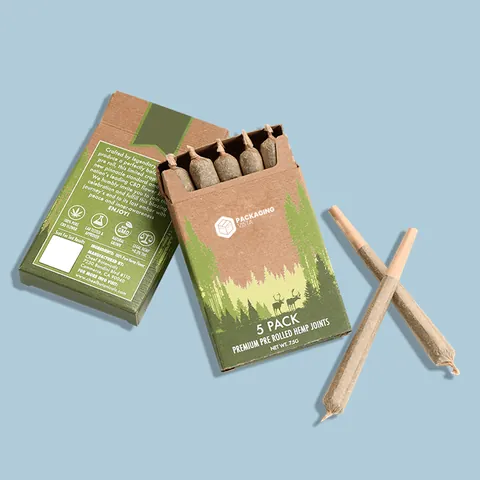
| Pre-rolls | Slim tubes and multi-pack cartons with CR closures – see pre-roll boxes. |
| Edibles & gummies | Opaque, child-resistant cartons with full ingredient and dosage panels. |
| Concentrates | Rigid two-piece boxes with snug inserts for jars and containers. |
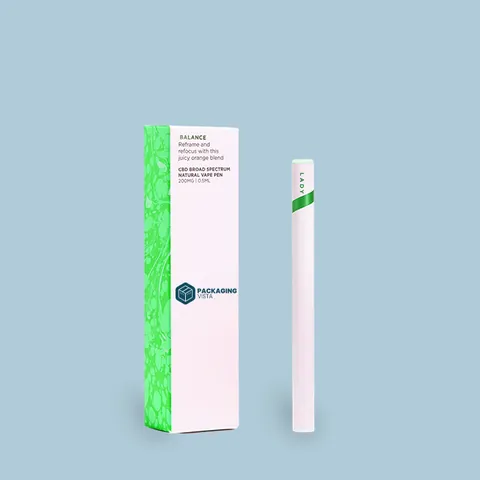
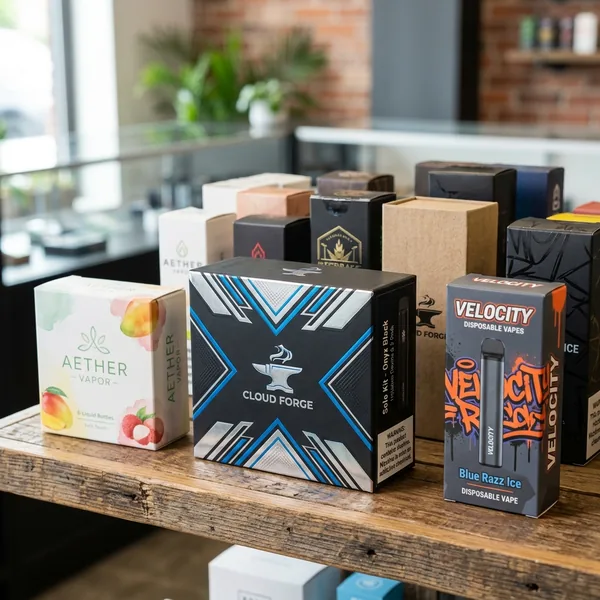
| Vapes & cartridges | Insert-fitted boxes that hold the device securely – see vape boxes. |
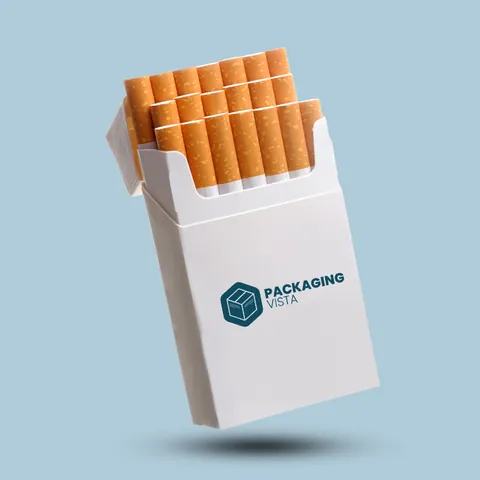
| Disposables & e-cigs | Compact retail cartons for disposable devices – see e-cigarette boxes. |
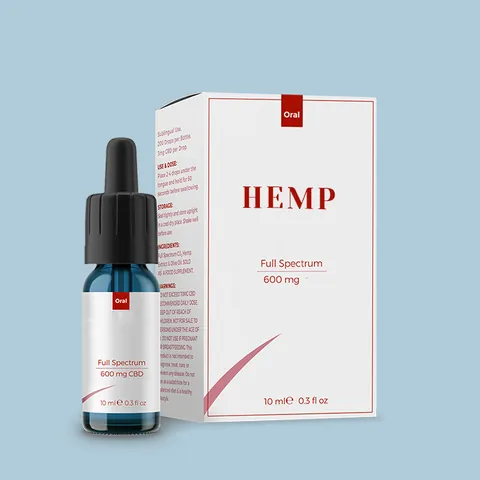
| CBD & hemp oils | Folding cartons that secure the dropper bottle – see hemp oil boxes. |
Compliance and child-resistant options
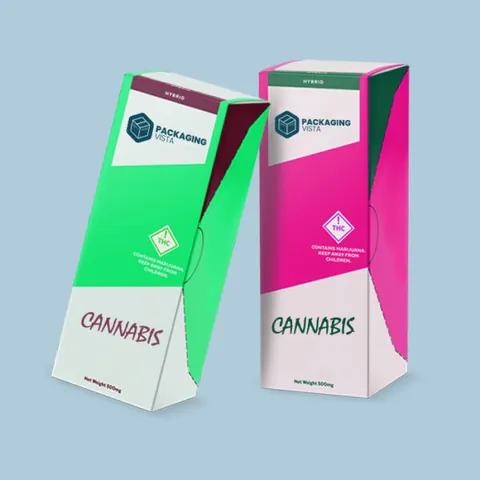
Cannabis packaging is where most state rules bite, so we build the dieline around them. We offer child-resistant builds where needed. That means push-and-turn rigid boxes, CR slide cartons, and tuck designs with CR features. Your dieline reserves clear space for warning symbols, THC content, net weight, batch numbers, and a QR code linking to your Certificate of Analysis.
Edible boxes can print fully opaque and free of any child-appealing design. This is layout help, not legal advice. Rules differ by state, so confirm the rules for each market before you print. Ask about child-resistant layouts for marijuana boxes as well.
Custom cannabis boxes with your branding
We print your exact artwork in full CMYK and Pantone-matched color. You also get a free dieline and 3D mockup. Approve the fit, the compliance copy, and the finish before we print.
Add soft-touch, gloss, or matte lamination. Layer on foil stamp, emboss, deboss, spot UV, and window patching to pop on the shelf. Or keep the outside fully opaque for a subtle, discreet look. No die, plate, or setup fees, so your brand and your sizes are covered from the first 100 boxes.
Materials and sustainability
Three stocks cover most cannabis SKUs. Kraft and recycled paperboard reads natural and clean, a fit for eco-minded buyers. SBS cardstock is the smooth, white standard for crisp full-color print. Rigid board gives the premium, non-collapsible feel that top-shelf flower and concentrate brands want; see rigid boxes for that tier.
For eco-focused lines, pair these with our kraft boxes or eco-friendly boxes. Mix recyclable stock with matte or soft-touch lamination for a clean, premium feel.
Pricing, minimums, and turnaround
Cannabis box price depends on size, structure, CR features, finishes, and quantity. The per-box cost drops as volume rises. There are no die, plate, or setup fees. The minimum is just 100 boxes. Standard runs are 8 to 10 business days after proof approval, with rush on hand.
Every order comes with a free dieline, 3D mockup, and free US shipping. Request a free quote with your product, size, and quantity for exact pricing.
Cannabis product format to box map
Every cannabis SKU has a preferred pack style. The wrong box loses the shelf and, in a regulated state, can fail a compliance check. Common product-to-box pairings:
| Product | Pack style | Typical inside dims |
|---|---|---|
| Flower (eighth, quarter, half, ounce) | Rigid two-piece box or CR-fitted mylar-lined carton around a glass jar or Mylar bag | Sized to jar or 4 × 4 × 4 in for eighths |
| Pre-rolls (single or multi-pack) | Slim tube (single) or hinged CR carton (multi-pack of 3, 5, or 10) | Tube: ø22 × 110 mm · Multi: 100 × 80 × 20 mm |
| Edibles (gummies, chocolates, hard candy) | CR folding carton with tamper-evident band, opaque or semi-opaque | 90 × 65 × 25 mm typical for 10-count gummy tin |
| Concentrates (wax, shatter, rosin) | Small rigid box holding a food-grade concentrate jar, CR insert | ø25 mm jar in a 50 × 50 × 30 mm box |
| Vapes and cartridges (cannabis) | CR-certified box with foam or paperboard cavity for the cart and battery | 110 × 30 × 20 mm typical for cart + battery |
| Topicals (salves, lotions, tinctures) | Standard folding carton or paper-wrapped jar; CR only where the state requires it | Sized to jar or tube |
| Gift and multi-strain sets | Rigid presentation box with die-cut compartments | Custom per line-up |
Send us your product form and the state you sell into and we recommend a matched build with any required CR certification and warning marks laid out on the first proof.
State-by-state packaging rules quick reference
Cannabis packaging rules vary sharply state to state. This is a starting reference; always confirm current rules with your state's regulator or your compliance advisor before you print. Major markets:
- California – child-resistant packaging required for edibles and infused products (BCC/DCC rules). Universal symbol (triangle with THC) required on the front. Font size and location strictly regulated. Prop 65 warnings apply.
- Colorado – CR packaging required. Rectangular THC symbol required on all cannabis products. Opaque packaging for edibles.
- Washington – CR packaging with I-502 warning. WSLCB-approved warning symbol required.
- Oregon – CR required for edibles and multi-serving products. State-specific universal symbol.
- Michigan – CR required, opaque for edibles. State-specific warning symbol. Sealed at manufacture.
- Massachusetts – CR required. Massachusetts-specific warning symbol. Opaque for edibles.
- New York – CR required for adult-use cannabis. Universal warning symbol. Strict font-size rules on warnings.
- Illinois – CR required. Illinois-specific warning symbols on all cannabis products.
- Arizona – CR required. Universal symbol required. Opaque for edibles.
- Multi-state operators – design to the strictest common denominator across your markets. It costs less to over-comply on one SKU than to run different artwork per state.
Each state maintains a current rule sheet online (search “[state name] cannabis packaging requirements”). Requirements change often; a rule current at the time of writing may be updated before your print run. Confirm before you approve the proof.
What is a cannabis box?
A cannabis box is state-regulated printed packaging built for the full US cannabis supply chain — cultivator, processor, distributor, and dispensary retailer — spanning bulk B2B kraft master cases for flower, retail CR cartons for consumer SKUs (flower jars, edibles, concentrates, pre-rolls, vape carts), and multi-product samplers and gift-set boxes for premium and holiday releases.
Unlike a generic retail carton, every cannabis box carries the cannabis regulatory stack for each state it ships into: ASTM D3475 or ASTM F3475 (cannabis-specific reclosable) child-resistant closure, 16 CFR 1700.20 (CPSC Poison Prevention Packaging Act) testing, state-specific universal cannabis symbol from a 10+ state matrix, total THC/CBD potency, license numbers (cultivator + manufacturer + distributor per state rules), batch and COA QR, state-mandated warnings, and Metrc or BioTrack track-and-trace tag zones.
Cannabis packaging has three unusual requirements that separate it from other retail categories: no federal baseline exists — cannabis remains Schedule I as of 2026-09-11 with DEA reclassification to Schedule III pending, so every state has its own CR standard, symbol, warning wording, and track-and-trace system stacking on top of ASTM/CPSC baselines, the supply chain has 3+ regulated handoff points (cultivator → processor → distributor → dispensary) each requiring track-and-trace tag reads, so both bulk B2B master cases AND retail CR cartons must be designed together, and MSOs (multi-state operators) designing for cross-state distribution must harmonize 10+ state programs into one SKU or run state-specific artwork — a packaging design decision that cascades across every product format.
How much do custom cannabis boxes cost?
Cannabis box pricing scales by structure, CR mechanism, product format, finishes, and quantity, with the per-unit price dropping meaningfully as volume rises. Ballpark ranges by cannabis packaging tier (before finishes and volume discounts):
- B2B bulk kraft master case (flower or bulk product, cultivator/processor) — $1.20 to $3.20 per case in 500–2,000-unit runs. Corrugated kraft or SBS master case with track-and-trace tag zone and license-number panel; not CR (not consumer-facing) but must carry batch/lot for state tracking.
- Retail CR flower jar carton (3.5–14 g) — $0.60 to $2.20 per carton. Fitted paperboard insert cradles the glass jar; state universal symbol + potency + license panel.
- Retail CR edible box (gummies, chocolates, bars) — $0.80 to $2.80 per box. Snap-pack or push-and-slide CR with dose-per-serving panel.
- Retail CR concentrate/wax box — $1.20 to $3.60 per box. Rigid or premium tuck with snug jar insert and push-and-turn rigid CR.
- Rigid multi-product sampler or MSO gift-set (holiday, dispensary-exclusive) — $4.00 to $12.00 per set box. Luxury tier with EVA foam divided insert holding multi-format cannabis SKUs.
- White-label / private-label carton for co-manufacturer supply — pricing follows the underlying product-format tier + $0.05–$0.15 per box for variable-data brand panel that changes per label without a plate change.
MSO cost drivers unique to cannabis: designing to the strictest-common-denominator state (usually CA/CO) adds 10–20% to unit cost versus a single-state design but eliminates the need for state-specific SKU runs. Third-party CR certification testing where a state requires it beyond ASTM D3475 paperwork adds 2–3 weeks and $1,000–$3,000 per SKU.
Send target states, product formats, and expected volumes for exact MSO pricing. Request a free quote.
How long do custom cannabis boxes take to make?
Standard cannabis box production is 8–10 business days after proof approval, with rush lanes in 4 to 6 days for launch dates. Add 1–2 days for rigid concentrate or premium multi-product sampler builds. Add 2–3 weeks if any state on your distribution list requires third-party CR certification testing.
Add 1–3 days for multi-strain / multi-flavor / multi-dose variants that need digital-print variable-data setup.
Cannabis-industry launch back-plans: a 60–90 day back-plan is realistic for a single-state new-brand launch (dispensary buyer packaging vetting 45 days ahead, state Metrc/BioTrack integration setup 2–4 weeks). 120–180 day back-plan for an MSO cross-state launch spanning 3–5 legal states — legal review of every state's symbol + warning wording is the critical-path activity (10–15 business days per state with a specialist cannabis-attorney review).
Schedule III transition may accelerate cross-state pre-positioning once DEA reclassification finalizes; MSOs should back-plan a packaging refresh window 6–12 months after reclassification to accept both state universal symbols AND future FDA cannabinoid warning wording without re-tooling.
Single-state SKU vs multi-state harmonized SKU vs white-label private-label
Cannabis packaging strategy hinges on the state footprint and go-to-market model. Three archetypes:
| Feature | Single-state SKU | Multi-state harmonized SKU | White-label / private-label |
|---|---|---|---|
| Best for | Single-state license holders, house-brand dispensaries | MSOs across 3–5+ state programs | Co-manufacturers, dispensary house brands |
| Design approach | One state's symbol + warning + tag length | Strictest-common-denominator (usually CA/CO) | Blank-panel dieline + variable brand plate |
| Unit-cost premium | Baseline | +10 to +20% vs single-state | +$0.05 to $0.15 per box for variable brand plate |
| Legal review load | 1 state legal review | 3–5+ state legal reviews (10–15 bd/state) | Per-brand review of variable-data panel |
| SKU count | One per state | One SKU covers multiple states | One base dieline, many brand variants |
| Cross-state expansion cost | New artwork + tooling + review per state | Marginal — SKU already clears new state | New variable plate; no dieline change |
Legal-review-load row unique to cannabis: because cannabis has no federal baseline, every state's packaging design must be reviewed by a specialist cannabis attorney familiar with that state's regulator (California BCC/DCC, Colorado MED, Washington WSLCB, Oregon OLCC, Nevada CCB, Massachusetts CCC, New York OCM, Illinois IDFPR, Michigan CRA, Arizona ADHS).
This is the hidden multi-state expansion cost most new MSOs underestimate.
Are custom cannabis boxes worth it for an MSO, cultivator, processor, or new-license operator?
For any cannabis operator with a state license — cultivator, processor, distributor, retailer, or MSO — custom cannabis packaging is a licensing-and-listing requirement rather than an upgrade. The state cannabis programs will not authorize product sale with non-compliant packaging, and dispensary buyers reject product that fails CR + universal symbol + potency + COA QR + license number requirements.
The typical buyers of custom cannabis boxes at the 100–10,000+ box range include: new-license cultivators launching a hero flower SKU, boutique processors releasing hash-rosin and live-resin drops, edible processors with 5/10 mg dose ladders, dispensary house-brand programs across flower + pre-roll + edible, MSOs launching a brand family across 3–5+ state programs, co-manufacturers running white-label programs for dispensary house brands, and vertically-integrated operators managing supply-chain packaging from cultivator through dispensary shelf.
Three reasons custom is worth it for cannabis specifically: (1) state cannabis programs treat packaging as a licensing instrument, not a marketing asset — regulators pull product from shelves and levy fines when CR fails testing, universal symbol placement is wrong, or license numbers are missing. (2) The supply chain has 3+ regulated handoff points (cultivator → processor → distributor → dispensary) each triggering a state Metrc/BioTrack track-and-trace entry, so B2B bulk master cases AND retail CR cartons must both carry batch/lot + license identifiers — a generic corrugated master case that fails track-and-trace scan at handoff creates a supply-chain gap. (3) MSO cross-state expansion is a packaging-design problem more than a supply-chain problem — the cost of one strictest-common-denominator SKU is far less than running state-specific artwork per market, but only custom-designed cartons can accommodate the harmonized front-panel and compliance-panel layout.
Cross-links to marijuana boxes (dispensary retail hub), pre-roll boxes, vape boxes, CBD packaging, and hemp oil boxes.
Are cannabis boxes recyclable?
Outer paperboard cartons are broadly curbside-recyclable and cannabis-eco-brand positioning has grown from 2022–2026 as consumers push back on the mixed-material packaging burden characteristic of the category. But cannabis packaging has a sustainability-vs-CR tension unique to the category: child-resistant mechanisms often introduce plastic or mixed-material components that reduce recyclability.
Push-and-turn rigid concentrate boxes use plastic CR jars inside paperboard sleeves (paperboard recycles; jar and CR cap need separate stream). Snap-pack edible cartons and push-and-slide tuck cartons are usually all-paperboard and fully curbside-recyclable — increasingly the eco-brand cannabis standard.
Flower jars themselves (glass with CR cap) recycle in most municipal glass streams when the polypropylene cap is removed first.
Coating-by-coating: uncoated kraft and matte-varnish paperboard have the highest curbside acceptance and are the small-cultivator eco-brand standard; soft-touch and gloss laminates reduce curbside acceptance because the plastic laminate contaminates paper recycling.
FSC-certified paperboard is the eco-positioned cannabis-brand baseline; Sustainable Forestry Initiative (SFI) is an accepted alternative. State dispensary take-back programs are emerging (California, Colorado, and Washington have pilot programs) requiring dispensary take-back for empty flower jars and CR components — MSOs should design for this trajectory.
FTC Green Guides (16 CFR Part 260) still govern "recyclable" and "sustainable" claim wording; qualified claims ("recyclable where facilities exist") are safer for laminated stocks.
Frequently Asked Questions
Can you make child-resistant cannabis boxes?
Yes. We offer child-resistant builds. Options include push-and-turn rigid boxes, CR slide cartons, and tuck designs with CR features. They fit flower, pre-rolls, edibles, and concentrates. Rules differ by state, so we treat this as layout help, not legal advice. You confirm the exact rules for each market you sell into.
What compliance information can fit on the box?
Our free dieline saves clear, legible space for the labels your product needs. That covers state warning symbols, THC content, net weight, batch or lot numbers, and ingredient or dosage panels for edibles. You will see every needed element on your free 3D proof before we print. You confirm the specifics for your state.
Can you add a QR code linking to my Certificate of Analysis?
Yes. We can print a scan-ready QR code that links to your Certificate of Analysis or lab results. We lay it out so it stays clean and easy to scan next to your other copy. COA access is now expected by cannabis buyers, so it also acts as a trust signal on the shelf.
Are sustainable or recyclable materials available?
Yes. We offer kraft, recyclable paperboard, and rigid chipboard. All three appeal to eco-minded cannabis buyers. We can advise which stock holds up best for your weight and finish. Eco stocks pair well with matte or soft-touch lamination for a clean, premium feel.
What box styles do you offer for flower, pre-rolls, and concentrates?
We build pre-roll tubes and multi-pack cartons. We make rigid two-piece boxes for eighths and concentrates. We also make tuck-end or magnetic-closure boxes for premium flower jars. Tell us your product and jar or tube sizes, and we will create a custom dieline to fit it snugly.
What sizes and dimensions can I get?
Any size. Cannabis boxes are made to your product's sizes, given as length x width x depth. If you are unsure, send a sample, your jar, or product specs. We will size the box and supply a free dieline and 3D mockup to confirm the fit before print.
How much do custom cannabis boxes cost and how long do they take?
Cost depends on size, structure, CR features, finishes, and quantity. It drops as volume rises, so we quote per project rather than list a flat price. There are never die, plate, or setup fees. The minimum is 100 boxes. Standard turnaround is 8 to 10 business days after proof approval, with rush on hand. Send your sizes and quantity for an exact, no-obligation quote.
Do you make CR (child-resistant) cannabis boxes?
Yes. We make ASTM D3475 and D3475-certified push-and-turn tucks, hinged CR cartons, and rigid CR boxes for edibles, flower jars, and vape cartridges. Tell us the state or program you sell under and we recommend the right certified build with the correct universal warning symbol.
How do I handle different state warning symbols on one product?
Two options. Option one: design to the strictest common denominator across your markets so one SKU works everywhere. Option two: run state-specific SKUs at our standard 100-box minimum — no die or plate fees means the extra state-specific runs cost only the extra box quantity, not tooling.
Are your cannabis boxes opaque enough for edibles?
Yes. Opacity is a stock and coating choice. For any state requiring opaque packaging for edibles or infused products, we spec a fully opaque board (SBS or heavy chipboard) with a matte or soft-touch coating that blocks light and shows no product silhouette.
What is a cannabis box, and how does it fit the cultivator-processor-distributor-dispensary supply chain?
A cannabis box is state-regulated printed packaging built for the full US cannabis supply chain, spanning bulk B2B kraft master cases for cultivator flower, retail CR cartons for consumer SKUs (flower jars, edibles, concentrates, pre-rolls, vape carts), and multi-product samplers.
Every cannabis box carries the state regulatory stack for each market it ships into: ASTM D3475 or ASTM F3475 (cannabis-specific reclosable) CR closure, 16 CFR 1700.20 CPSC Poison Prevention Packaging Act testing, state-specific universal cannabis symbol from a 10+ state matrix, total THC/CBD potency, license numbers, batch and COA QR, state-mandated warnings, and Metrc or BioTrack track-and-trace tag zones.
The supply chain has 3+ regulated handoff points (cultivator to processor to distributor to dispensary) each triggering a state track-and-trace entry.
How much do custom cannabis boxes cost by supply-chain tier?
Ranges scale by tier: B2B bulk kraft master case $1.20–$3.20, retail CR flower jar carton $0.60–$2.20, retail CR edible box $0.80–$2.80, retail CR concentrate/wax box $1.20–$3.60, rigid multi-product sampler or MSO gift-set $4.00–$12.00.
White-label / private-label variable-brand-plate adds $0.05–$0.15 per box. MSO strictest-common-denominator design adds 10–20% versus single-state SKU. Third-party state CR certification testing adds 2–3 weeks and $1,000–$3,000 per SKU where required.
Single-state SKU vs multi-state harmonized SKU vs white-label — which cannabis packaging approach fits my operation?
Single-state SKUs fit single-state license holders and dispensary house brands (baseline unit cost, one state legal review, one state's symbol and tag length). Multi-state harmonized SKUs fit MSOs across 3–5+ state programs (+10 to +20% unit cost, 3–5+ state legal reviews at 10–15 business days each, one SKU clears every state — usually designed to CA/CO strictest-common-denominator).
White-label / private-label fits co-manufacturers and dispensary house-brand programs (variable brand plate adds $0.05–$0.15 per box; one base dieline supports many brand variants without re-tooling).
How do I design a multi-state cannabis packaging program step by step?
Six steps: (1) Map every state you sell into and lock the strictest-common-denominator CR standard (ASTM D3475 + F3475 + 16 CFR 1700.20 baseline). (2) Harmonize universal cannabis symbol placement across 10+ state programs (CA downward triangle 0.5 in, CO red diamond 0.25 in per panel, WA/OR/NV/MA/NY/MI/IL/AZ variants) with no-overprint rule for finishes. (3) Build the compliance-panel content stack per product format (potency, cannabinoid + terpene, batch/lot, cultivator + manufacturer + distributor license numbers, mfg/expiration, state warnings). (4) Design the COA QR + variable-print batch-code zone to integrate with Metrc (CA/CO/MI/MA/NV/OR/MT/MO/MD/DC) or BioTrack (WA/HI/NM/ND/IL/NY historically). (5) Coordinate B2B bulk kraft master cases AND retail CR cartons for supply-chain handoff track-and-trace. (6) Print, add finishes, plan for Schedule III transition and future FDA cannabinoid warning wording.
Are custom cannabis boxes worth it for an MSO, cultivator, processor, or new-license operator?
Yes, and effectively a licensing-and-listing requirement rather than an upgrade. Three reasons: (1) state cannabis programs treat packaging as a licensing instrument — regulators pull product and levy fines when CR fails, symbol placement is wrong, or license numbers are missing. (2) The supply chain has 3+ regulated handoff points each triggering Metrc or BioTrack track-and-trace entries, so B2B master cases AND retail CR cartons must both carry batch/lot + license identifiers — a generic master case that fails track-and-trace scan creates a supply-chain gap. (3) MSO cross-state expansion is a packaging-design problem more than a supply-chain problem — the cost of one strictest-common-denominator SKU is far less than state-specific artwork per market.
Are cannabis boxes recyclable, and how do CR mechanisms affect recyclability?
Outer paperboard cartons are broadly curbside-recyclable, but cannabis has a sustainability-vs-CR tension unique to the category: child-resistant mechanisms often introduce plastic or mixed-material components. Push-and-turn rigid concentrate boxes use plastic CR jars inside paperboard sleeves (paperboard recycles, jar and cap need separate stream); snap-pack and push-and-slide tuck cartons are usually all-paperboard and fully curbside-recyclable — increasingly the eco-brand cannabis standard.
Flower jars recycle in glass streams when the polypropylene CR cap is removed first. FSC-certified paperboard + all-paperboard CR mechanism + skip laminate = fully recyclable build. State dispensary take-back programs are emerging in CA/CO/WA. FTC Green Guides (16 CFR Part 260) govern 'recyclable' claim wording.
Who orders custom cannabis boxes?
Custom CBD and cannabis packaging is ordered by licensed operators who need compliant, brand-forward boxes across the full plant-touching supply chain.
- Licensed hemp and CBD brands — tincture boxes, gummy cartons, and topical packaging with FDA-style facts panels and warning statements pre-laid out.
- State-licensed cannabis dispensaries — flower jars, pre-roll tubes, and edible cartons that meet each state's child-resistant and opaque-window rules.
- Vape and e-cigarette manufacturers — cartridge boxes and battery kit packaging with nicotine warnings, batch codes, and QR-linked lab results.
- White-label and private-label formulators — unbranded or lightly-branded stock boxes ready to drop-ship as retailer-branded SKUs.
- Compliance-driven startups — child-resistant certified structures (ASTM D3475 / 16 CFR 1700.20) so a launch clears state inspection on the first try.
How to order custom cannabis boxes
Five steps from quote to delivery. Every order includes free design support, a free custom dieline, and a digital mockup for approval before anything hits the press.
- Share your specs. Send box dimensions (or a photo of the product), quantity, material preference, and any artwork or logo files. If you're unsure of the size, our design team can advise from a product photo.
- Get a quote and mockup. Within one business day we return a firm quote, a printable dieline, and a 3D digital mockup of your cannabis boxes. No die, plate, or setup fees are added.
- Approve the proof. Review the mockup, request color, layout, or dieline changes, and give final approval. Revisions are unlimited before press.
- Production (8–10 business days). Your order runs on offset or digital press, then moves through finishing — lamination, spot UV, foil stamping, embossing, die-cutting, and assembly if needed.
- Free US shipping. Orders ship flat-packed with tracking. Assembled bundles or master-carton packing are available on request at no charge.
Resources & tools
Free tools and trusted references to help you size, spec, and choose the right cannabis boxes before you order.
Free tools & guides
- Cannabis packaging & Schedule III – how rescheduling could change packaging rules.
- Child-resistant CBD packaging – CR closures and what the rules require.
- CBD & cannabis packaging hub – compliant, child-resistant box styles we make.
Trusted references
- CPSC — Child-Resistant Packaging (PPPA) – federal child-resistant packaging requirements.
- FDA — Cannabis & CBD Products (Q&A) – federal stance on cannabis- and CBD-derived products.
- USDA — Domestic Hemp Production Program – the federal rules for growing and moving US hemp.
- FTC — Advertising & Marketing Guidance – federal truth-in-advertising rules for on-pack product claims.