Blog · By The Packaging Vista Team · October 28, 2026
What Exactly Is a Soap Box? Styles, Materials, and Standard Sizes
Reviewed by Kate Johnson — Soap & Personal-Care Packaging Specialist
12+ years in soap, candle, and personal-care folding carton production. Specializes in breathable kraft sleeves, pillow boxes, window cartons, cold-process and cottage-food compliance. Reviews every stock + liner + label spec on this page.
Credentials: ASTM + FSC Chain-of-Custody trained, 500+ brand builds overseen on the plant floor. Last reviewed: November 2026.
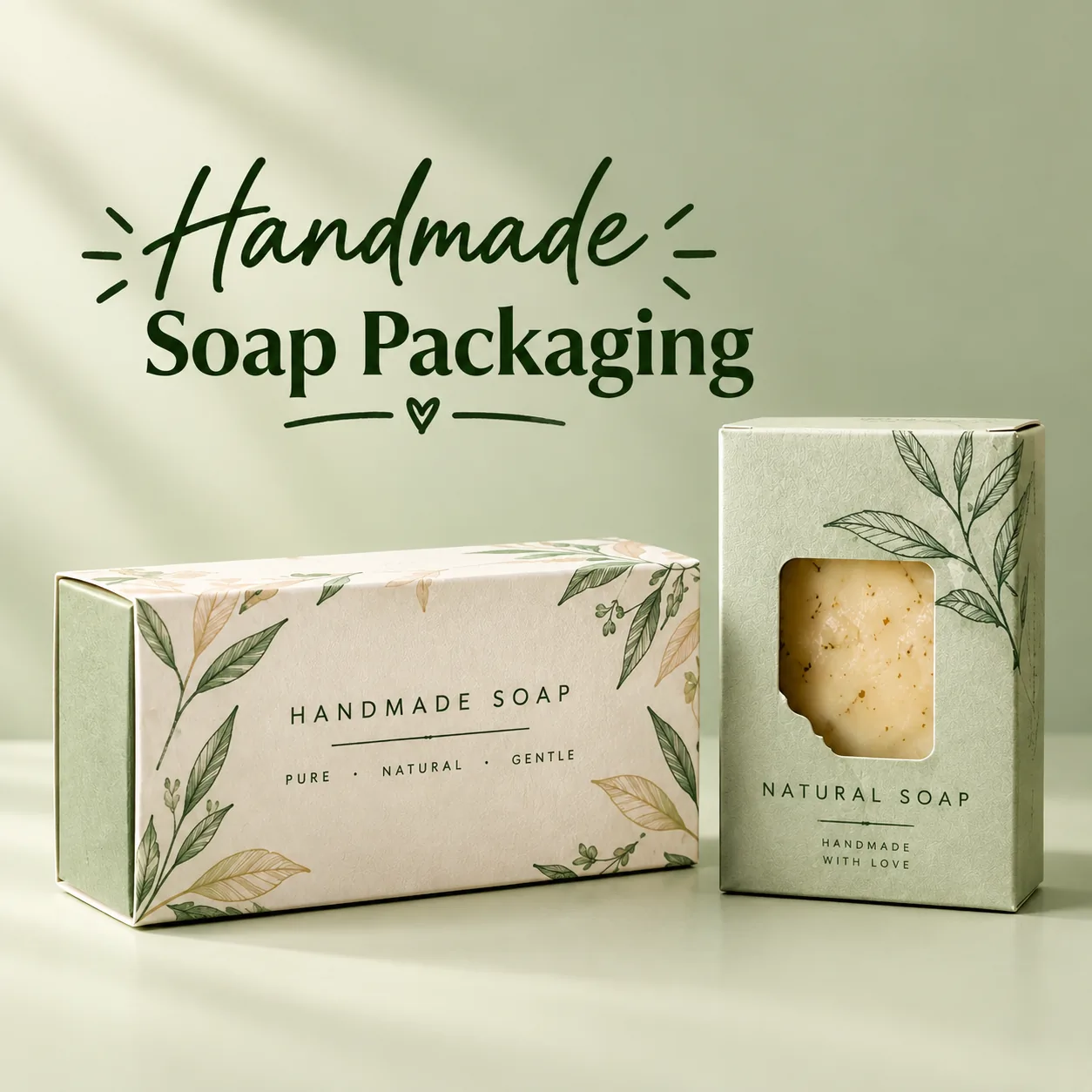
A soap box is a custom-printed carton or sleeve designed to hold a bar of soap, protect it from handling and moisture, and carry the brand on the retail shelf. It is the piece of packaging most handmade and small-batch soap brands lean on because it is cheap enough for a 100-bar launch run and still looks premium on open.
What is a soap box?
A soap box is a folding carton or sleeve made from paperboard — most often SBS, kraft, or recycled board — that covers a bar of soap. It serves three functions:
- Protection. Keeps the bar clean, prevents scratches, and shields it from hands during browsing.
- Information. Carries the ingredient list, net weight, scent name, and brand story — required under FDA cosmetic labeling rules for most soap sold in the US (more on that below).
- Brand expression. On a crowded natural-beauty shelf, the box is the entire visual pitch. A plain unlabeled soap bar wins against nothing.
The three main soap box styles
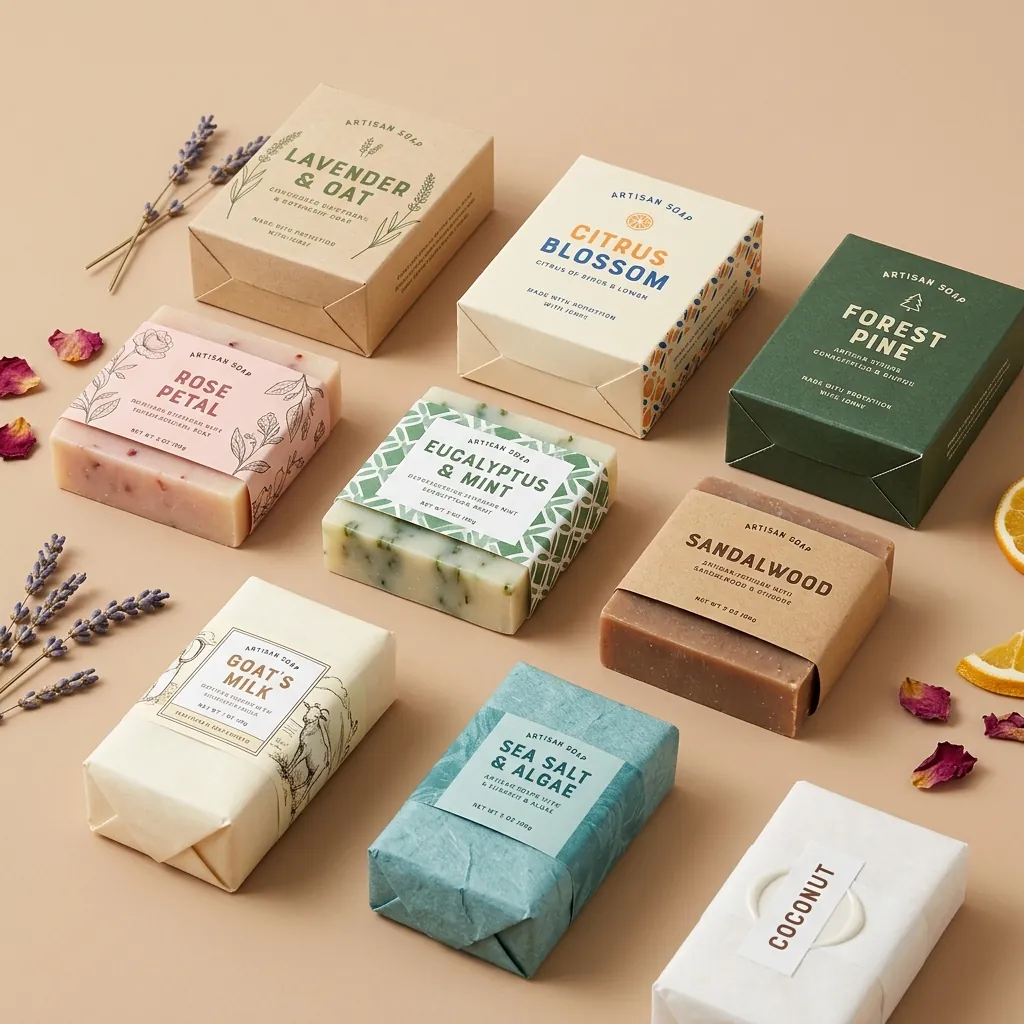
1. Soap sleeve
An open sleeve that wraps around the middle of the bar leaving the ends exposed. The lightest, cheapest option; great for farmer's markets and sample sets. Does not fully enclose the bar.
2. Tuck-end carton
A full folding carton with top and bottom flaps that tuck closed. The most common retail soap box — prints as a full brand canvas and encloses the bar completely. Available in reverse tuck (opposite flap direction, saves board) or straight tuck (flaps the same direction, cleanest front panel).
3. Pillow box
A curved-end carton that reads as a gift from the first glance. Great for gift soaps, holiday limited editions, and sampler sets. Lighter weight than a tuck-end which keeps shipping cheap.
See all three styles in our soap boxes category.
Material choices for soap packaging
Soap packaging has one special consideration: scent and oil can migrate out of a bar over time, so the inner surface of the box matters.
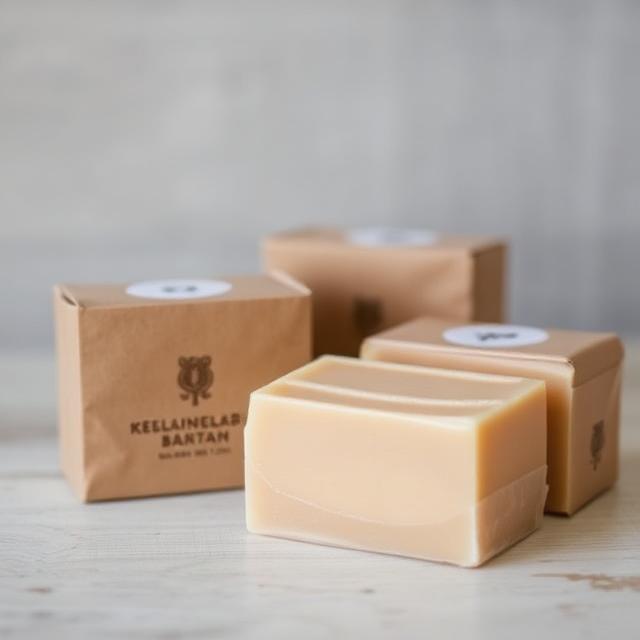
- Kraft board. The default for handmade, cold-process, and natural soap. Earthy brown reads as artisan; works beautifully with 1-color print and gold or copper foil. See our kraft boxes.
- White SBS. Vivid full-color print; great for colorful soap lineups and photo-forward brands.
- Recycled SBS. Off-white with a slight tint — combines the SBS print quality with recycled fiber content.
For high-oil soaps, we recommend a wax-paper or glassine inner liner inside the box as an extra oil barrier.
Standard soap box dimensions
Measure your bar in three dimensions — length, width, thickness — and add 1/16"–1/8" clearance per side for a snug retail fit. Common bar sizes and matching box dimensions:
| Bar size (L x W x T) | Weight | Box dimension (snug) |
|---|---|---|
| 3.5 x 2.5 x 1" | ~4 oz handmade bar | 3.625 x 2.625 x 1.125" |
| 3.75 x 2.5 x 1.25" | ~5 oz standard | 3.875 x 2.625 x 1.375" |
| 4 x 2.5 x 1.25" | ~6 oz premium | 4.125 x 2.625 x 1.375" |
| 3 x 2 x 1" | ~2.5 oz travel/mini | 3.125 x 2.125 x 1.125" |
Not sure of your bar dimensions? Send a sample and our design team will size the dieline free.
Branding your soap box
Three elements separate a soap box that sells from one that sits:
- Front panel hierarchy. Brand name + bar scent name + a short descriptor ("cold process goat milk"). Keep it readable from 3 feet.
- Required info on side or back. Ingredients, net weight, business address, and the identity statement ("soap" vs "beauty bar" — see our packaging requirements for soap products post).
- Material cue. Kraft + foil = artisan premium; recycled SBS + minimal type = clean modern; white SBS + photo = retail-forward.
Soap box labeling — what US buyers and the FDA expect on the panel
The label on a soap box does more than sell — it keeps your brand on the right side of the FDA. The dividing line most small makers miss sits inside 21 CFR 701.2(a): a product is "true soap" (and exempt from cosmetic labeling) only if the bulk of its non-volatile matter is alkali salts of fatty acids and it is marketed strictly for cleansing.
The moment you claim moisturizing, deodorizing, anti-acne, or "leaves skin soft," the product becomes a cosmetic under 21 CFR 701 and the full panel applies.
For a cosmetic-regulated bar, the carton needs five things: an ingredient list in descending order (common names are fine for the top of the list; INCI nomenclature is required for color additives and most functional ingredients), net weight shown in both US customary and metric (for example, 4 oz / 113 g), the name and address of the manufacturer or distributor, and —
for retail — country of origin per US Customs. If you sell into California, add a CA Prop 65 warning when any listed chemical is present above the safe-harbor level. Handmade soaps containing residual lye or high pH in the first two weeks should carry a short cautionary line as well.
Our soap packaging requirements post walks the full panel point by point.
Cold-process vs hot-process vs melt-and-pour — does the method change the box?
Yes, and the difference matters more than most new makers expect. Cold-process soap cures for 4–6 weeks after unmolding, and bars lose roughly 5–8% of their weight to water evaporation during cure.
If you box too early on a snug-fit tuck-end carton, the bar will rattle by week three — always box after full cure, or build in 1/8" clearance per side instead of the 1/16" you would use for a stable bar.
Fresh cold-process bars also carry a slightly elevated pH for the first 10–14 days, so cartons printed with uncoated inks should stay off the bar until cure is complete.
Hot-process soap finishes saponification in the pot, so there is no lye residue to worry about on day one — but the rustic surface texture means a sleeve or belly band often reads better than a flush tuck-end.
Melt-and-pour bars are the most paperboard-sensitive: glycerin-heavy and prone to sweating in humid climates, they almost always need a shrink film or glassine inner wrap before the carton.
For dye-saturated bars (indigo, turmeric, activated charcoal), a closed carton protects pigment from UV fade; for color-forward bars where the swirl is the sales pitch, a window carton trades a little UV exposure for a lot of shelf appeal.
Frequently asked questions
What is the minimum order for a soap box?
100 boxes at Packaging Vista. No die, plate, or setup fees — the per-unit cost drops as you order more.
Should my soap box have a window?
A small window can show the bar color if color is a selling cue (herbal green, charcoal black, berry red). Skip the window for bars with light-sensitive essential oils that fade in sunlight.
Can I use a kraft box for cold-process soap?
Yes — kraft is the dominant choice for cold-process and natural soap because the brown reads as artisan and the paperboard is widely recyclable.
Do I need to list every ingredient?
If your product is marketed as a cosmetic (claims to beautify, moisturize, cleanse the skin) rather than "soap" strictly, yes — FDA cosmetic labeling under FPLA applies. See our packaging requirements for soap products for the full breakdown.
Do I need an INCI ingredient list on my soap box?
If your bar meets the "true soap" test under 21 CFR 701.2(a), no — common names are enough. If you make any cosmetic claim (moisturizing, anti-acne, exfoliating), INCI nomenclature is required for color additives and most functional ingredients, listed in descending order by weight for ingredients above 1%.
Most US handmade brands dual-label (common name with INCI in parentheses) to stay safe on both sides of the line.
Can the paperboard touch wet or semi-cured soap?
Not safely. Fresh cold-process bars are still shedding water and carry a slightly elevated pH for the first 10–14 days, which will discolor uncoated inks and cause the paperboard to warp or stain. Let the bar cure fully before boxing, or add a greaseproof or glassine inner wrap between the bar and the carton. Melt-and-pour bars, which can sweat glycerin, almost always need a film or wrap first.
What paperboard thickness is ideal for a soap bar?
For a standard 4–6 oz retail bar, 16–18 pt SBS or 18–20 pt kraft hits the sweet spot — stiff enough that the carton holds its shape on a shelf, thin enough that the fold score stays clean and shipping cost stays reasonable. Travel-size or sampler bars can drop to 14 pt; chunky 8 oz artisan bars benefit from 20–24 pt kraft for a more substantial hand-feel.
Ready to design your soap box? Browse soap boxes and kraft boxes, or request a free quote with your bar dimensions and we will come back with pricing and a free dieline inside one business day.